
人类皮质类器官作为皮质发育畸形疾病模型的生成及特性
The generation and properties of human cortical organoids as a disease model for malformations of cortical development.
作者信息
Zhang Xiu-Ping, Wang Xi-Yuan, Wang Shu-Na, Miao Chao-Yu
机构信息
Department of Pharmacology, Second Military Medical University/Naval Medical University, Shanghai, China.
出版信息
Neural Regen Res. 2023 Oct;18(10):2119-2126. doi: 10.4103/1673-5374.369100.
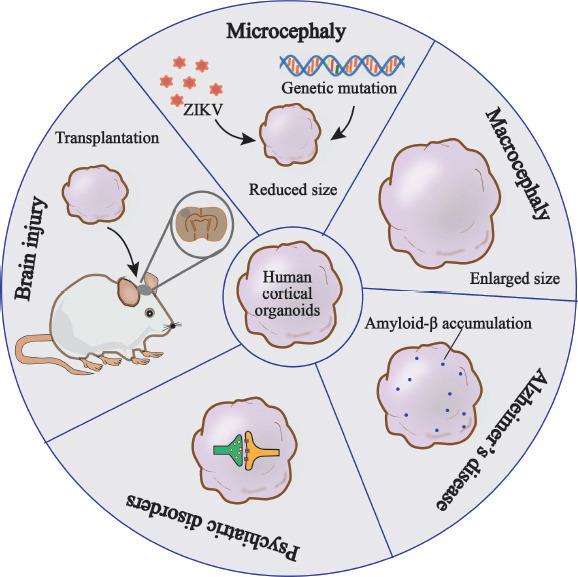
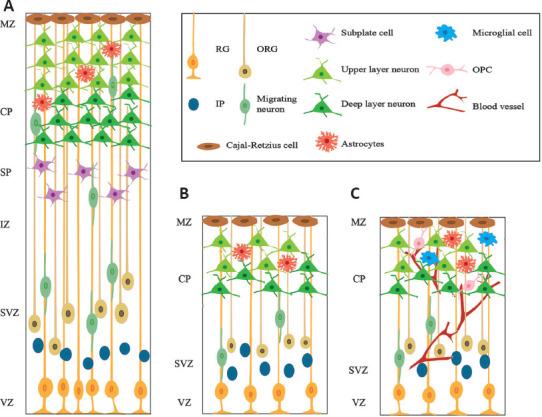
As three-dimensional "organ-like" aggregates, human cortical organoids have emerged as powerful models for studying human brain evolution and brain disorders with unique advantages of human-specificity, fidelity and manipulation. Human cortical organoids derived from human pluripotent stem cells can elaborately replicate many of the key properties of human cortical development at the molecular, cellular, structural, and functional levels, including the anatomy, functional neural network, and interaction among different brain regions, thus facilitating the discovery of brain development and evolution. In addition to studying the neuro-electrophysiological features of brain cortex development, human cortical organoids have been widely used to mimic the pathophysiological features of cortical-related disease, especially in mimicking malformations of cortical development, thus revealing pathological mechanism and identifying effective drugs. In this review, we provide an overview of the generation of human cortical organoids and the properties of recapitulated cortical development and further outline their applications in modeling malformations of cortical development including pathological phenotype, underlying mechanisms and rescue strategies.
作为三维“类器官”聚集体,人类皮质类器官已成为研究人类大脑进化和脑部疾病的强大模型,具有人类特异性、保真度和可操作性等独特优势。源自人类多能干细胞的人类皮质类器官能够在分子、细胞、结构和功能水平上精细地复制人类皮质发育的许多关键特性,包括解剖结构、功能性神经网络以及不同脑区之间的相互作用,从而促进对大脑发育和进化的发现。除了研究大脑皮质发育的神经电生理特征外,人类皮质类器官还被广泛用于模拟皮质相关疾病的病理生理特征,尤其是在模拟皮质发育畸形方面,从而揭示病理机制并确定有效药物。在本综述中,我们概述了人类皮质类器官的生成以及重现的皮质发育特性,并进一步概述了它们在模拟皮质发育畸形中的应用,包括病理表型、潜在机制和挽救策略。

 Zotero 插件