
外侧隔核背侧部和齿状回分别对小鼠的空间识别记忆和物体识别记忆是必需的。
Lateral septal nucleus, dorsal part, and dentate gyrus are necessary for spatial and object recognition memory, respectively, in mice.
作者信息
Jiang Ying-Ke, Dong Fei-Yuan, Dong Yi-Bei, Zhu Xin-Yi, Pan Lu-Hui, Hu Lin-Bo, Xu Le, Xu Xiao-Fan, Xu Li-Min, Zhang Xiao-Qin
机构信息
Department of Pharmacology, Health Science Center, Ningbo University, Ningbo, Zhejiang, China.
Ningbo Women and Children's Hospital, Ningbo, Zhejiang, China.
出版信息
Front Behav Neurosci. 2023 Mar 31;17:1139737. doi: 10.3389/fnbeh.2023.1139737. eCollection 2023.
INTRODUCTION
Cognitive impairment includes the abnormality of learning, memory and judgment, resulting in severe learning and memory impairment and social activity impairment, which greatly affects the life quality of individuals. However, the specific mechanisms underlying cognitive impairment in different behavioral paradigms remain to be elucidated.
METHODS
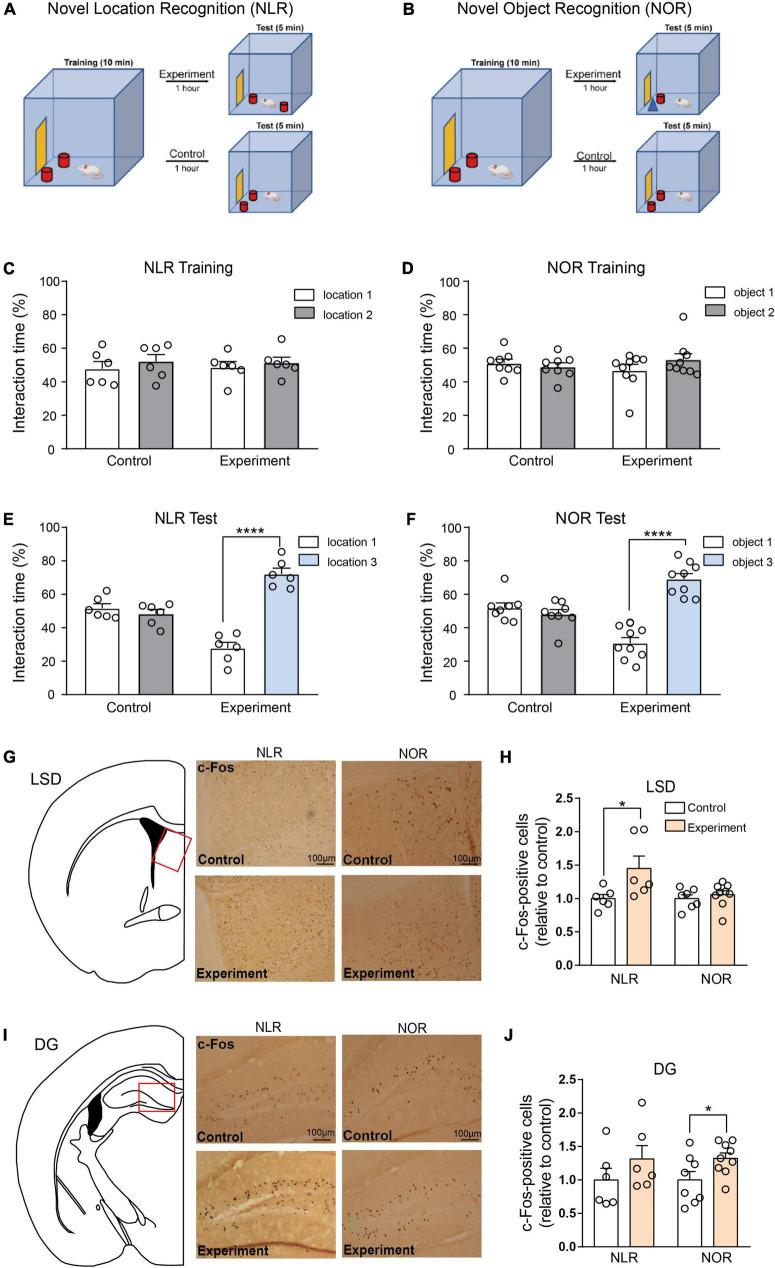
The study utilized two behavioral paradigms, novel location recognition (NLR) and novel object recognition (NOR), to investigate the brain regions involved in cognitive function. These tests comprised two phases: mice were presented with two identical objects for familiarization during the training phase, and a novel (experiment) or familiar (control) object/location was presented during testing. Immunostaining quantification of c-Fos, an immediate early gene used as a neuronal activity marker, was performed in eight different brain regions after the NLR or NOR test.
RESULTS
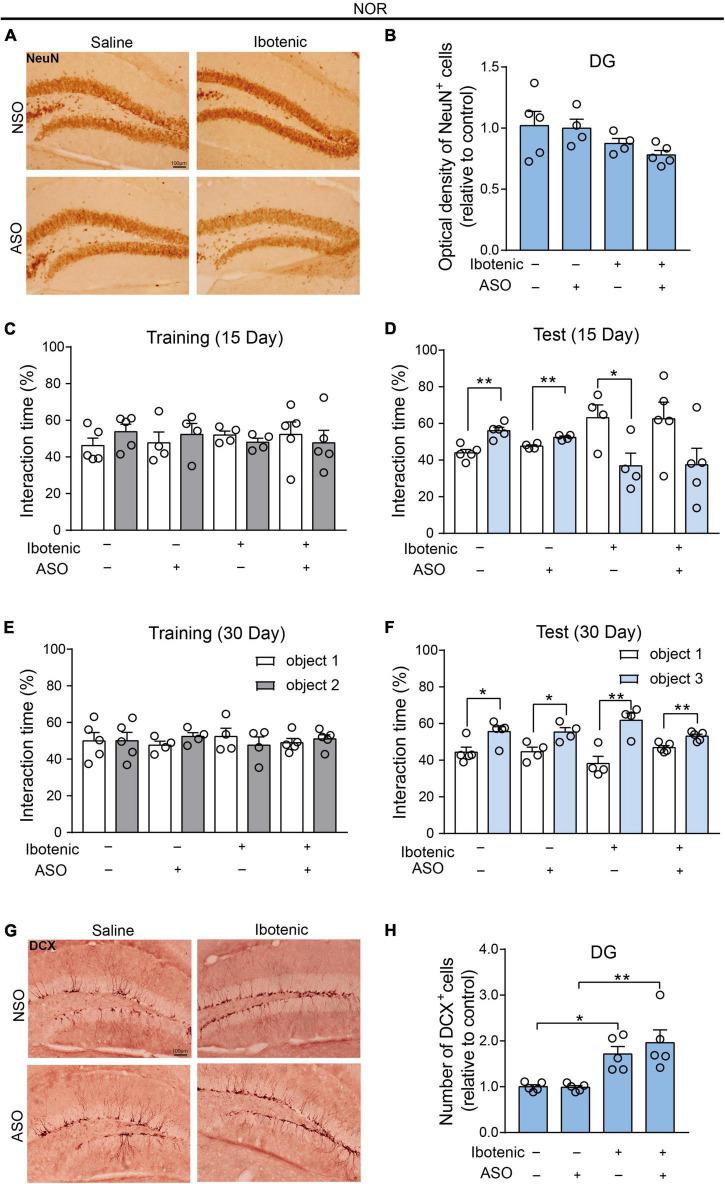
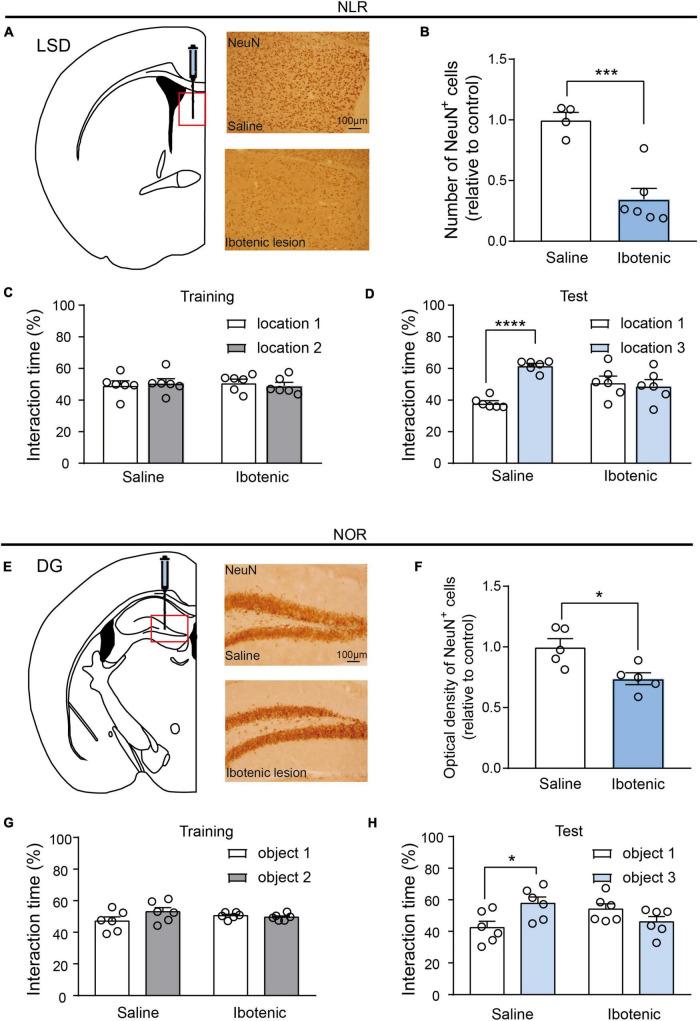
The number of c-Fos-positive cells was significantly higher in the dorsal part of the lateral septal nucleus (LSD) in the NLR and dentate gyrus (DG) in the NOR experiment group than in the control group. We further bilaterally lesioned these regions using excitotoxic ibotenic acid and replenished the damaged areas using an antisense oligonucleotide (ASO) strategy.
DISCUSSION
These data reinforced the importance of LSD and DG in regulating spatial and object recognition memory, respectively. Thus, the study provides insight into the roles of these brain regions and suggests potential intervention targets for impaired spatial and object recognition memory.
引言
认知障碍包括学习、记忆和判断异常,导致严重的学习和记忆损害以及社交活动受损,极大地影响个体的生活质量。然而,不同行为范式下认知障碍的具体机制仍有待阐明。
方法
本研究采用两种行为范式,即新位置识别(NLR)和新物体识别(NOR),来研究参与认知功能的脑区。这些测试包括两个阶段:在训练阶段向小鼠呈现两个相同的物体进行熟悉,在测试阶段呈现一个新的(实验)或熟悉的(对照)物体/位置。在NLR或NOR测试后,对八个不同脑区进行免疫染色定量检测作为神经元活动标记物的即刻早期基因c-Fos。
结果
NLR实验组外侧隔核背侧(LSD)和NOR实验组齿状回(DG)中c-Fos阳性细胞数量显著高于对照组。我们进一步使用兴奋性毒性鹅膏蕈氨酸对这些区域进行双侧损伤,并采用反义寡核苷酸(ASO)策略补充受损区域。
讨论
这些数据强化了LSD和DG分别在调节空间和物体识别记忆中的重要性。因此,本研究深入了解了这些脑区的作用,并为受损的空间和物体识别记忆提出了潜在的干预靶点。


 Zotero 插件