
利用加权基因共表达网络分析鉴定与头颈部鳞状细胞癌发展相关的免疫相关基因。
Identification of immune-related genes contributing to head and neck squamous cell carcinoma development using weighted gene co-expression network analysis.
机构信息
Key Laboratory of Systems Biomedicine (Ministry of Education), Shanghai Center for Systems Biomedicine, Shanghai Jiao Tong University, Shanghai, China.
Department of Radiation Oncology, Fujian Medical University Cancer Hospital, Fujian Cancer Hospital, Fuzhou, Fujian, China.
出版信息
Cancer Rep (Hoboken). 2023 May;6(5):e1808. doi: 10.1002/cnr2.1808. Epub 2023 Apr 24.
BACKGROUND
This study aimed to identify genes related to the degree of immune cell infiltration in head and neck squamous cell carcinoma (HNSCC), explore their new biological functions, and evaluate their diagnostic and prognostic value in HNSCC.
METHODS
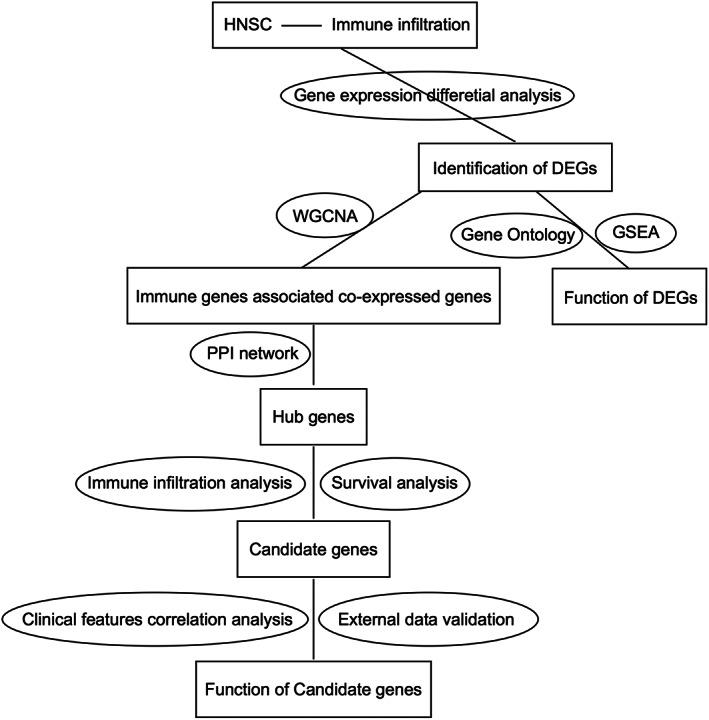
Transcriptomic data from The Cancer Genome Atlas (TCGA) HNSCC dataset was used to screen differentially expressed genes between tumors and normal tissues, followed by weighted correlation network analysis (WGCNA) to identify immune-related modules. Differential gene expression, immune cell infiltration, and survival analyses were performed to screen key genes. The expression of these key genes was validated in Oncomine and gene expression omnibus (GEO) datasets and by immunohistochemistry (IHC).
RESULTS
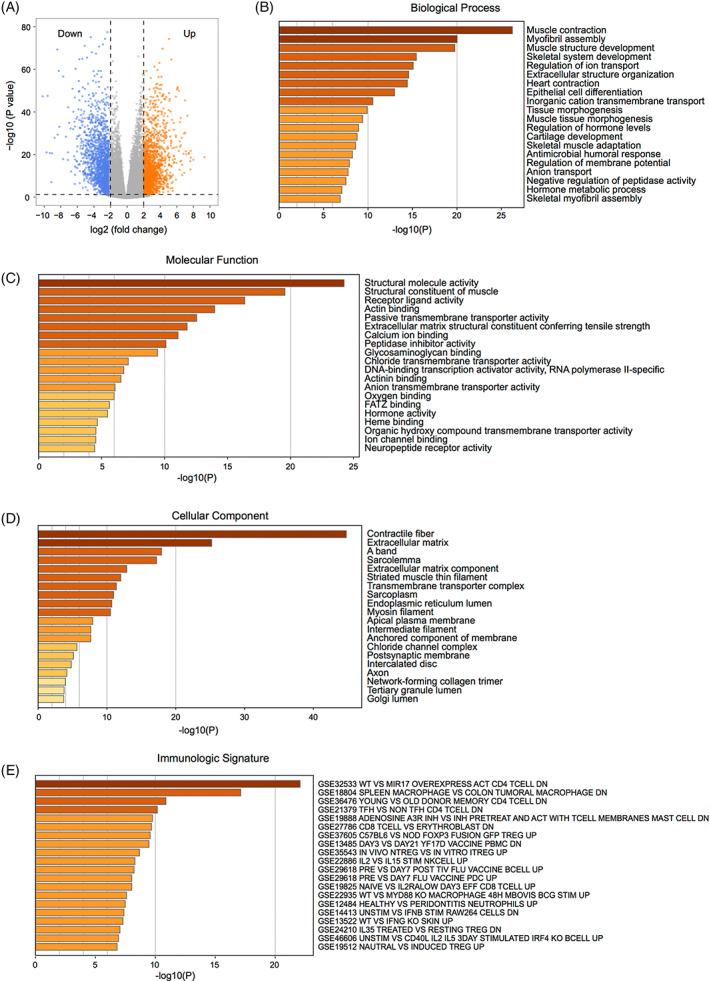
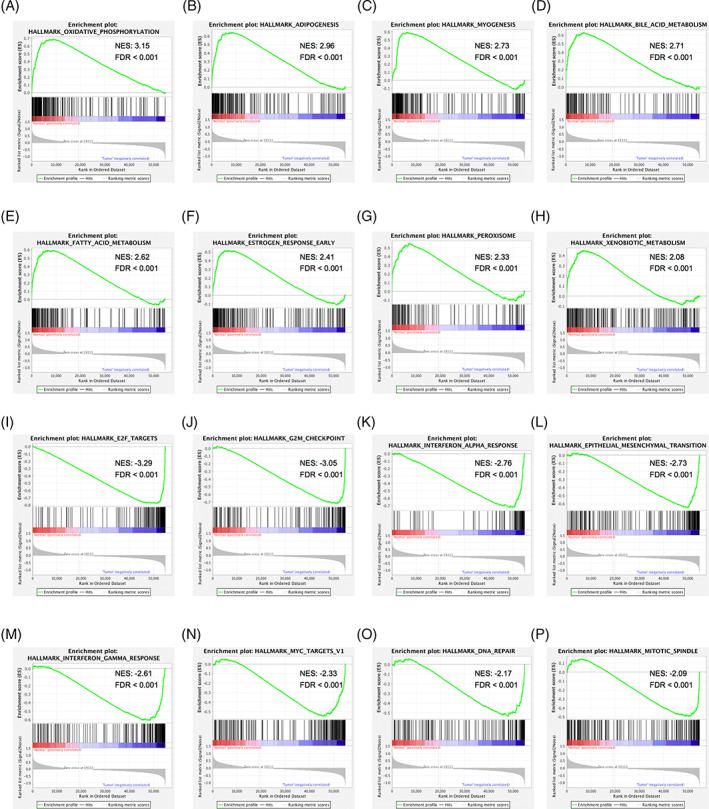
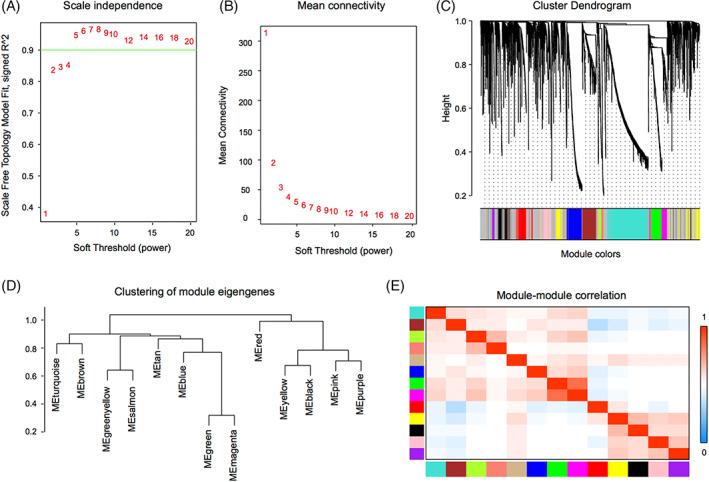
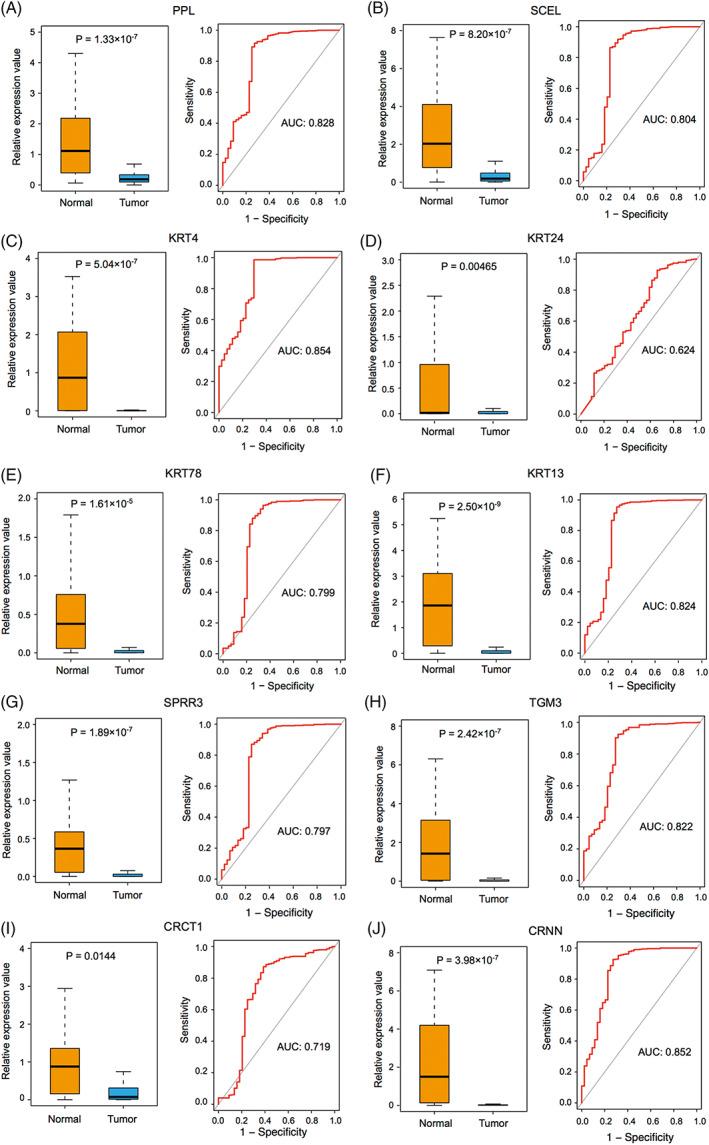
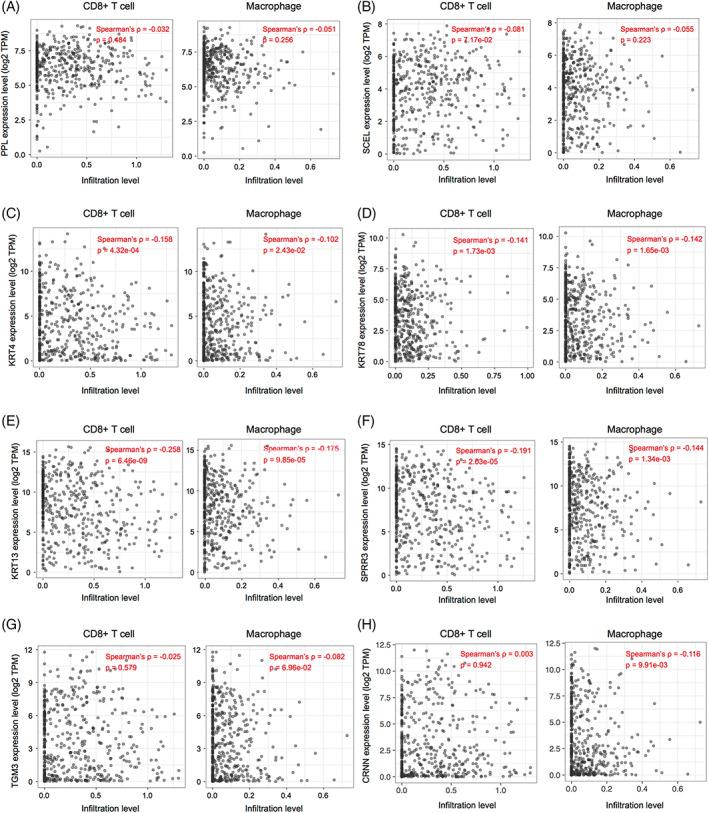
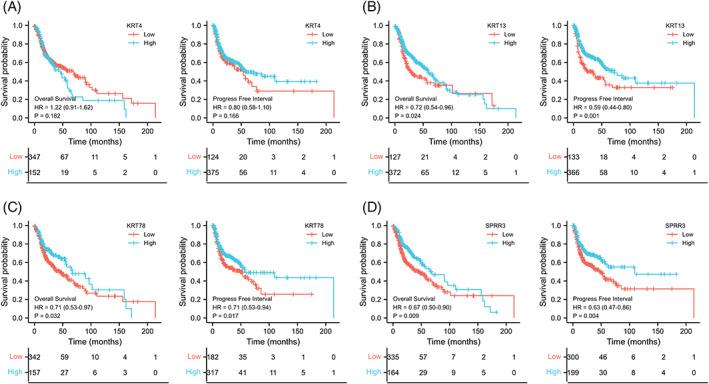
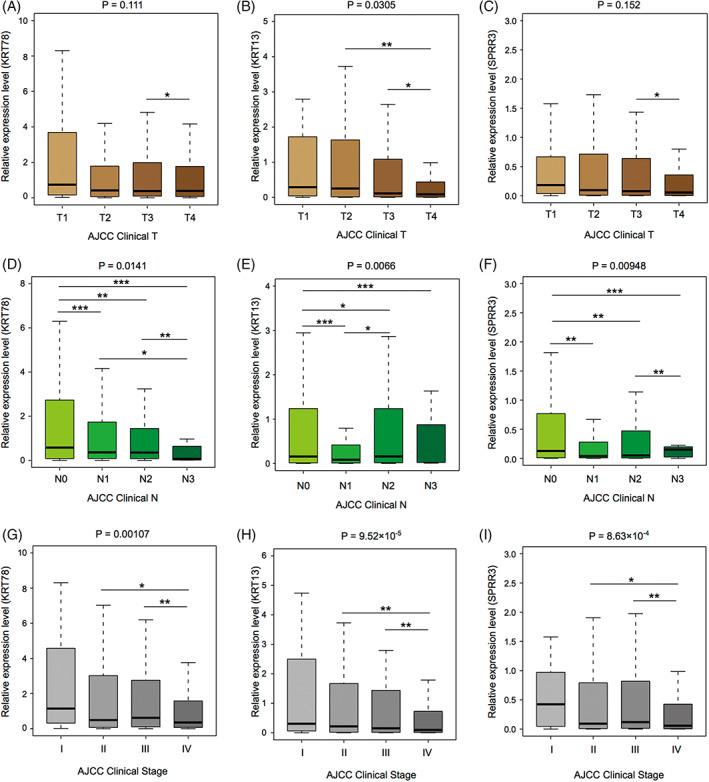
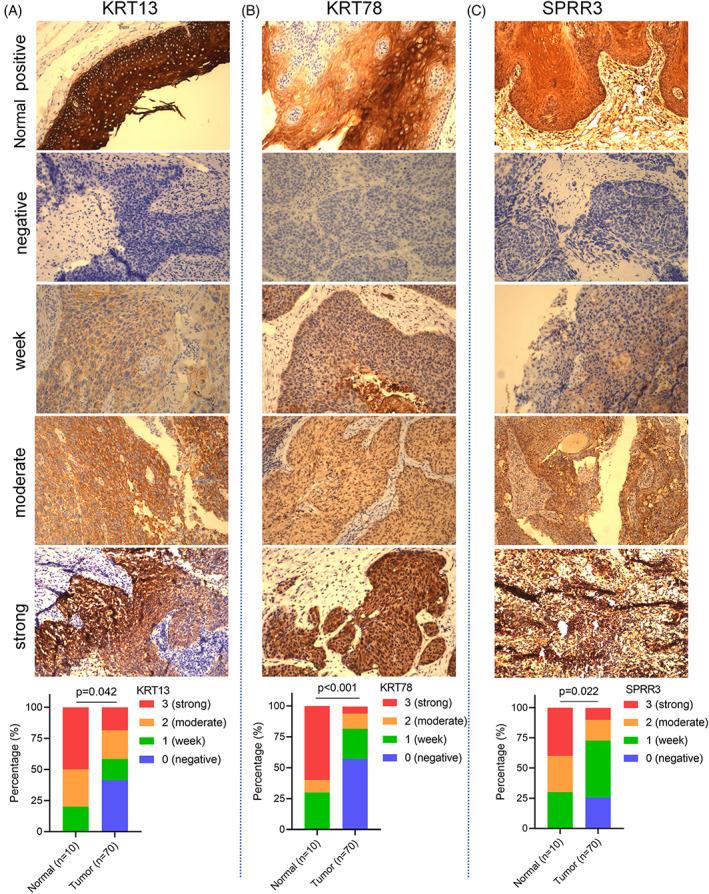
1869 and 1578 genes were significantly upregulated and downregulated in HNSCC. WGCNA showed that the brown module was associated with the most significant number of immune-related genes. PPI network analysis demonstrated that PPL, SCEL, KRT4, KRT24, KRT78, KRT13, SPRR3, TGM3, CRCT1, and CRNN were key components in the brown module. Furthermore, the expression levels of KRT4, KRT78, KRT13, and SPRR3 in HNSCC correlated with infiltration levels of CD8+ T cells and macrophages. Survival analyses revealed that the expression of KRT78, KRT13, and SPRR3 in HNSCC correlated with overall survival (OS). The IHC assay indicated that KRT13 (p = .042), KRT78 (p < .001), and SPRR3 (p = .022) protein expression levels in HNSCC were significantly lower than in normal tissues. Analysis of GSE65858 and GSE41613 datasets showed that a worse OS was associated with low expression of KRT78 (p = .0086, and p = .005) and SPRR3 (p = .017, and p = .02).
CONCLUSIONS
Our findings suggest that KRT4, KRT78, KRT13, and SPRR3 are related to the occurrence and development of HNSCC. Importantly, KRT78 and SPRR3 might serve as diagnostic and prognostic biomarkers of HNSCC.
背景
本研究旨在鉴定与头颈部鳞状细胞癌(HNSCC)免疫细胞浸润程度相关的基因,探索其新的生物学功能,并评估其在 HNSCC 中的诊断和预后价值。
方法
使用癌症基因组图谱(TCGA)HNSCC 数据集的转录组数据筛选肿瘤组织与正常组织之间差异表达的基因,然后进行加权相关网络分析(WGCNA)以鉴定免疫相关模块。进行差异基因表达、免疫细胞浸润和生存分析以筛选关键基因。在 Oncomine 和基因表达综合(GEO)数据集以及免疫组织化学(IHC)中验证这些关键基因的表达。
结果
HNSCC 中显著上调和下调的基因分别有 1869 个和 1578 个。WGCNA 显示棕色模块与数量最多的免疫相关基因相关。PPI 网络分析表明,PPL、SCEL、KRT4、KRT24、KRT78、KRT13、SPRR3、TGM3、CRCT1 和 CRNN 是棕色模块的关键成分。此外,HNSCC 中 KRT4、KRT78、KRT13 和 SPRR3 的表达水平与 CD8+T 细胞和巨噬细胞的浸润水平相关。生存分析表明,HNSCC 中 KRT78、KRT13 和 SPRR3 的表达与总生存期(OS)相关。IHC 检测表明,HNSCC 中 KRT13(p=0.042)、KRT78(p<0.001)和 SPRR3(p=0.022)蛋白表达水平明显低于正常组织。对 GSE65858 和 GSE41613 数据集的分析表明,KRT78(p=0.0086 和 p=0.005)和 SPRR3(p=0.017 和 p=0.02)低表达与较差的 OS 相关。
结论
我们的研究结果表明 KRT4、KRT78、KRT13 和 SPRR3 与 HNSCC 的发生和发展有关。重要的是,KRT78 和 SPRR3 可能是 HNSCC 的诊断和预后生物标志物。



 Zotero 插件