
维生素E在保护妊娠雌性大鼠免受氧化应激、炎症及对乙酰氨基酚急性中毒所致神经毒性影响中的作用
The Role of Vitamin E in Protecting against Oxidative Stress, Inflammation, and the Neurotoxic Effects of Acute Paracetamol in Pregnant Female Rats.
作者信息
Hammad Alaa M, Shawaqfeh Baraa, Hikmat Suhair, Al-Qirim Tariq, Hamadneh Lama, Al-Kouz Sameer, Awad Mariam M, Hall Frank S
机构信息
Department of Pharmacy, College of Pharmacy, Al-Zaytoonah University of Jordan, Amman 11733, Jordan.
Department of Basic Medical Sciences, Faculty of Medicine, Al-Balqa Applied University, Al-Salt 19117, Jordan.
出版信息
Toxics. 2023 Apr 12;11(4):368. doi: 10.3390/toxics11040368.
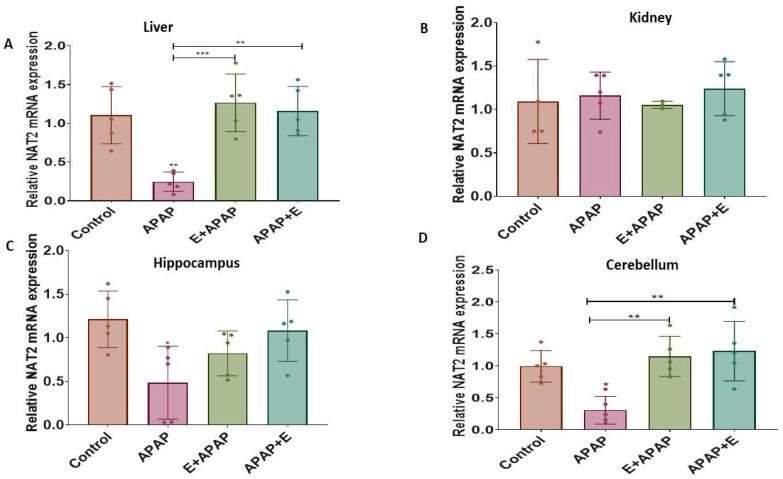
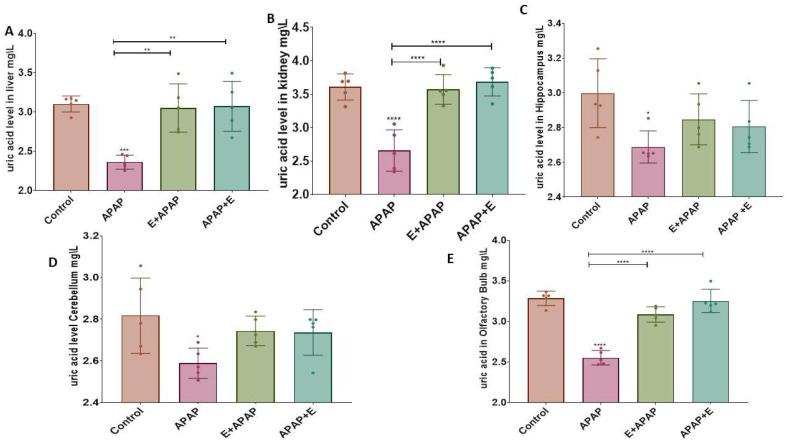
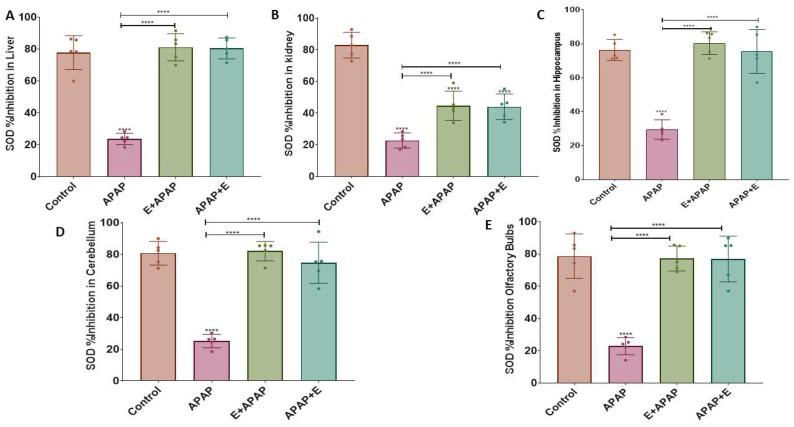
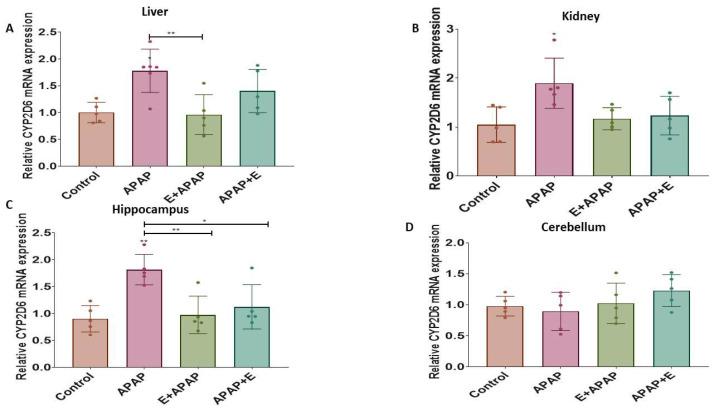
Paracetamol (acetaminophen, APAP) is the most common non-prescription analgesic drug used during pregnancy. The aim of this study was to investigate the effect of vitamin E on acute APAP toxicity in pregnant rats. Toxicity in the liver, kidney, and brain (hippocampus, cerebellum, and olfactory bulb) was examined. Twenty pregnant female Wistar rats at gestational day 18 were used. Pregnant rats were divided into four groups: Control, APAP, E + APAP, and APAP + E. The Control group was treated with 0.5 mL p.o. corn oil. The APAP group received 3000 mg/kg p.o. APAP. The E + APAP group received 300 mg/kg p.o. vitamin E one hour before 3000 mg/kg APAP. The APAP + E group received 3000 mg/kg paracetamol one hour before 300 mg/kg p.o. vitamin E. Twenty-four hours after the last treatment administration, rats were euthanized and blood, brain, liver, and kidney samples were collected. Alanine aminotransferase (ALT), aspartate aminotransferase (AST), blood urea nitrogen (BUN), creatinine levels, uric acid (UA), and superoxide dismutase (SOD) levels, as well as the relative mRNA expression of , , and , were determined. Acute APAP treatment upregulated ALT, AST, BUN, and creatinine levels. APAP treatment downregulated UA and SOD levels. APAP treatment upregulated the relative mRNA expression of and , but downregulated expression. Vitamin E treatment, either before or after APAP administration, attenuated the toxic effects of APAP. In conclusion, the results showed that an acute toxic APAP dose in late pregnancy can cause oxidative stress and dysregulation in Cyp isoform expression, and that vitamin E treatment attenuates these effects.
对乙酰氨基酚(扑热息痛,APAP)是孕期最常用的非处方镇痛药。本研究旨在探讨维生素E对孕鼠急性APAP毒性的影响。检测了肝脏、肾脏和脑(海马体、小脑和嗅球)的毒性。选用20只妊娠第18天的雌性Wistar大鼠。将孕鼠分为四组:对照组、APAP组、E + APAP组和APAP + E组。对照组经口给予0.5 mL玉米油。APAP组经口给予3000 mg/kg APAP。E + APAP组在给予3000 mg/kg APAP前1小时经口给予300 mg/kg维生素E。APAP + E组在经口给予300 mg/kg维生素E前1小时给予3000 mg/kg对乙酰氨基酚。在最后一次给药后24小时,对大鼠实施安乐死并采集血液、脑、肝脏和肾脏样本。测定了丙氨酸转氨酶(ALT)、天冬氨酸转氨酶(AST)、血尿素氮(BUN)、肌酐水平、尿酸(UA)和超氧化物歧化酶(SOD)水平,以及 、 和 的相对mRNA表达。急性APAP处理使ALT、AST、BUN和肌酐水平上调。APAP处理使UA和SOD水平下调。APAP处理使 和 的相对mRNA表达上调,但使 表达下调。在APAP给药之前或之后进行维生素E处理,均可减轻APAP的毒性作用。总之,结果表明,妊娠晚期急性毒性剂量的APAP可导致氧化应激和Cyp亚型表达失调,而维生素E处理可减轻这些影响。


 Zotero 插件