
新冠疫情后环境中的微塑料及其他新出现的污染物:全球普查研究的必要性。
Microplastics and other emerging contaminants in the environment after COVID-19 pandemic: The need of global reconnaissance studies.
作者信息
Picó Yolanda, Barceló Damià
机构信息
Food and Environmental Research Group (SAMA-UV), Research Desertification Centre (CIDE) (CSIC-University of Valencia-GV), Moncada-Naquera Road, Km 4.5, 46113 Moncada, Valencia, Spain.
CIBER Epidemiologia y Salud Pública (CIBERESP), Institute of Health Carlos III, Madrid, Spain.
出版信息
Curr Opin Environ Sci Health. 2023 Jun;33:100468. doi: 10.1016/j.coesh.2023.100468. Epub 2023 Apr 11.
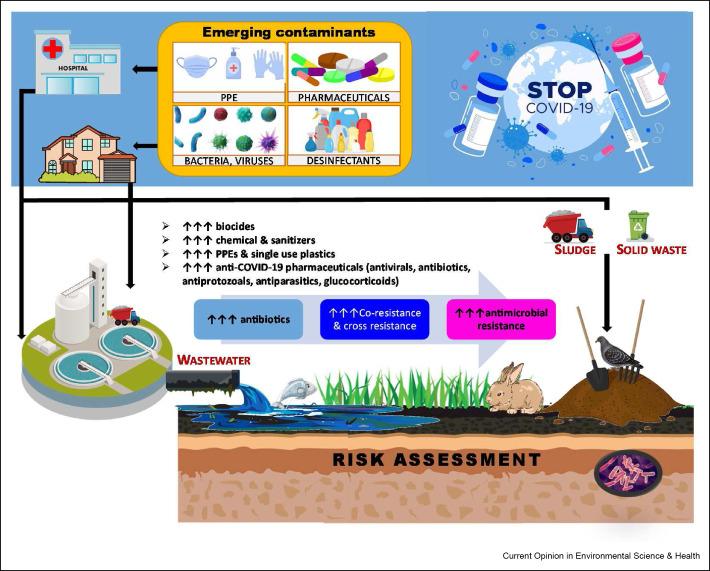
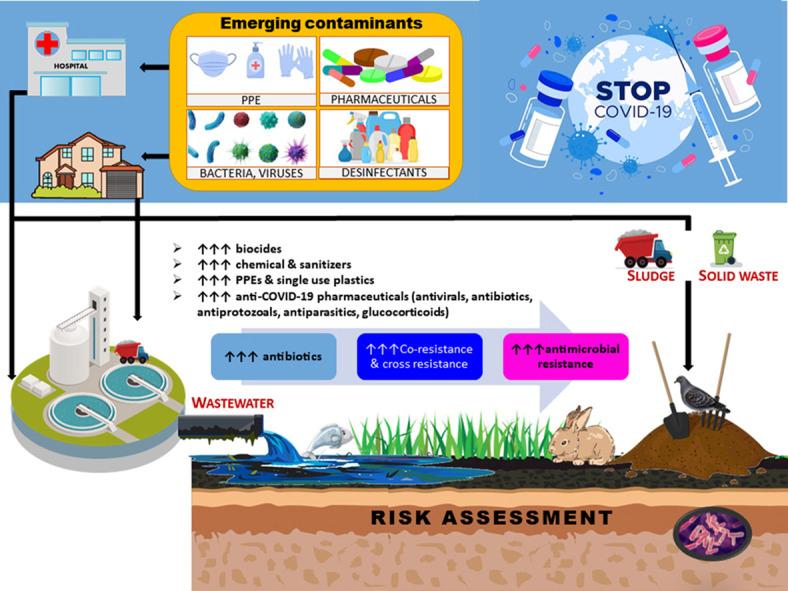
Evidence of the increase of emerging contaminants in the environment due to the COVID-19 pandemic, such as personal protective equipment (PPE), disinfectants, pharmaceuticals, etc., has enlarged. Here we explain the variety of pathways of these emerging contaminants to enter the environment, including wastewater treatment plants, improper disposal of PPE, and runoff from surfaces treated with disinfectants. We also discuss the current state-of-art of the toxicological implications of these emerging contaminants. Initial research suggests that they may have harmful effects on aquatic organisms and human health. Future directions are suggested as further research is needed to fully understand the impacts of these contaminants on the environment and humans, as well as to develop effective approaches to mitigate their potential negative effects.
由于新冠疫情导致环境中新兴污染物增加的证据已经增多,这些污染物包括个人防护装备(PPE)、消毒剂、药品等。在此,我们解释了这些新兴污染物进入环境的多种途径,包括污水处理厂、个人防护装备的不当处置以及经消毒剂处理表面的径流。我们还讨论了这些新兴污染物毒理学影响的当前研究现状。初步研究表明,它们可能对水生生物和人类健康产生有害影响。鉴于需要进一步研究以全面了解这些污染物对环境和人类的影响,以及制定有效的方法来减轻其潜在的负面影响,我们提出了未来的研究方向。

 Zotero 插件