
基于纳米医学的联合疗法克服胶质母细胞瘤对替莫唑胺的耐药性。
Nanomedicine-based combination therapies for overcoming temozolomide resistance in glioblastomas.
机构信息
State Key Laboratory of Medicinal Chemical Biology, Nankai University, Tianjin 300071, China.
Key Laboratory of Functional Polymer Materials of Ministry of Education, College of Chemistry, Nankai University, Tianjin 300071, China.
出版信息
Cancer Biol Med. 2023 May 5;20(5):325-43. doi: 10.20892/j.issn.2095-3941.2022.0761.
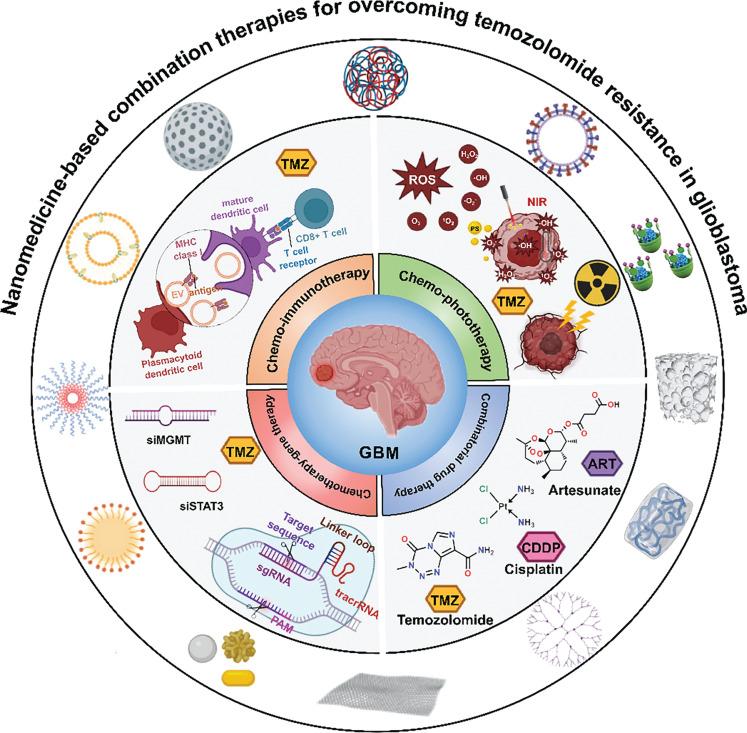
Glioblastoma (GBM) is the most common malignant brain tumor. Although current treatment strategies, including surgery, chemotherapy, and radiotherapy, have achieved clinical effects and prolonged the survival of patients, the gradual development of resistance against current therapies has led to a high recurrence rate and treatment failure. Mechanisms underlying the development of resistance involve multiple factors, including drug efflux, DNA damage repair, glioma stem cells, and a hypoxic tumor environment, which are usually correlative and promote each other. As many potential therapeutic targets have been discovered, combination therapy that regulates multiple resistance-related molecule pathways is considered an attractive strategy. In recent years, nanomedicine has revolutionized cancer therapies with optimized accumulation, penetration, internalization, and controlled release. Blood-brain barrier (BBB) penetration efficiency is also significantly improved through modifying ligands on nanomedicine and interacting with the receptors or transporters on the BBB. Moreover, different drugs for combination therapy usually process different pharmacokinetics and biodistribution, which can be further optimized with drug delivery systems to maximize the therapeutic efficiency of combination therapies. Herein the current achievements in nanomedicine-based combination therapy for GBM are discussed. This review aimed to provide a broader understanding of resistance mechanisms and nanomedicine-based combination therapies for future research on GBM treatment.
胶质母细胞瘤(GBM)是最常见的恶性脑肿瘤。尽管目前的治疗策略,包括手术、化疗和放疗,已经取得了临床效果并延长了患者的生存时间,但对现有治疗方法的耐药性逐渐发展导致了高复发率和治疗失败。耐药性发展的机制涉及多种因素,包括药物外排、DNA 损伤修复、神经胶质瘤干细胞和缺氧肿瘤微环境,这些因素通常相互关联并相互促进。由于已经发现了许多潜在的治疗靶点,因此调节多个耐药相关分子途径的联合治疗被认为是一种有吸引力的策略。近年来,纳米医学通过优化药物的积累、渗透、内化和控制释放,彻底改变了癌症治疗方法。通过修饰纳米医学上的配体并与 BBB 上的受体或转运体相互作用,也显著提高了血脑屏障(BBB)的穿透效率。此外,不同的药物联合治疗通常具有不同的药代动力学和生物分布,通过药物传递系统可以进一步优化,以最大限度地提高联合治疗的疗效。本文讨论了基于纳米医学的 GBM 联合治疗的最新进展。本综述旨在提供对耐药机制和基于纳米医学的联合治疗的更广泛理解,为未来 GBM 治疗的研究提供参考。


 Zotero 插件