
用于支架应用的三维(3D)可生物降解聚乙醇酸纤维(PGA)预制件的开发:实验图案化和纤维体积分数-孔隙率建模研究
Development of Three-Dimensional (3D) Biodegradable Polyglycolic Acid Fiber (PGA) Preforms for Scaffold Applications: Experimental Patterning and Fiber Volume Fraction-Porosity Modeling Study.
作者信息
Kundak Hikmet, Bilisik Kadir
机构信息
Nano/Micro Fiber Preform Design and Composite Laboratory, Department of Textile Engineering, Faculty of Engineering, Erciyes University, Talas 38039, Kayseri, Turkey.
Nanotechnology Application and Research Centre (ERNAM), Erciyes University, Talas 38039, Kayseri, Turkey.
出版信息
Polymers (Basel). 2023 Apr 27;15(9):2083. doi: 10.3390/polym15092083.
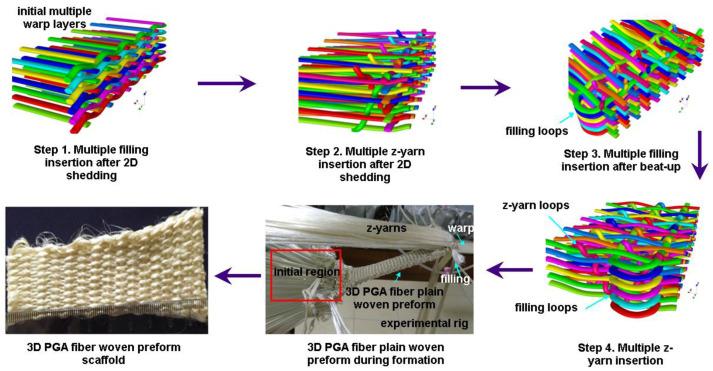
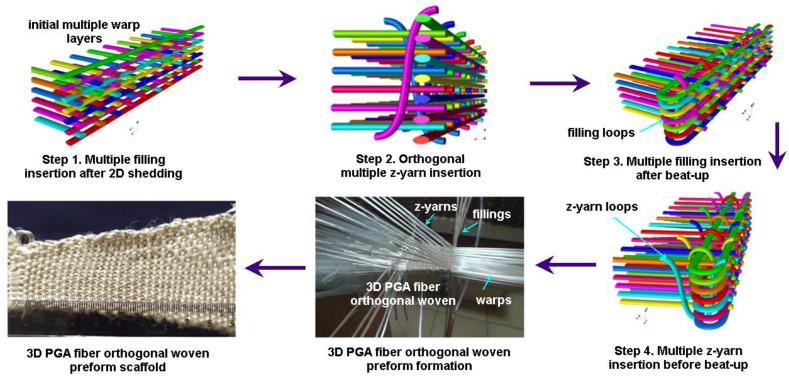
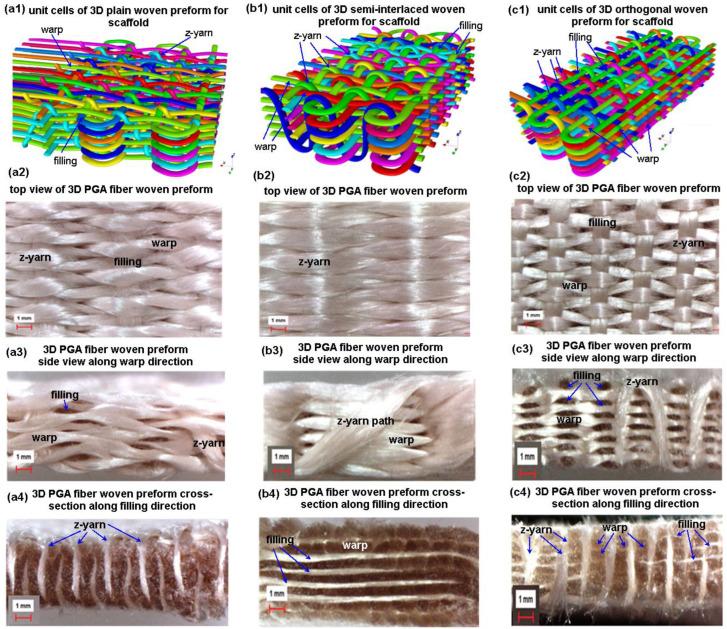
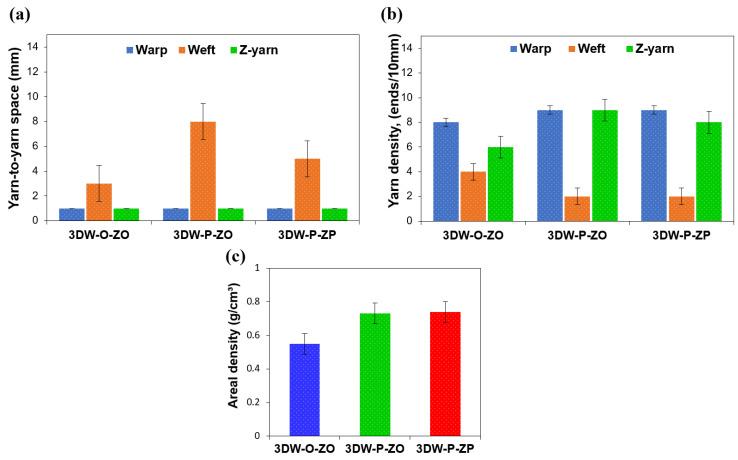
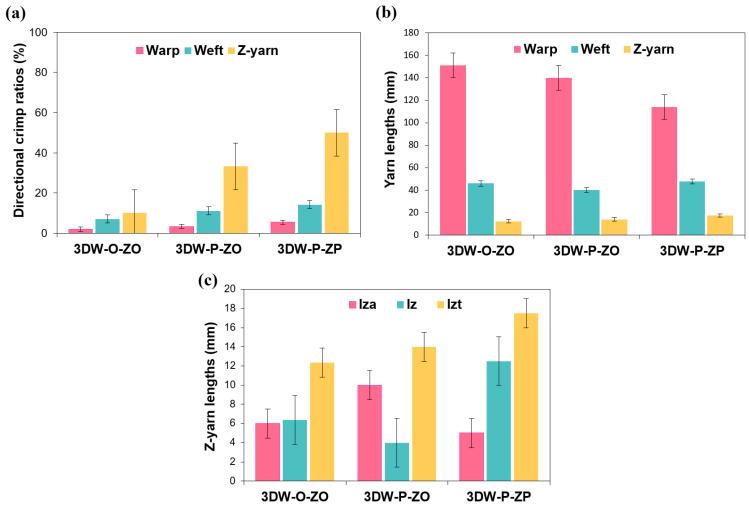
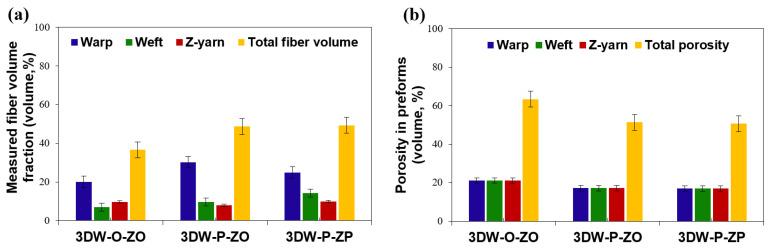
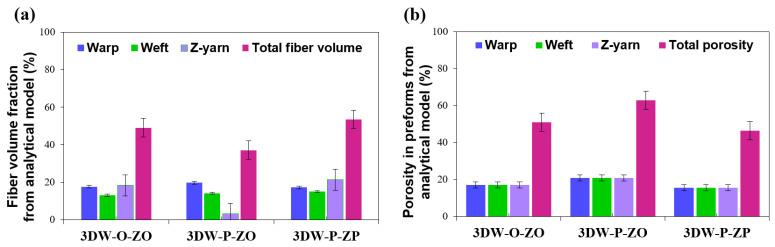
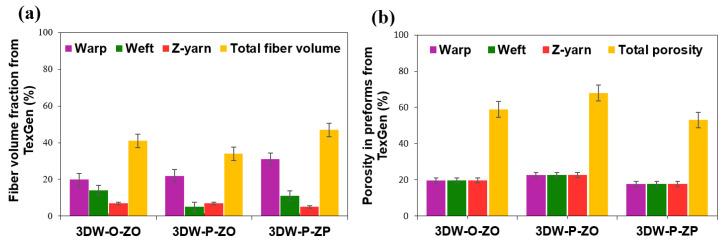
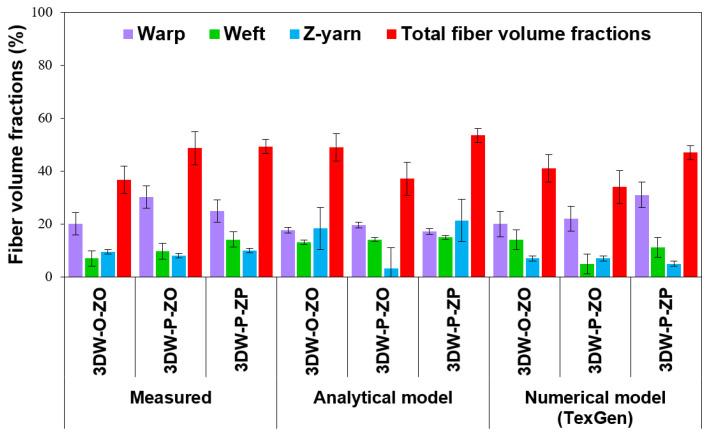
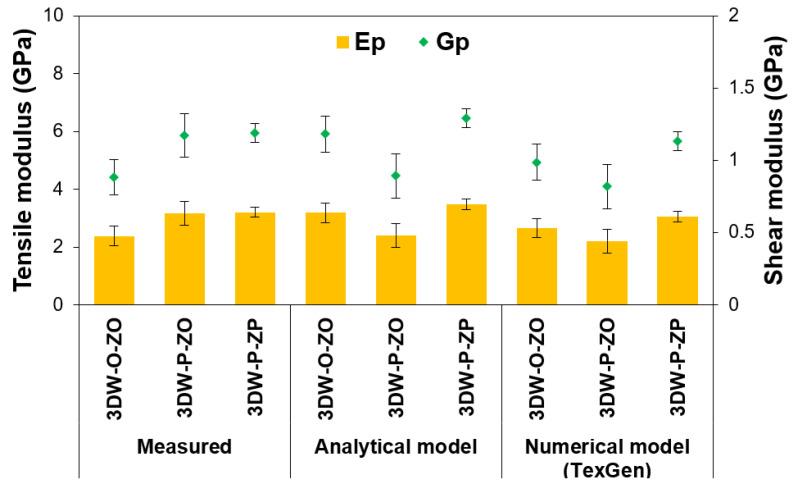
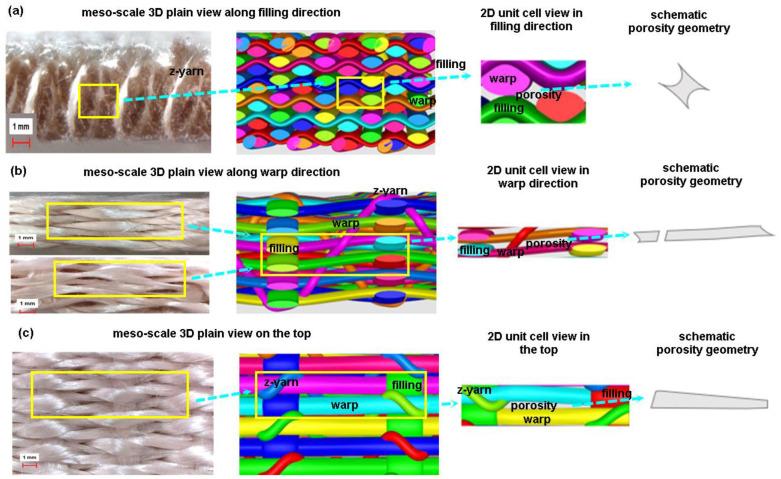
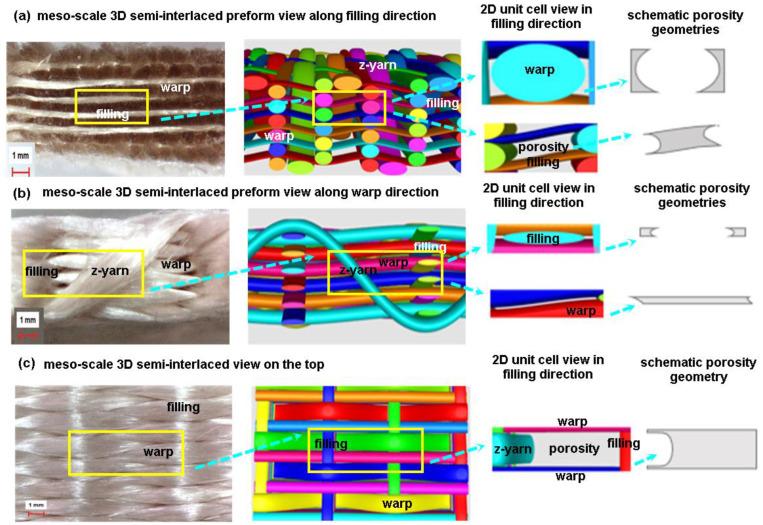
Three-dimensional (3D) biodegradable polyglycolic acid fiber (PGA) preforms were developed as temporary scaffolds for three-dimensional tissue regeneration applications. Three-dimensional biodegradable polyglycolic acid fiber (PGA) preforms including various degrees of interlaced structures called 3D plain, semi-interlaced, and orthogonal woven preforms were designed. Analytical relations and finite element model-based software (TexGen) on fiber volume fraction and porosity fraction were proposed to predict scaffolds' stiffness and strength properties considering micromechanics relations. It was revealed that yarn-to-yarn space, density, and angles of all 3D PGA fiber preforms were heterogeneous and demonstrated direction-dependent features (anisotropy). Total fiber volume fractions () and porosity fraction () predicted by analytic and numerical modelling of all 3D scaffolds showed some deviations compared to the measured values. This was because yarn cross-sections in the scaffolds were changed from ideal circular yarn (fiber TOW) geometry to high-order ellipse (lenticular) due to inter-fiber pressure generated under a tensile-based macrostress environment during preform formation. Z-yarn modulus () and strength () were probably critical values due to strong stiffness and strength in the through-the-thickness direction where hydrogel modulus and strengths were negligibly small. Morphology of the scaffold showed that PGA fiber sets in the preform were locally distorted, and they appeared as inconsistent and inhomogeneous continuous fiber forms. Additionally, various porosity shapes in the preform based on the virtual model featured complex shapes from nearly trapezoidal beams to partial or concave rectangular beams and ellipsoid rectangular cylinders. It was concluded that 3D polyglycolic acid fiber preforms could be a temporary supportive substrate for 3D tissue regeneration because cells in the scaffold's thickness can grow via through-the-thickness fiber (z-yarn), including various possible mechanobiology mechanisms.
三维(3D)可生物降解聚乙醇酸纤维(PGA)预制件被开发用作三维组织再生应用的临时支架。设计了三维可生物降解聚乙醇酸纤维(PGA)预制件,包括具有不同交织结构程度的3D平纹、半交织和正交编织预制件。考虑微观力学关系,提出了基于纤维体积分数和孔隙率分数的解析关系和有限元模型软件(TexGen),以预测支架的刚度和强度特性。结果表明,所有3D PGA纤维预制件的纱线间距、密度和角度都是不均匀的,并表现出方向依赖性特征(各向异性)。与测量值相比,所有3D支架的解析和数值模拟预测的总纤维体积分数()和孔隙率分数()存在一些偏差。这是因为在预制件形成过程中,在基于拉伸的宏观应力环境下,由于纤维间压力的作用,支架中的纱线横截面从理想的圆形纱线(纤维束)几何形状变为高阶椭圆形(透镜状)。由于在厚度方向上具有很强的刚度和强度,而水凝胶模量和强度可忽略不计,因此Z纱线模量()和强度()可能是临界值。支架的形态表明,预制件中的PGA纤维束局部扭曲,呈现出不一致和不均匀的连续纤维形式。此外,基于虚拟模型的预制件中的各种孔隙形状具有复杂的形状,从近乎梯形梁到部分或凹形矩形梁以及椭圆形矩形圆柱体。得出的结论是,3D聚乙醇酸纤维预制件可以作为3D组织再生的临时支撑基质,因为支架厚度方向上的细胞可以通过厚度方向的纤维(Z纱线)生长,包括各种可能的力学生物学机制。




 Zotero 插件