
综合医院接受全身麻醉下牙科治疗的儿科患者术后疼痛:一项横断面研究
Postoperative Pain of Pediatric Patients Undergoing Dental Treatment under General Anesthesia Visiting a General Hospital: A Cross-Sectional Study.
作者信息
Kakti Ateet, Abumelha Reema Khalid, Alajmi Asmaa Mansour, Dagriri Lamis Khalid, Alkodari Lamia Abdullah, Fares Mohammed J, Cicciù Marco, Minervini Giuseppe
机构信息
Department of Preventive Dentistry, College of Dentistry, Riyadh Elm University, Riyadh 13244, Saudi Arabia.
College of Dentistry, Riyadh Elm University, Riyadh 13244, Saudi Arabia.
出版信息
Children (Basel). 2023 Mar 31;10(4):671. doi: 10.3390/children10040671.
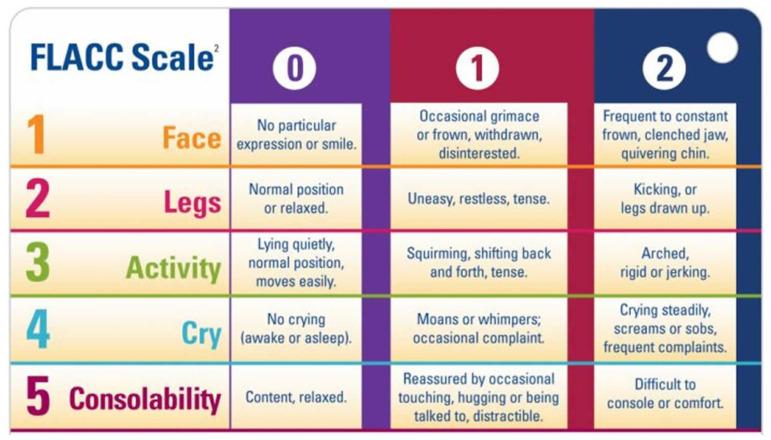
Dental general anesthesia (GA) is a day-stay procedure and is a suitable choice for complicated cases. It is undertaken in a controlled hospital setting that ensures the quality, safety, efficacy, and efficiency of dental treatment. The purpose of this study is to determine the prevalence, severity, duration, and factors related to the occurrence of postoperative discomfort in young children following GA in a general hospital. This study includes a minimum sample size of 23 children that were undergoing GA over a 1-month period. Informed consent was obtained from the parent prior to the treatment. A preoperative questionnaire via the Survey Monkey program was used for the purposes of recording the responses of the survey population. All data related to the immediate postoperative period while the child was in the post-anesthetic recovery room (PAR) was collected and assessed by one of the investigators using the Face, Legs, Activity, Cry, and Consolability (FLACC) pain assessment scale. Postoperative data was gathered using the Dental Discomfort Questionnaire (DDQ-8) and was performed by phone 3 days after the GA procedure. The participating 23 children ranged from 4 to 9 years old (mean 5.43 ± 1.53). A total of 65.2% were girls and 34.8% were boys, with 30.4% experiencing a recent history of pain.
牙科全身麻醉(GA)是一种日间留观手术,适用于复杂病例。它在可控的医院环境中进行,以确保牙科治疗的质量、安全性、有效性和效率。本研究的目的是确定综合医院中幼儿接受GA术后不适的发生率、严重程度、持续时间及相关因素。本研究纳入了在1个月内接受GA的至少23名儿童作为样本。治疗前已获得家长的知情同意。通过Survey Monkey程序使用术前问卷记录调查人群的回答。所有与儿童在麻醉后恢复室(PAR)时术后即刻相关的数据,由一名研究人员使用面部、腿部、活动、哭闹和安慰度(FLACC)疼痛评估量表进行收集和评估。术后数据通过牙科不适问卷(DDQ - 8)收集,并在GA手术3天后通过电话进行。参与研究的23名儿童年龄在4至9岁之间(平均5.43±1.53)。其中65.2%为女孩,34.8%为男孩,30.4%近期有疼痛史。
 Zotero 插件