
自噬与乳腺癌:在生长、进展和治疗中相互关联。
Autophagy and Breast Cancer: Connected in Growth, Progression, and Therapy.
机构信息
Department of Oncology, Johns Hopkins University School of Medicine and the Sidney Kimmel Comprehensive Cancer Center at Johns Hopkins, Baltimore, MD 21287-0013, USA.
出版信息
Cells. 2023 Apr 14;12(8):1156. doi: 10.3390/cells12081156.
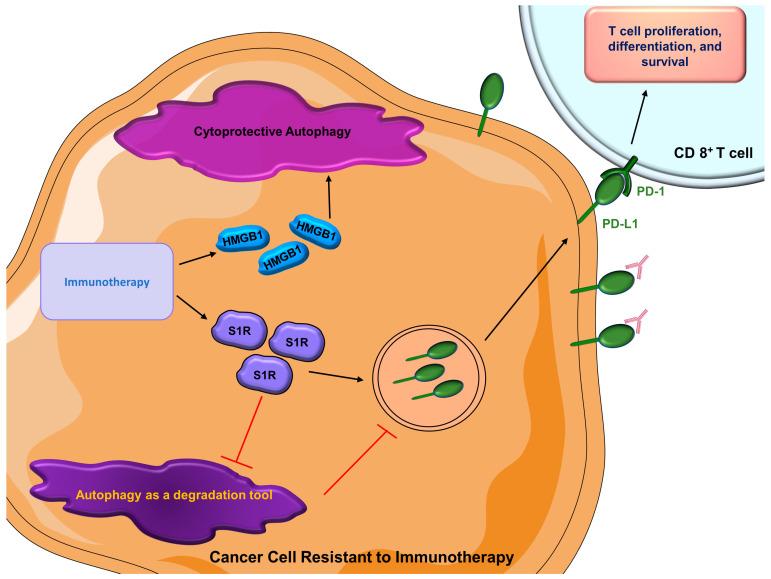
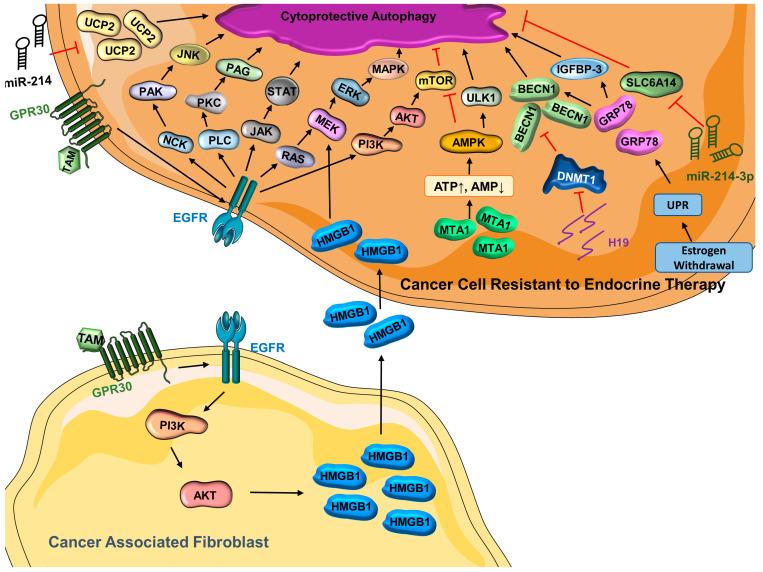
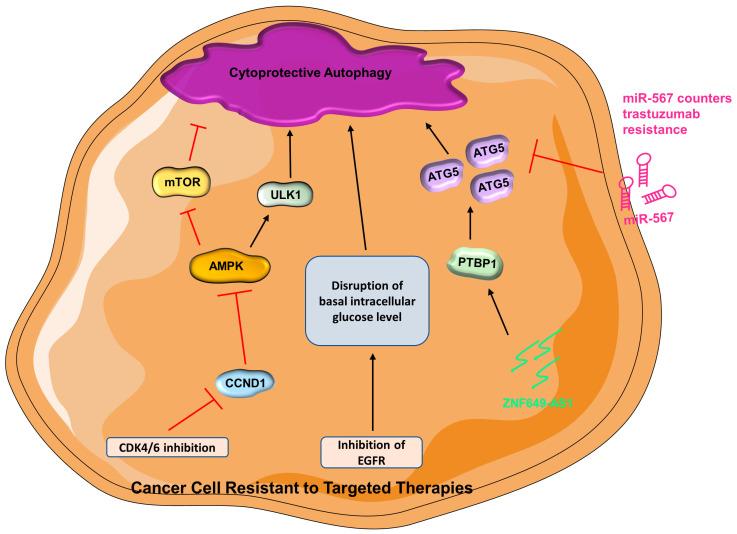
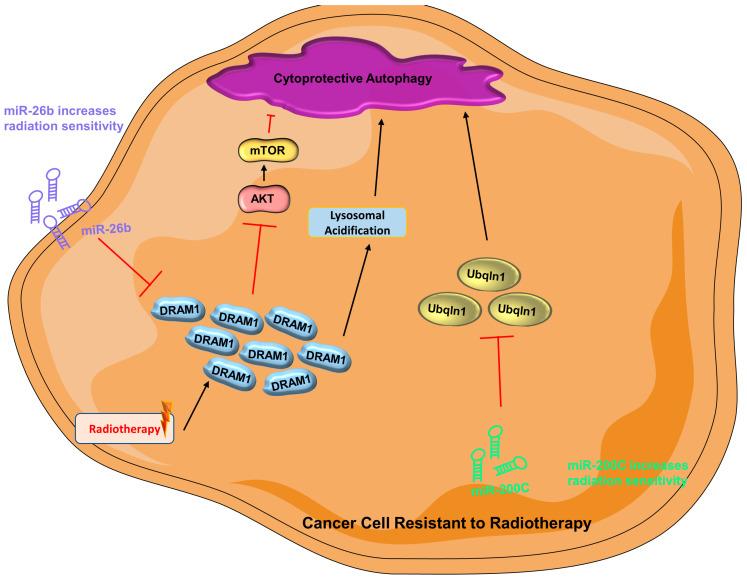
Despite an increase in the incidence of breast cancer worldwide, overall prognosis has been consistently improving owing to the development of multiple targeted therapies and novel combination regimens including endocrine therapies, aromatase inhibitors, Her2-targeted therapies, and cdk4/6 inhibitors. Immunotherapy is also being actively examined for some breast cancer subtypes. This overall positive outlook is marred by the development of resistance or reduced efficacy of the drug combinations, but the underlying mechanisms are somewhat unclear. It is interesting to note that cancer cells quickly adapt and evade most therapies by activating autophagy, a catabolic process designed to recycle damaged cellular components and provide energy. In this review, we discuss the role of autophagy and autophagy-associated proteins in breast cancer growth, drug sensitivity, tumor dormancy, stemness, and recurrence. We further explore how autophagy intersects and reduces the efficacy of endocrine therapies, targeted therapies, radiotherapy, chemotherapies as well as immunotherapy via modulating various intermediate proteins, miRs, and lncRNAs. Lastly, the potential application of autophagy inhibitors and bioactive molecules to improve the anticancer effects of drugs by circumventing the cytoprotective autophagy is discussed.
尽管全球乳腺癌的发病率有所增加,但由于多种靶向治疗和新的联合治疗方案的发展,包括内分泌治疗、芳香化酶抑制剂、Her2 靶向治疗和 CDK4/6 抑制剂,总体预后一直在持续改善。免疫疗法也正在积极研究一些乳腺癌亚型。这种整体积极的前景因药物组合的耐药性或疗效降低而受到影响,但潜在机制尚不清楚。有趣的是,癌细胞通过激活自噬来快速适应和逃避大多数治疗,自噬是一种旨在回收受损细胞成分并提供能量的分解代谢过程。在这篇综述中,我们讨论了自噬及其相关蛋白在乳腺癌生长、药物敏感性、肿瘤休眠、干性和复发中的作用。我们进一步探讨了自噬如何通过调节各种中间蛋白、miRs 和 lncRNAs 来干扰内分泌治疗、靶向治疗、放疗、化疗以及免疫疗法的疗效。最后,讨论了自噬抑制剂和生物活性分子的潜在应用,通过绕过细胞保护自噬来提高药物的抗癌效果。

 Zotero 插件