
β-连环蛋白激活在肝细胞癌肿瘤免疫微环境及免疫治疗中的作用
Role of β-Catenin Activation in the Tumor Immune Microenvironment and Immunotherapy of Hepatocellular Carcinoma.
作者信息
Morita Masahiro, Nishida Naoshi, Aoki Tomoko, Chishina Hirokazu, Takita Masahiro, Ida Hiroshi, Hagiwara Satoru, Minami Yasunori, Ueshima Kazuomi, Kudo Masatoshi
机构信息
Department of Gastroenterology and Hepatology, Kindai University Faculty of Medicine, 377-2 Ohno-Higashi, Osaka-Sayama 589-8511, Japan.
出版信息
Cancers (Basel). 2023 Apr 15;15(8):2311. doi: 10.3390/cancers15082311.
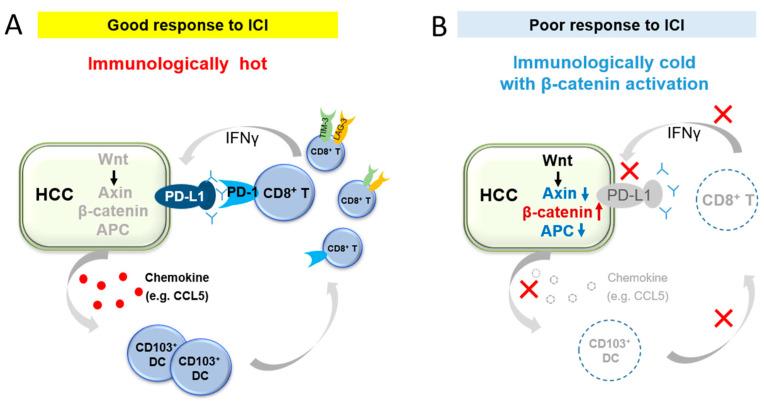
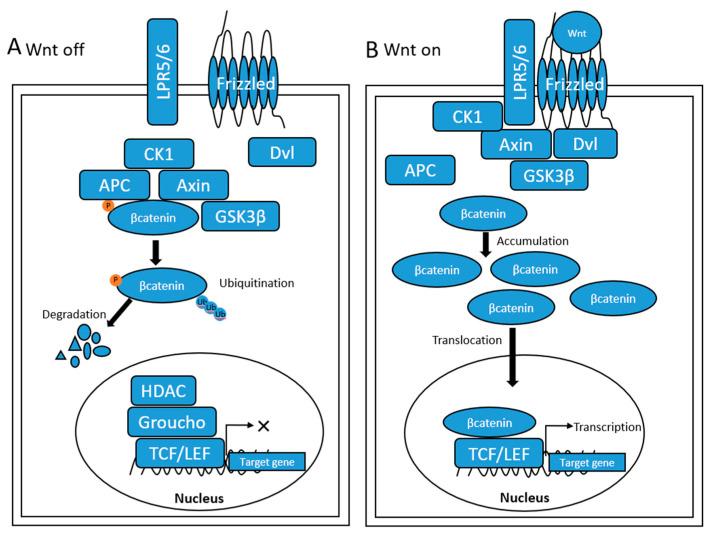
Recently, the therapeutic combination of atezolizumab and bevacizumab was widely used to treat advanced hepatocellular carcinoma (HCC). According to recent clinical trials, immune checkpoint inhibitors (ICIs) and molecular target agents are expected to be key therapeutic strategies in the future. Nonetheless, the mechanisms underlying molecular immune responses and immune evasion remain unclear. The tumor immune microenvironment plays a vital role in HCC progression. The infiltration of CD8-positive cells into tumors and the expression of immune checkpoint molecules are key factors in this immune microenvironment. Specifically, Wnt/β catenin pathway activation causes "immune exclusion", associated with poor infiltration of CD8-positive cells. Some clinical studies suggested an association between ICI resistance and β-catenin activation in HCC. Additionally, several subclassifications of the tumor immune microenvironment were proposed. The HCC immune microenvironment can be broadly divided into inflamed class and non-inflamed class, with several subclasses. β-catenin mutations are important factors in immune subclasses; this may be useful when considering therapeutic strategies as β-catenin activation may serve as a biomarker for ICI. Various types of β-catenin modulators were developed. Several kinases may also be involved in the β-catenin pathway. Therefore, combinations of β-catenin modulators, kinase inhibitors, and ICIs may exert synergistic effects.
最近,阿替利珠单抗和贝伐单抗的联合疗法被广泛用于治疗晚期肝细胞癌(HCC)。根据最近的临床试验,免疫检查点抑制剂(ICIs)和分子靶向药物有望成为未来的关键治疗策略。尽管如此,分子免疫反应和免疫逃逸的潜在机制仍不清楚。肿瘤免疫微环境在HCC进展中起着至关重要的作用。CD8阳性细胞向肿瘤的浸润以及免疫检查点分子的表达是这种免疫微环境中的关键因素。具体而言,Wnt/β-连环蛋白通路的激活会导致“免疫排斥”,这与CD8阳性细胞的浸润不良有关。一些临床研究表明,HCC中ICI耐药与β-连环蛋白激活之间存在关联。此外,还提出了肿瘤免疫微环境的几种亚分类。HCC免疫微环境可大致分为炎症类和非炎症类,并包含几个亚类。β-连环蛋白突变是免疫亚类中的重要因素;在考虑治疗策略时这可能会有所帮助,因为β-连环蛋白激活可能作为ICI的生物标志物。已开发出多种类型的β-连环蛋白调节剂。几种激酶也可能参与β-连环蛋白通路。因此,β-连环蛋白调节剂、激酶抑制剂和ICIs的联合使用可能会产生协同效应。
 Zotero 插件