
2019年冠状病毒病对全科医疗中电子重复配药的影响。
The impact of COVID-19 on electronic repeat dispensing (eRD) in general practice.
作者信息
Sharma Raman, Javid Farideh A
机构信息
Parkside Medical Practice, Horton Park Health Centre, Bradford, BD7 3EG, UK.
Department of Pharmacy, School of Applied Sciences, University of Huddersfield, Huddersfield, HD1 3DH, UK.
出版信息
J Pharm Policy Pract. 2023 May 17;16(1):66. doi: 10.1186/s40545-023-00566-9.
BACKGROUND
Electronic repeat dispensing (eRD) has been part of the community pharmacy contact since 2005 and a requirement in the General Medical Services contract since 2019. NHS England highlights benefits of eRD as increased efficiency in general practice of 2.7 million hours annually if 80% of all repeat prescriptions are issued as eRD. Despite clear benefits to patients, community pharmacies and general practices, the uptake of eRD remains low and variable across general practices in West Yorkshire, UK.
OBJECTIVES
To investigate the impact of COVID-19 on eRD in general practice and understand the key enablers to its uptake.
METHODS
A 19-item questionnaire was developed and piloted during cognitive interviews. A cross-sectional survey was conducted via emails to general practices in West Yorkshire, UK, between July 2020 and November 2020.
RESULTS
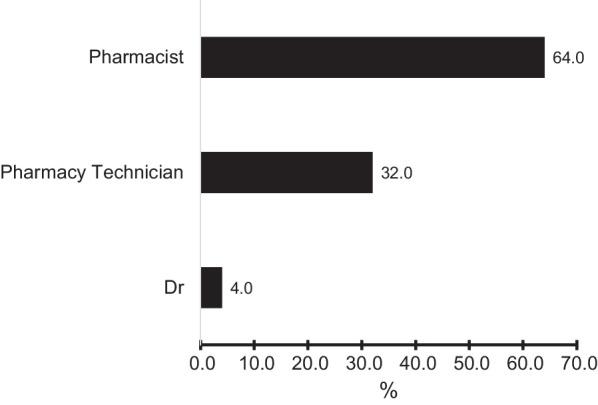
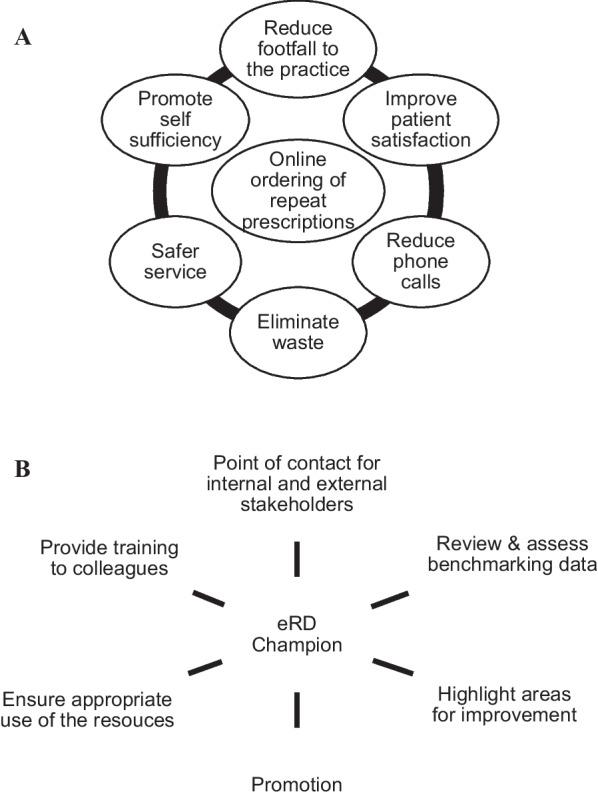
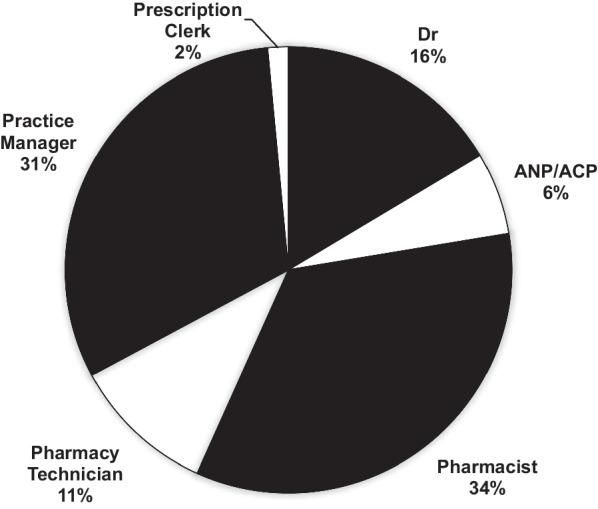
Sixty-seven complete responses were received (23 pharmacists, 21 practice managers, 11 general practitioners, seven pharmacy technicians, four advanced practitioners, one prescription clerk). 59% of respondents were aware of eRD uptake in their surgery (mean value 4.56% ± 0.229%). Higher uptake of eRD was demonstrated where the general practice integrated eRD into routine workflows during the repeat prescription reauthorisation process (P < 0.001) and where an eRD service lead is nominated (P = 0.04).
CONCLUSION
Utilising eRD in the respective practices should be considered due to potential efficiency gains and the increase in average eRD utilisation observed in the study participating general practices was from 7.2% average uptake in March 2020 to 10.4% November 2020, as the response to COVID-19. The stated benefits of eRD by NHS England of 2.7 million hours per annum predates the roll out of electronic transmission of prescriptions suggesting further research is needed to quantify the efficiency gains in present NHS general practice environments.
背景
电子重复配药(eRD)自2005年起成为社区药房服务的一部分,自2019年起成为全科医疗服务合同的一项要求。英国国家医疗服务体系(NHS)英格兰地区强调,如果所有重复处方中有80%以电子重复配药的形式开具,那么每年可为全科医疗提高270万小时的效率。尽管电子重复配药对患者、社区药房和全科医疗都有明显益处,但在英国西约克郡,其采用率仍然很低,且各全科医疗之间存在差异。
目的
调查新冠疫情对全科医疗中电子重复配药的影响,并了解其采用的关键推动因素。
方法
编制了一份包含19个条目的问卷,并在认知访谈期间进行了预试验。2020年7月至2020年11月期间,通过电子邮件对英国西约克郡的全科医疗进行了横断面调查。
结果
共收到67份完整回复(23名药剂师、21名业务经理、11名全科医生、7名药房技术员、4名高级从业者、1名处方员)。59%的受访者知晓其所在诊所的电子重复配药采用情况(平均值4.56%±0.229%)。在重复处方重新授权过程中,将电子重复配药纳入常规工作流程的全科医疗(P<0.001)以及指定了电子重复配药服务负责人的地方(P=0.04),电子重复配药的采用率更高。
结论
鉴于潜在的效率提升,各诊所应考虑使用电子重复配药。在参与研究的全科医疗中,观察到电子重复配药的平均使用率从2020年3月的7.2%上升至2020年11月的10.4%,这是对新冠疫情的应对措施。英国国家医疗服务体系英格兰地区宣称的电子重复配药每年节省270万小时的效益早于处方电子传输的推出,这表明需要进一步研究以量化当前英国国家医疗服务体系全科医疗环境中的效率提升情况。


 Zotero 插件