
使用液相色谱-串联质谱法(LC-MS/MS)优化靶向植物蛋白质组学
Optimization of Targeted Plant Proteomics Using Liquid Chromatography with Tandem Mass Spectrometry (LC-MS/MS).
作者信息
Li Weiwei, Keller Arturo A
机构信息
Bren School of Environmental Science and Management, University of California at Santa Barbara, Santa Barbara, California 93106, United States.
出版信息
ACS Agric Sci Technol. 2023 Apr 17;3(5):421-431. doi: 10.1021/acsagscitech.3c00017. eCollection 2023 May 15.
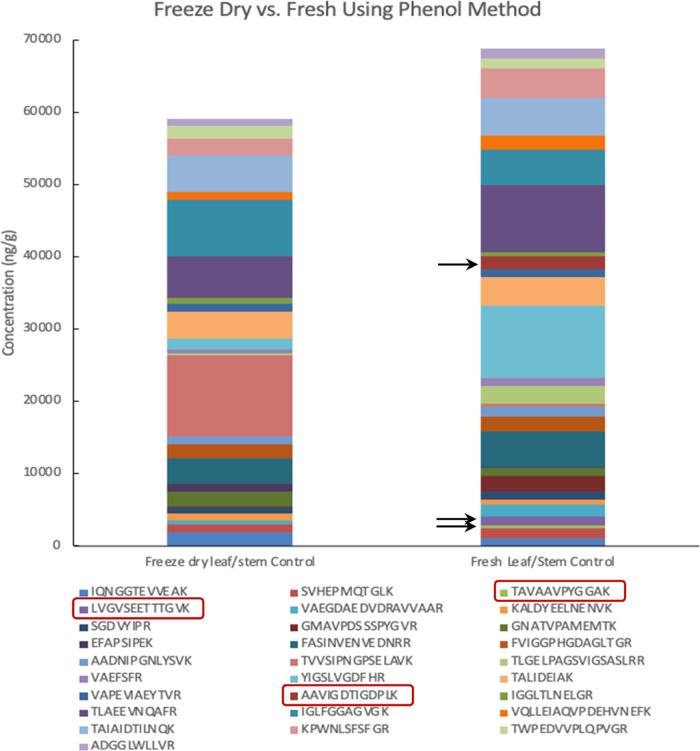
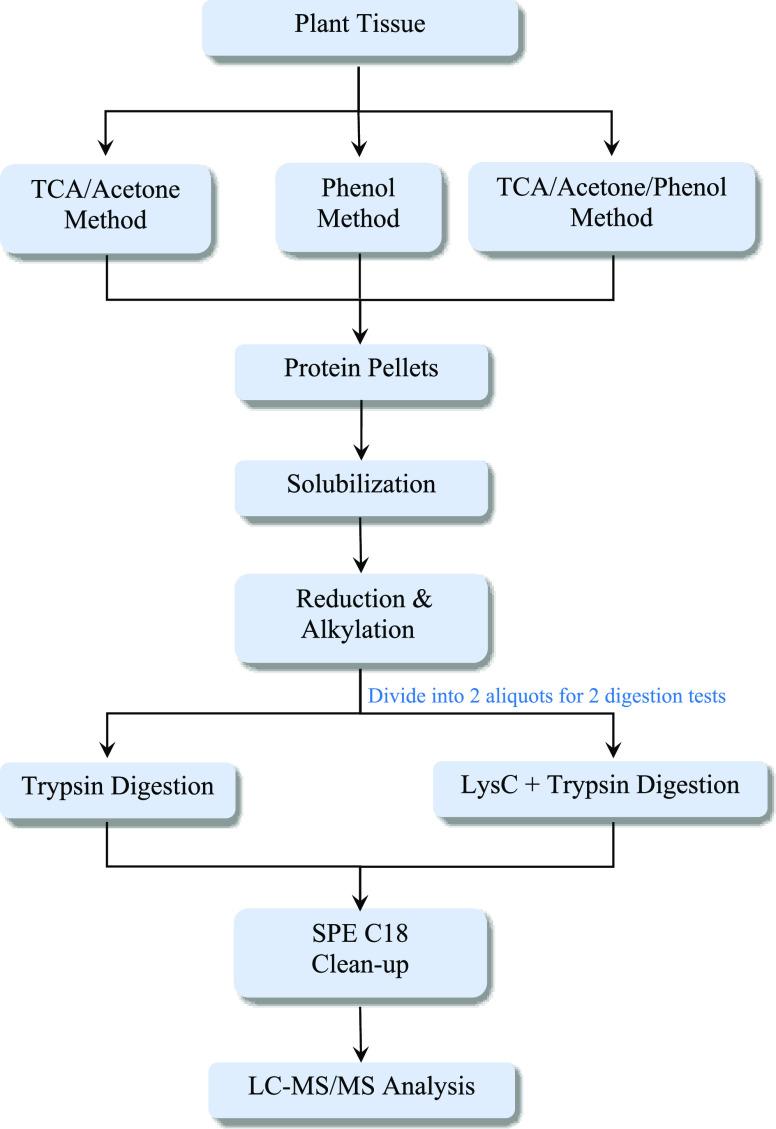
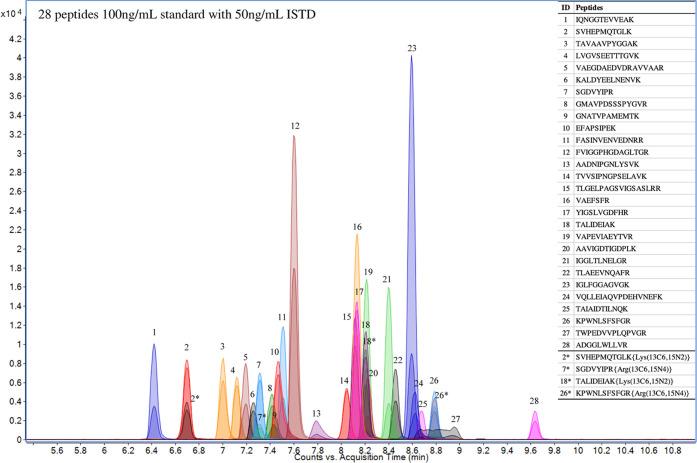
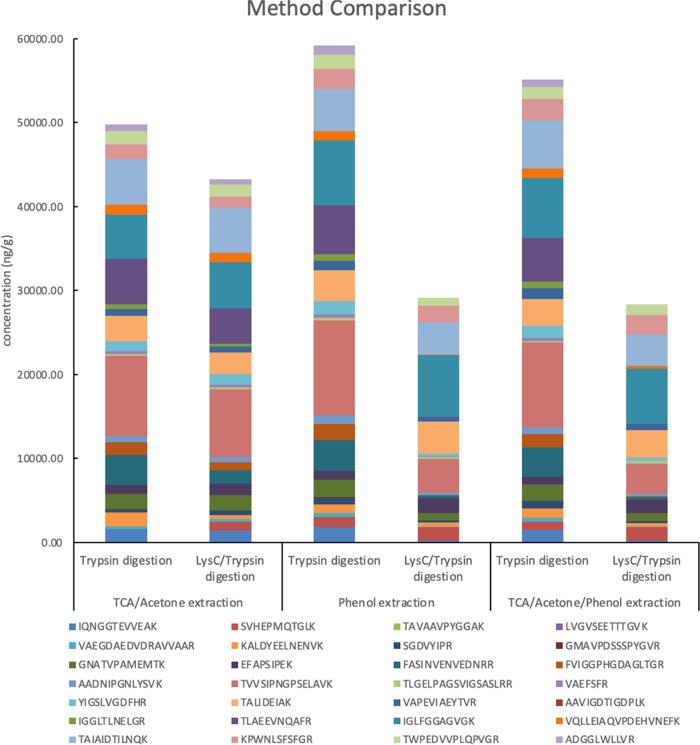
This study was conducted to optimize a targeted plant proteomics approach from signature peptide selection and liquid chromatography with tandem mass spectrometry (LC-MS/MS) analytical method development and optimization to sample preparation method optimization. Three typical protein extraction and precipitation methods, including trichloroacetic acid (TCA)/acetone method, phenol method, and TCA/acetone/phenol method, and two digestion methods, including trypsin digestion and LysC/trypsin digestion, were evaluated for selected proteins related to the impact of engineered nanomaterials (ENMs) on wheat () plant growth. In addition, we compared two plant tissue homogenization methods: grinding freeze-dried tissue and fresh tissue into a fine powder using a mortar and pestle aided with liquid nitrogen. Wheat plants were grown under a 16 h photoperiod (light intensity 150 μmol·m·s) for 4 weeks at 22 °C with a relative humidity of 60% and were watered daily to maintain a 70-90% water content in the soil. Processed samples were analyzed with an optimized LC-MS/MS method. The concentration of selected signature peptides for the wheat proteins of interest indicated that the phenol extraction method using fresh plant tissue, coupled with trypsin digestion, was the best sample preparation method for the targeted proteomics study. Overall, the optimized approach yielded the highest total peptide concentration (68,831 ng/g, 2.4 times the lowest concentration) as well as higher signature peptide concentrations for most peptides (19 out of 28). In addition, three of the signature peptides could only be detected using the optimized approach. This study provides a workflow for optimizing targeted proteomics studies.
本研究旨在优化一种靶向植物蛋白质组学方法,从特征肽段选择、液相色谱串联质谱(LC-MS/MS)分析方法的开发与优化到样品制备方法的优化。针对与工程纳米材料(ENMs)对小麦()植物生长影响相关的选定蛋白质,评估了三种典型的蛋白质提取和沉淀方法,包括三氯乙酸(TCA)/丙酮法、酚法和TCA/丙酮/酚法,以及两种消化方法,包括胰蛋白酶消化和LysC/胰蛋白酶消化。此外,我们比较了两种植物组织匀浆方法:使用研钵和杵在液氮辅助下将冻干组织和新鲜组织研磨成细粉。小麦植株在16小时光周期(光强150 μmol·m·s)、22°C、相对湿度60%的条件下生长4周,每天浇水以保持土壤含水量在70 - 90%。用优化的LC-MS/MS方法分析处理后的样品。目标小麦蛋白质的选定特征肽段浓度表明,使用新鲜植物组织的酚提取方法结合胰蛋白酶消化,是靶向蛋白质组学研究的最佳样品制备方法。总体而言,优化后的方法产生了最高的总肽浓度(68,831 ng/g,是最低浓度的2.4倍),并且大多数肽段(28个中的19个)的特征肽段浓度更高。此外,其中三个特征肽段只能使用优化后的方法检测到。本研究提供了一种优化靶向蛋白质组学研究的工作流程。

 Zotero 插件