
一种条件性RNA聚合酶II单启动子驱动HIV诱导的、CRISPR介导的细胞周期蛋白T1抑制及HIV抑制。
A conditional RNA Pol II mono-promoter drives HIV-inducible, CRISPR-mediated cyclin T1 suppression and HIV inhibition.
作者信息
Chinnapaiyan Srinivasan, Santiago Maria-Jose, Panda Kingshuk, Rahman Md Sohanur, Alluin Jessica, Rossi John, Unwalla Hoshang J
机构信息
Department of Immunology and Nanomedicine, Institute of Neuroimmune Pharmacology, Herbert Wertheim College of Medicine, Florida International University, Miami, FL 33199, USA.
Beckman Research Institute of the City of Hope National Medical Center, Monrovia Biomedical Research Center MBRC, 1218 S. Fifth Av., Monrovia, CA 91008, USA.
出版信息
Mol Ther Nucleic Acids. 2023 Apr 19;32:553-565. doi: 10.1016/j.omtn.2023.04.011. eCollection 2023 Jun 13.
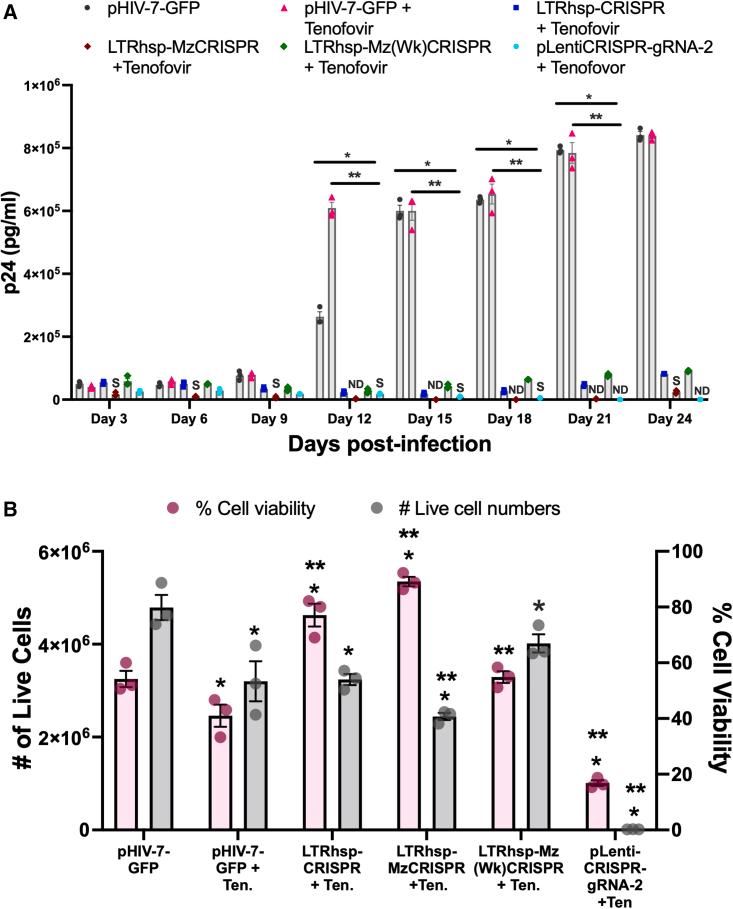
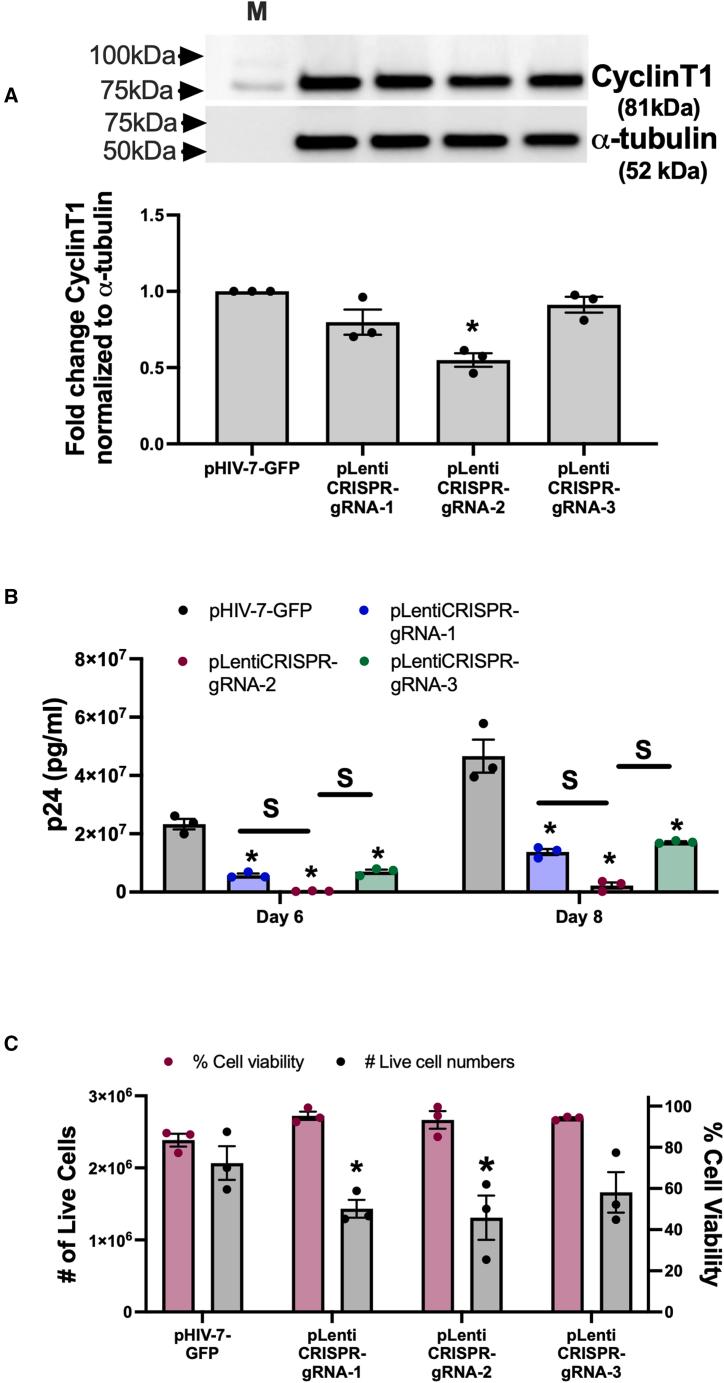
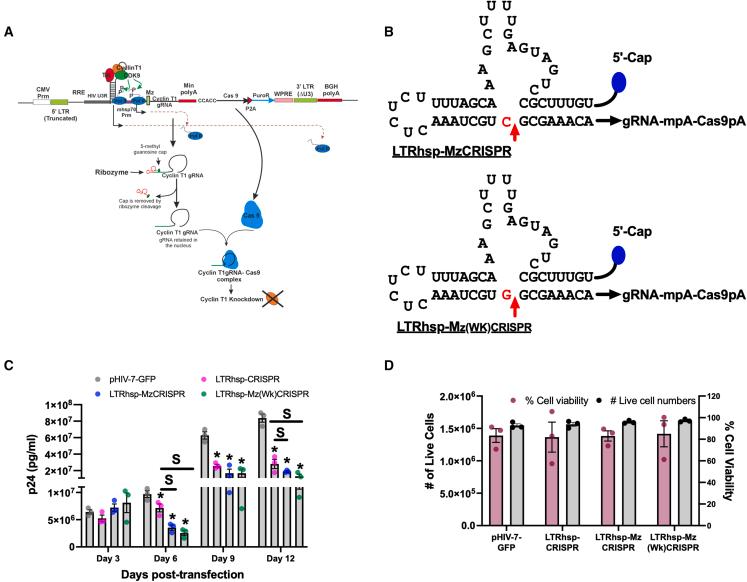
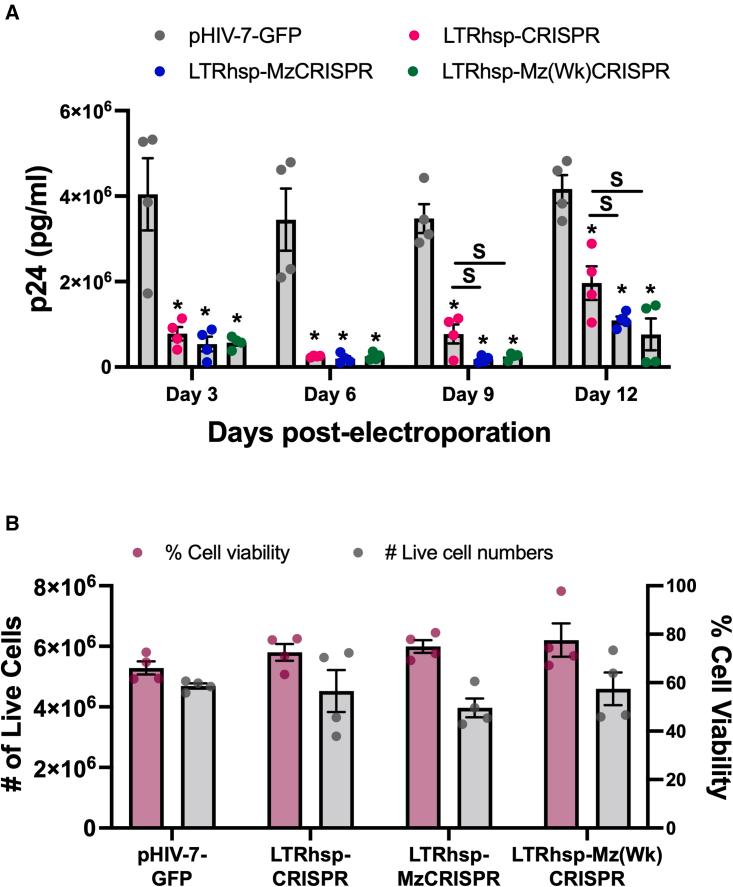
Gene editing using clustered regularly interspaced short palindromic repeats (CRISPR) targeted to HIV proviral DNA has shown excision of HIV from infected cells. However, CRISPR-based HIV excision is vulnerable to viral escape. Targeting cellular co-factors provides an attractive yet risky alternative to render viral escape irrelevant. Cyclin T1 is a critical modulator of HIV transcription and mediates recruitment of positive transcription elongation factor-b (P-TEFb) kinase for transcriptional elongation. Hence, a CRISPR-mediated cyclin T1 inactivation will silence HIV transcription, locking it in an inactive form in the cell and thereby serving as an effective antiviral and possibly effecting a functional cure. However, cellular genes play important roles, and their uncontrolled inhibition can promote undesirable effects. Here, we demonstrate a conditional inducible RNA polymerase II (RNA Pol II) mono-promoter-based co-expression of a CRISPR system targeting cyclin T1 from a single transcription unit. Co-expression of guide RNA (gRNA) and CRISPR-associated protein (Cas9) is observed only in HIV-infected cells and leads to sustained HIV suppression in stringent chronically infected cell lines as well as in T cell lines. We further show that incorporation of -acting ribozymes immediately upstream of the gRNA further enhances HIV silencing.
使用靶向HIV前病毒DNA的成簇规律间隔短回文重复序列(CRISPR)进行基因编辑已显示可从感染细胞中切除HIV。然而,基于CRISPR的HIV切除易受病毒逃逸影响。靶向细胞辅助因子提供了一种有吸引力但有风险的替代方法,使病毒逃逸无关紧要。细胞周期蛋白T1是HIV转录的关键调节因子,并介导正转录延伸因子b(P-TEFb)激酶的募集以进行转录延伸。因此,CRISPR介导的细胞周期蛋白T1失活将使HIV转录沉默,将其锁定在细胞中的无活性形式,从而作为一种有效的抗病毒方法,并可能实现功能性治愈。然而,细胞基因起着重要作用,对它们的无控制抑制会产生不良影响。在这里,我们展示了一种基于条件诱导RNA聚合酶II(RNA Pol II)单启动子的CRISPR系统的共表达,该系统从单个转录单元靶向细胞周期蛋白T1。仅在HIV感染的细胞中观察到引导RNA(gRNA)和CRISPR相关蛋白(Cas9)的共表达,并导致在严格的慢性感染细胞系以及T细胞系中持续抑制HIV。我们进一步表明,在gRNA上游紧邻引入自切割核酶可进一步增强HIV沉默。



 Zotero 插件