
健康教育干预措施对印度30岁以下人群HPV疫苗接种率、认知度和接受度的影响:一项系统检索的文献综述
The impact of health education interventions on HPV vaccination uptake, awareness, and acceptance among people under 30 years old in India: a literature review with systematic search.
作者信息
Krokidi Eleni, Rao Arathi P, Ambrosino Elena, Thomas Pierre P M
机构信息
Faculty of Health, Medicine and Life Sciences, Maastricht University, Maastricht, Netherlands.
Prasanna School of Public Health, Manipal Academy of Higher Education, Manipal, India.
出版信息
Front Reprod Health. 2023 May 5;5:1151179. doi: 10.3389/frph.2023.1151179. eCollection 2023.
BACKGROUND
The HPV vaccine is used as one of the main prevention tools for HPV-related cancers globally, yet it is not part of the Indian National Immunization program. In light of the introduction of the indigenous vaccine, we examine the effectiveness of health education about uptake, acceptance, and awareness.
METHODS
Research was performed in the following databases: PubMed, CINAHL, Scopus, and Embase to identify studies between 2008 and 2022. Studies were included if: they were conducted in India including primary data research and health education intervention, and participants were between 9 and 29 years old.
RESULTS
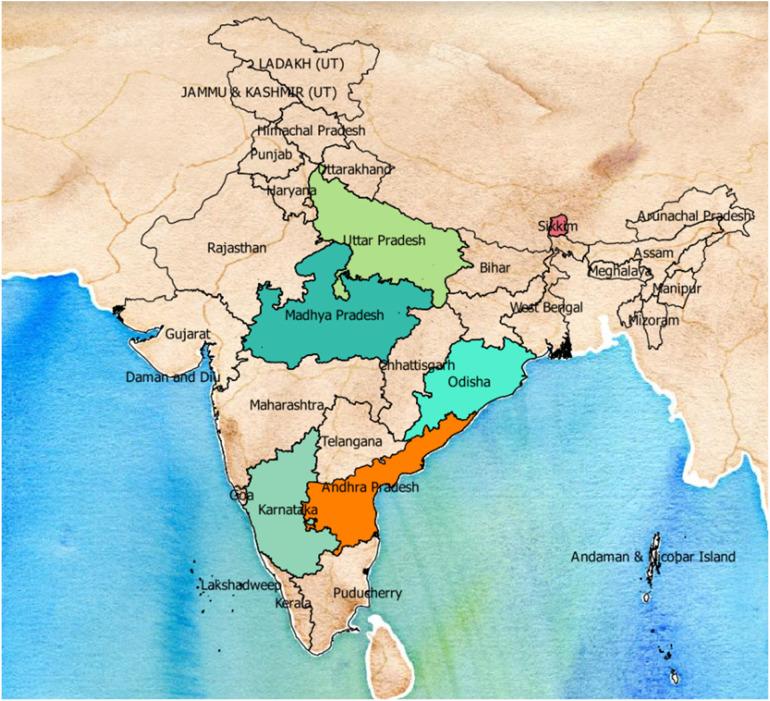
Out of the 10.952 results, 7 studies were included. Four studies focused on adolescent girls, aged from 9 to 20 years old, and 3 on university students aged from 17 to 26 years. Five studies were implemented in urban areas and 2 in rural areas. Health education interventions proved to be effective in increasing uptake, awareness, and acceptance of the HPV vaccine. The barriers included among others: cost, lack of awareness, and cultural barriers.
CONCLUSION
Observations from this study outline immediate action for policymakers to educate and encourage the young population toward HPV vaccination. Future programs should be aimed at different population groups and be adjusted according to their special characteristics and needs. Attention should be given to the male population and marginalized groups. The involvement of various stakeholders proved to be beneficial, and it is highly recommended.
背景
人乳头瘤病毒(HPV)疫苗是全球预防HPV相关癌症的主要工具之一,但它并非印度国家免疫计划的一部分。鉴于本土疫苗的推出,我们研究了关于HPV疫苗接种、接受度和认知度的健康教育的有效性。
方法
在以下数据库中进行研究:PubMed、护理学与健康领域数据库(CINAHL)、Scopus和Embase,以识别2008年至2022年期间的研究。纳入标准为:研究在印度进行,包括原始数据研究和健康教育干预,且参与者年龄在9至29岁之间。
结果
在10952条结果中,纳入了7项研究。4项研究聚焦于9至20岁的青春期女孩,3项研究聚焦于17至26岁的大学生。5项研究在城市地区开展,2项在农村地区开展。健康教育干预在提高HPV疫苗接种率、认知度和接受度方面被证明是有效的。障碍包括:成本、缺乏认知和文化障碍等。
结论
本研究的观察结果为政策制定者提出了立即采取行动的建议,即对年轻人群进行HPV疫苗接种的教育和鼓励。未来的项目应针对不同人群,并根据其特殊特征和需求进行调整。应关注男性人群和边缘化群体。事实证明,各利益相关者的参与是有益的,强烈建议这样做。

 Zotero 插件