
性别差异的复杂性及其对阿尔茨海默病的影响。
Complexity of Sex Differences and Their Impact on Alzheimer's Disease.
作者信息
Kadlecova Marion, Freude Kristine, Haukedal Henriette
机构信息
Department of Veterinary and Animal Sciences, Faculty of Health and Medical Sciences, University of Copenhagen, 1870 C Frederiksberg, Denmark.
出版信息
Biomedicines. 2023 Apr 24;11(5):1261. doi: 10.3390/biomedicines11051261.
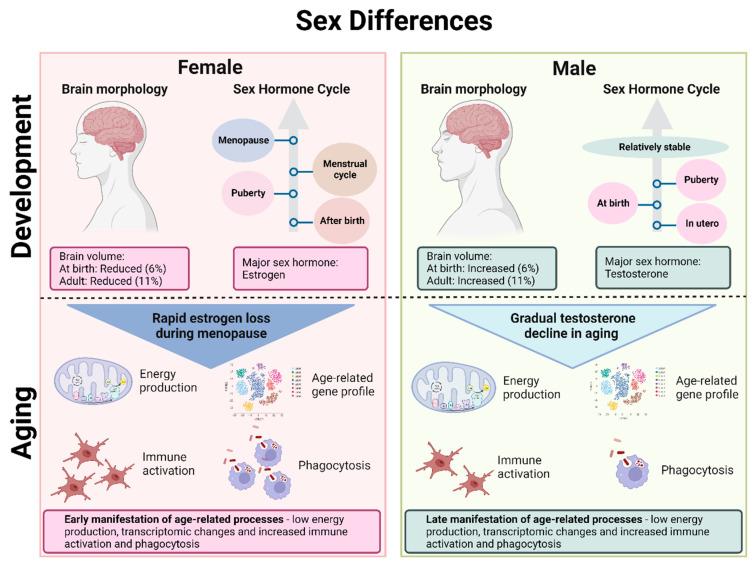
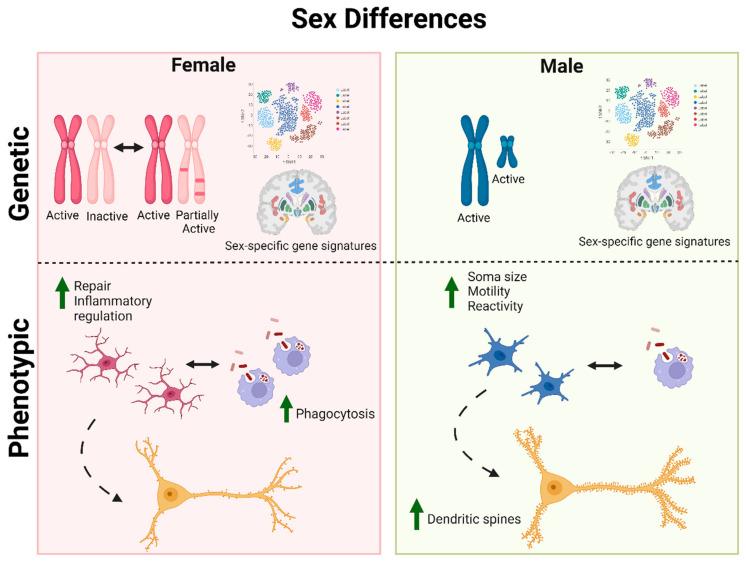
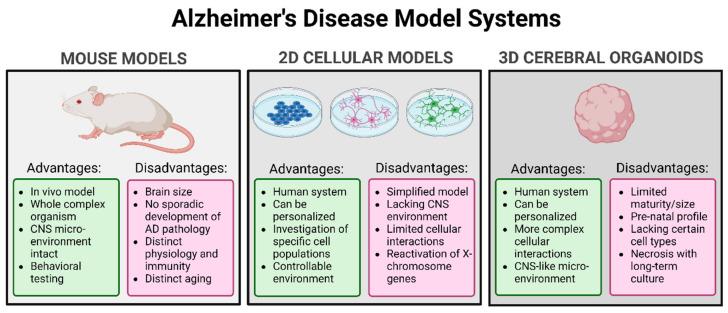
Sex differences are present in brain morphology, sex hormones, aging processes and immune responses. These differences need to be considered for proper modelling of neurological diseases with clear sex differences. This is the case for Alzheimer's disease (AD), a fatal neurodegenerative disorder with two-thirds of cases diagnosed in women. It is becoming clear that there is a complex interplay between the immune system, sex hormones and AD. Microglia are major players in the neuroinflammatory process occurring in AD and have been shown to be directly affected by sex hormones. However, many unanswered questions remain as the importance of including both sexes in research studies has only recently started receiving attention. In this review, we provide a summary of sex differences and their implications in AD, with a focus on microglia action. Furthermore, we discuss current available study models, including emerging complex microfluidic and 3D cellular models and their usefulness for studying hormonal effects in this disease.
大脑形态、性激素、衰老过程和免疫反应中存在性别差异。对于具有明显性别差异的神经疾病进行恰当建模时,需要考虑这些差异。阿尔茨海默病(AD)就是这样一种疾病,它是一种致命的神经退行性疾病,三分之二的病例在女性中被诊断出来。越来越明显的是,免疫系统、性激素和AD之间存在复杂的相互作用。小胶质细胞是AD中发生的神经炎症过程的主要参与者,并且已被证明直接受到性激素的影响。然而,由于在研究中纳入两性的重要性直到最近才开始受到关注,许多问题仍未得到解答。在这篇综述中,我们总结了AD中的性别差异及其影响,重点是小胶质细胞的作用。此外,我们讨论了当前可用的研究模型,包括新兴的复杂微流控和3D细胞模型及其在研究该疾病中激素效应方面的有用性。


 Zotero 插件