
基于 CFPD-HCD 分析的上呼吸道黏液层中病毒动力学的可视化预测和参数优化。
Visual prediction and parameter optimization of viral dynamics in the mucus milieu of the upper airway based on CFPD-HCD analysis.
机构信息
Interdisciplinary Graduate School of Engineering Sciences, Kyushu University, Japan.
Faculty of Engineering Sciences, Kyushu University, Japan.
出版信息
Comput Methods Programs Biomed. 2023 Aug;238:107622. doi: 10.1016/j.cmpb.2023.107622. Epub 2023 May 25.
BACKGROUND AND OBJECTIVE
Respiratory diseases caused by viruses are a major human health problem. To better control the infection and understand the pathogenesis of these diseases, this paper studied SARS-CoV-2, a novel coronavirus outbreak, as an example.
METHODS
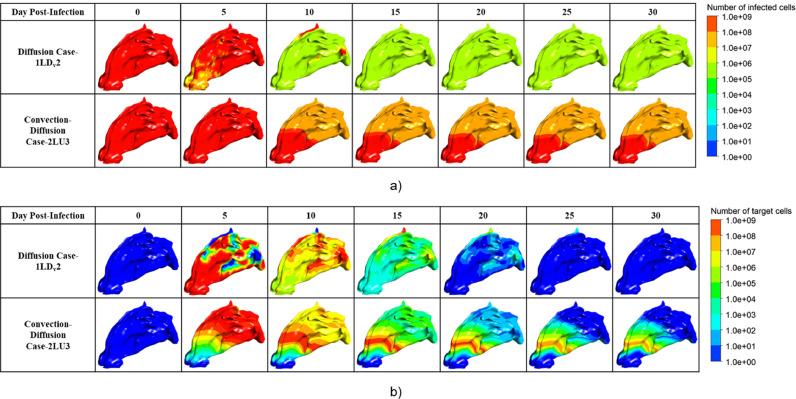
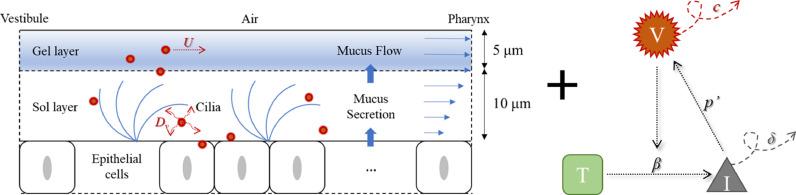
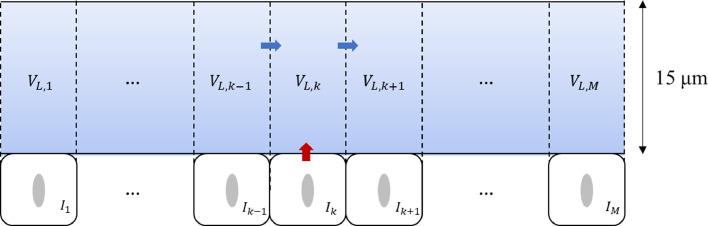
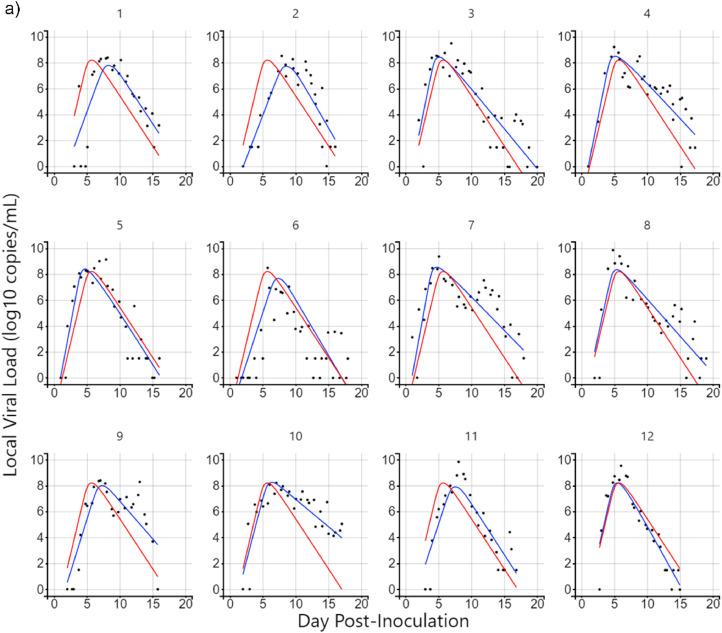
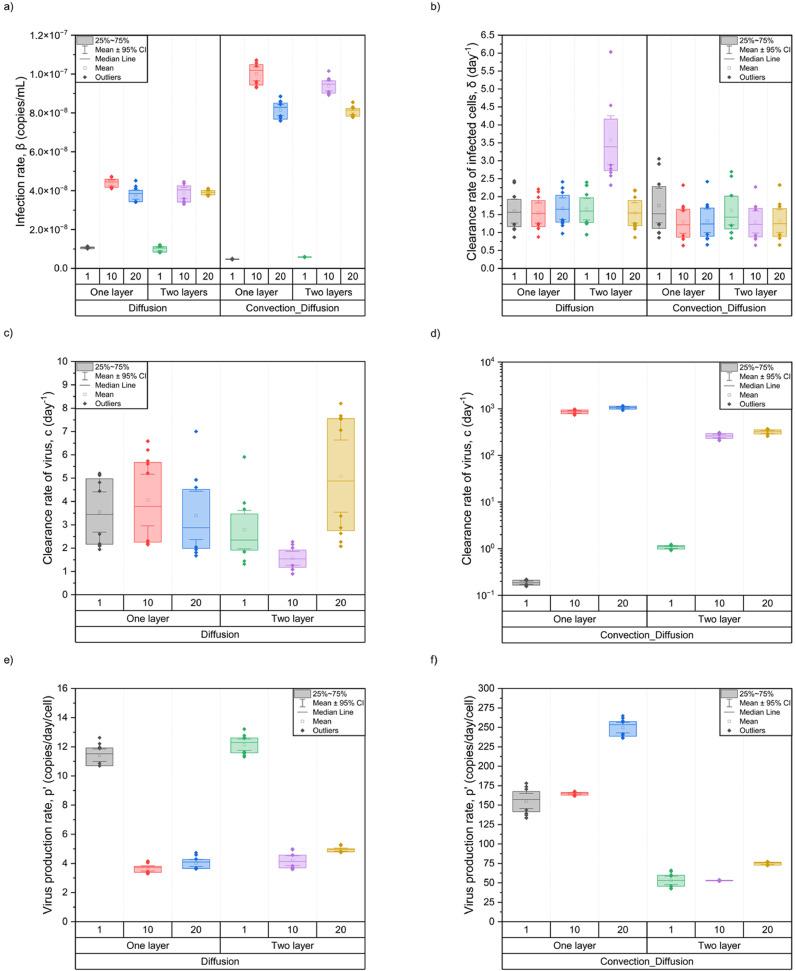
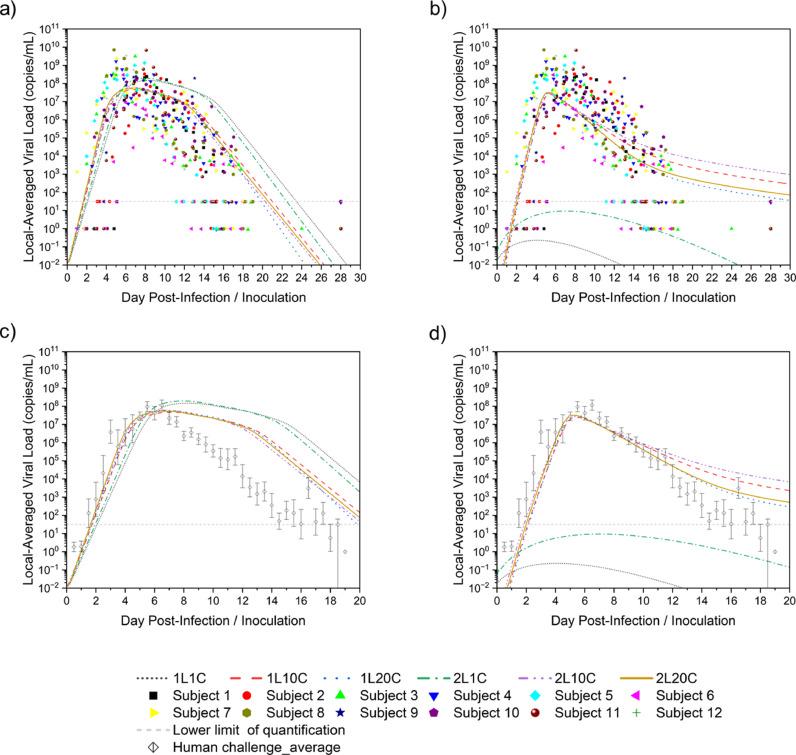
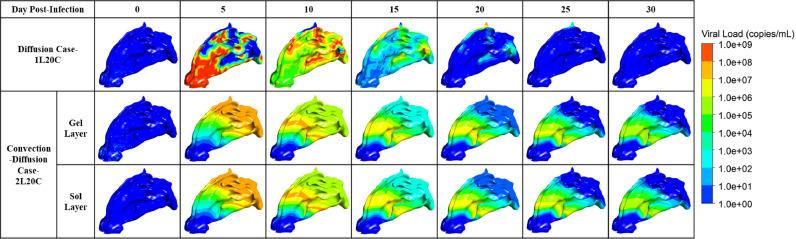
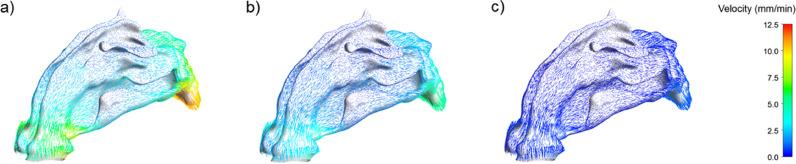
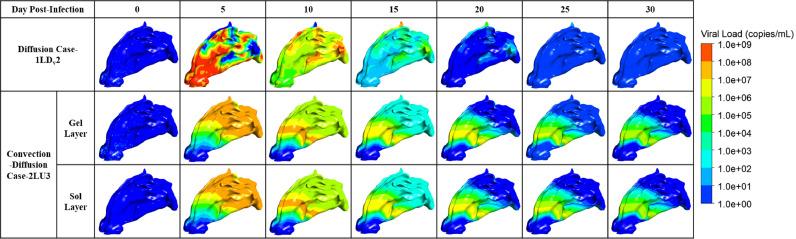
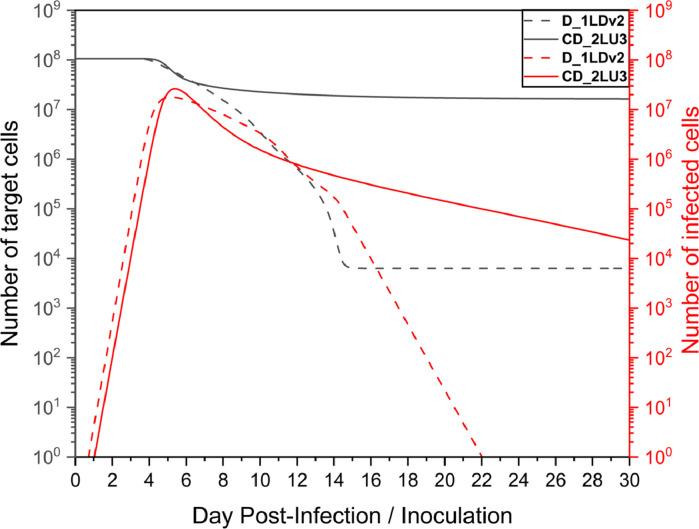
Based on coupled computational fluid and particle dynamics (CFPD) and host-cell dynamics (HCD) analyses, we studied the viral dynamics in the mucus layer of the human nasal cavity-nasopharynx. To reproduce the effect of mucociliary movement on the diffusive and convective transport of viruses in the mucus layer, a 3D-shell model was constructed using CT data of the upper respiratory tract (URT) of volunteers. Considering the mucus environment, the HCD model was established by coupling the target cell-limited model with the convection-diffusion term. Parameter optimization of the HCD model is the key problem in the simulation. Therefore, this study focused on the parameter optimization of the viral dynamics model, divided the geometric model into multiple compartments, and used Monolix to perform the nonlinear mixed effects (NLME) of pharmacometrics to discuss the influence of factors such as the number of mucus layers, number of compartments, diffusion rate, and mucus flow velocity on the prediction results.
RESULTS
The findings showed that sufficient experimental data can be used to estimate the corresponding parameters of the HCD model. The optimized convection-diffusion case with a two-layer multi-compartment low-velocity model could accurately predict the viral dynamics.
CONCLUSIONS
Its visualization process could explain the symptoms of the disease in the nose and contribute to the prevention and targeted treatment of respiratory diseases.
背景与目的
病毒引起的呼吸道疾病是一个重大的人类健康问题。为了更好地控制感染并了解这些疾病的发病机制,本文以 SARS-CoV-2(一种新型冠状病毒爆发)为例进行了研究。
方法
基于耦合计算流体和颗粒动力学(CFPD)和宿主细胞动力学(HCD)分析,我们研究了人类鼻腔-鼻咽黏液层中病毒的动力学。为了再现黏液纤毛运动对病毒在黏液层中扩散和对流传输的影响,使用志愿者上呼吸道(URT)的 CT 数据构建了一个 3D 壳模型。考虑到黏液环境,通过将靶细胞受限模型与对流-扩散项耦合,建立了 HCD 模型。HCD 模型的参数优化是模拟的关键问题。因此,本研究专注于病毒动力学模型的参数优化,将几何模型划分为多个隔室,并使用 Monolix 进行药物代谢动力学的非线性混合效应(NLME)分析,讨论了黏液层数、隔室数量、扩散率和黏液流速等因素对预测结果的影响。
结果
研究结果表明,可以使用足够的实验数据来估计 HCD 模型的相应参数。具有两层多隔室低流速模型的优化对流-扩散情况可以准确预测病毒动力学。
结论
其可视化过程可以解释鼻子疾病的症状,并有助于预防和靶向治疗呼吸道疾病。





 Zotero 插件