
血清脑源性神经营养因子对急性脑出血预后的预测价值:一项前瞻性观察性研究。
Prognostic potential of serum mesencephalic astrocyte-derived neurotrophic factor in acute intracerebral hemorrhage: a prospective observational study.
机构信息
Department of Neurology, The Quzhou Affiliated Hospital of Wenzhou Medical University, Quzhou People's Hospital, 100 Minjiang Road, Quzhou, Zhejiang Province, 324000, People's Republic of China.
Department of Clinical Pharmacy, The Second People's Hospital of Yuhang District, 80 Anle Road, Hangzhou, Zhejiang Province, 311121, People's Republic of China.
出版信息
BMC Neurol. 2023 Jun 2;23(1):213. doi: 10.1186/s12883-023-03254-y.
OBJECTIVE
Mesencephalic astrocyte-derived neurotrophic factor (MANF) expressions are dramatically up-regulated in injured brain tissues, thereby conferring neurological protective effects. We intended to determine significance of serum MANF as a prognostic biomarker of intracerebral hemorrhage (ICH).
METHODS
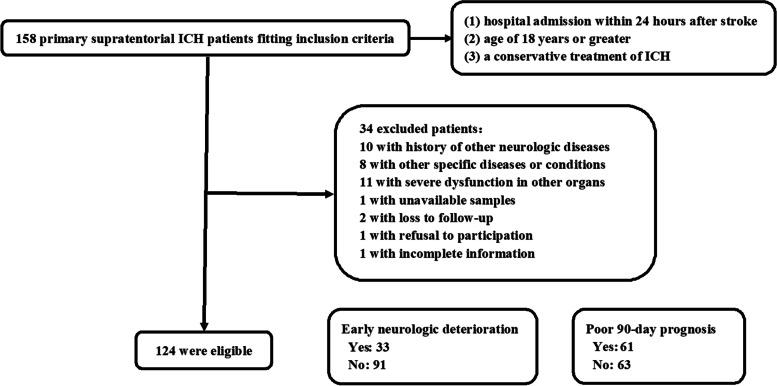
In this prospective, observational study done from February 2018 to July 2021, 124 patients with new-onset primary supratentorial ICH were consecutively enrolled. Also, a group of 124 healthy individuals constituted controls. Their serum MANF levels were detected using the Enzyme-Linked Immunosorbent Assay. National Institutes of Health Stroke Scale (NIHSS) and hematoma volume were designated as the two severity indicators. Early neurologic deterioration (END) was referred to as an increase of 4 or greater points in NIHSS scores or death at post-stroke 24 h. Post-stroke 90-day modified Rankin scale (mRS) scores of 3-6 was considered as a poor prognosis. Serum MANF levels were analyzed using multivariate analysis with respect to its association with stroke severity and prognosis.
RESULTS
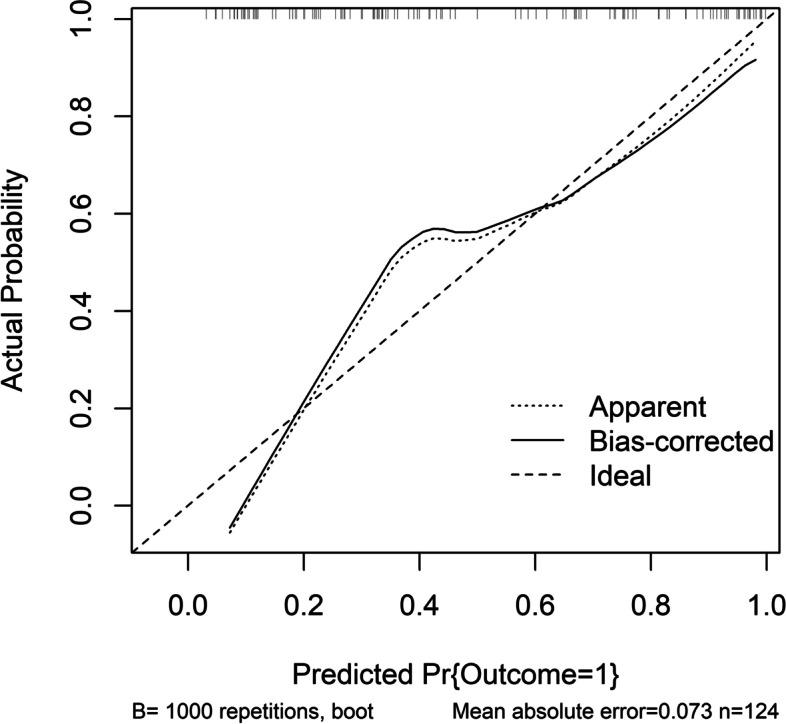
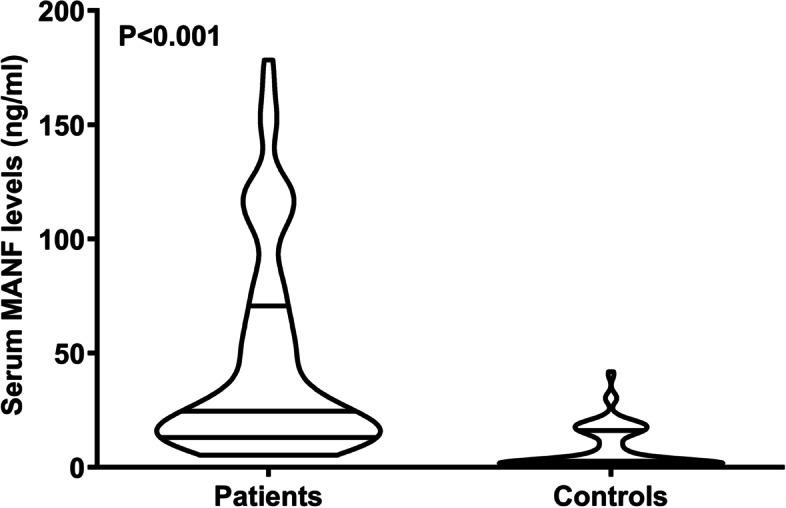
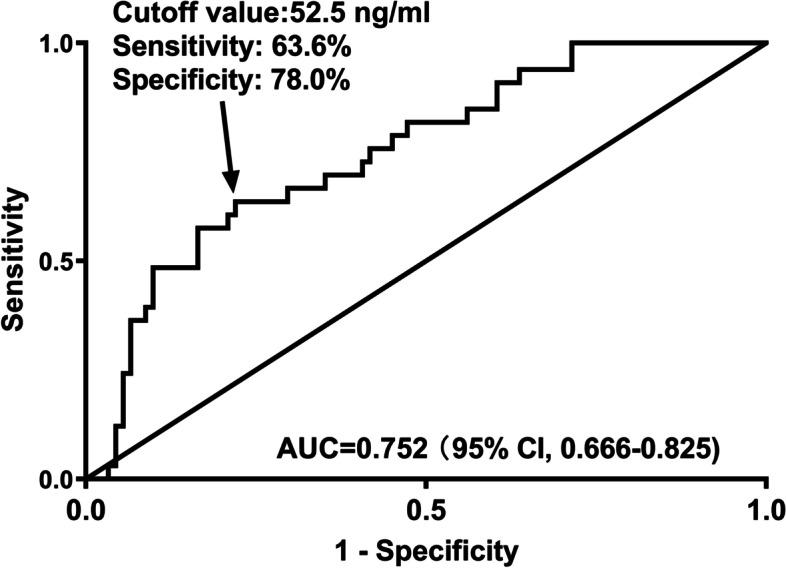
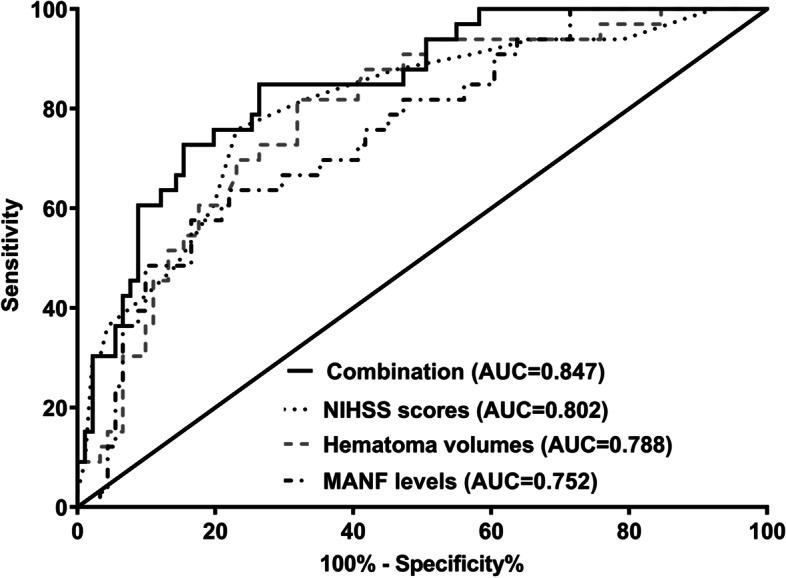
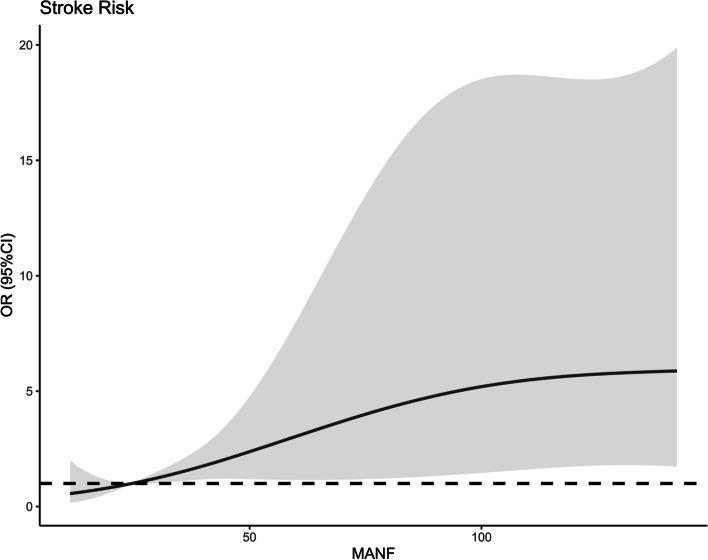
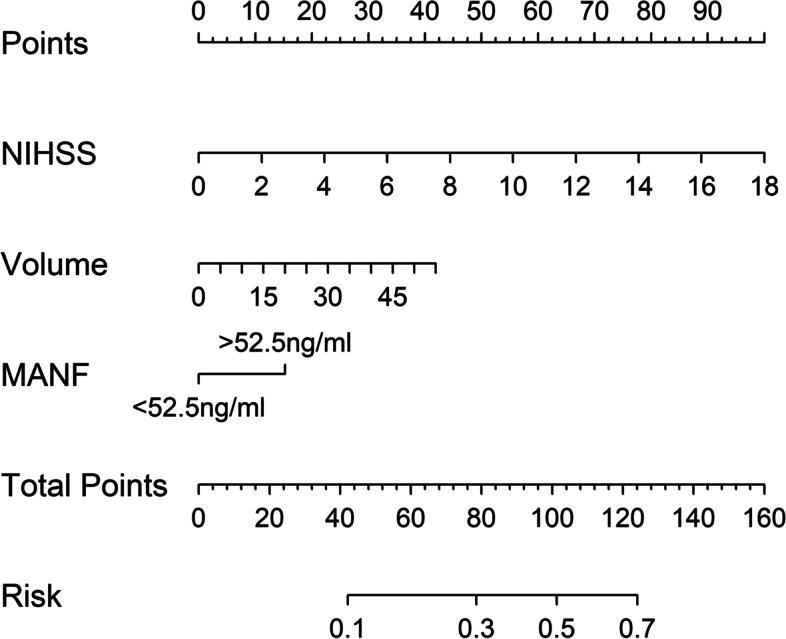
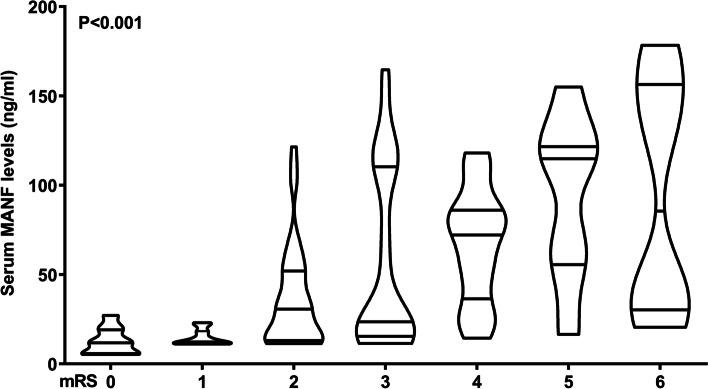
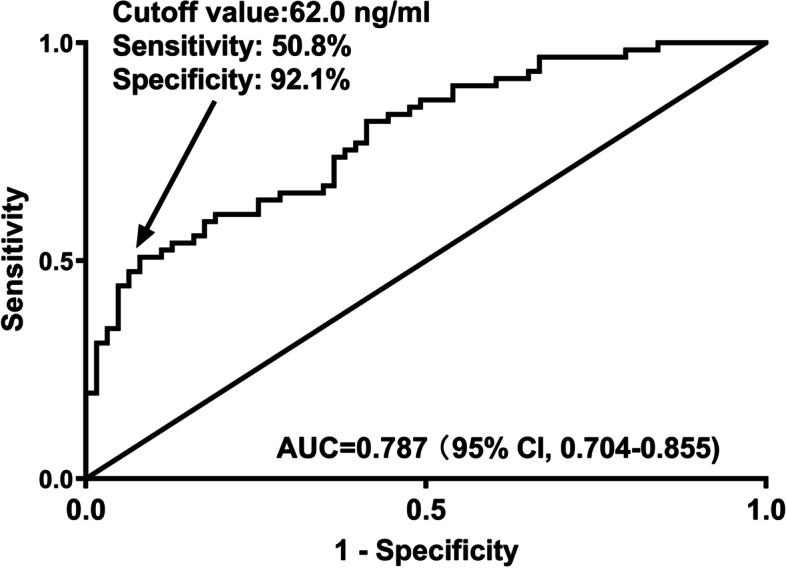
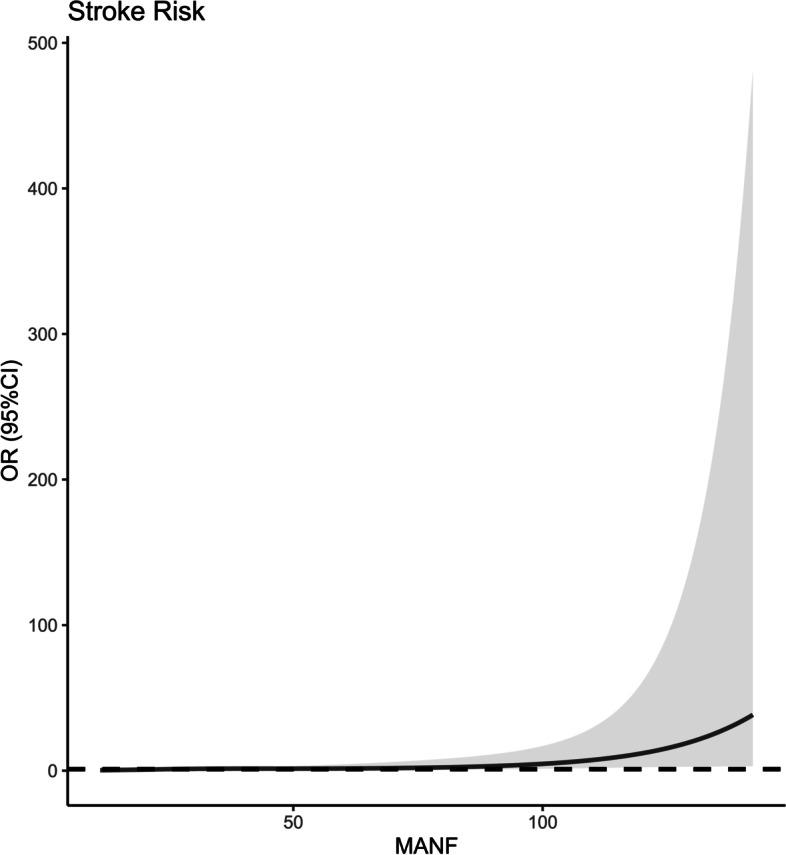
Patients, in comparison to controls, displayed markedly elevated serum MANF levels (median, 24.7 versus 2.7 ng/ml; P < 0.001), and serum MANF levels were independently correlated with NIHSS scores (beta, 3.912; 95% confidence interval (CI), 1.623-6.200; VIF = 2.394; t = 3.385; P = 0.002), hematoma volumes (beta, 1.688; 95% CI, 0.764-2.612; VIF = 2.661; t = 3.617; P = 0.001) and mRS scores (beta, 0.018; 95% CI, 0.013-0.023; VIF = 1.984; t = 2.047; P = 0.043). Serum MANF levels significantly predicted END and poor 90-day prognosis with areas under receiver operating characteristic curve at 0.752 and 0.787 respectively. END and prognostic predictive abilities were similar between serum MANF levels and NIHSS scores plus hematoma volumes (all P > 0.05). Combination of serum MANF levels with NIHSS scores and hematoma volumes had significantly higher prognostic capability than each of them (both P < 0.05). Serum MANF levels above 52.5 ng/ml and 62.0 ng/ml distinguished development of END and poor prognosis respectively with median-high sensitivity and specificity values. Using multivariate analysis, serum MANF levels > 52.5 ng/ml predicted END with odds ratio (OR) value of 2.713 (95% CI, 1.004-7.330; P = 0.042) and > 62.0 ng/ml predicted a poor prognosis with OR value of 3.848 (95% CI, 1.193-12.417; P = 0.024). Using restricted cubic spline, there was a linear correlation between serum MANF levels and poor prognosis or END risk (both P > 0.05). Nomograms were well established to predict END and a poor 90-day prognosis. Under calibration curve, such combination models were comparatively stable (using Hosmer & Lemeshow test, both P > 0.05).
CONCLUSION
Increased serum MANF levels after ICH, in independent correlation with disease severity, independently distinguished risks of END and 90-day poor prognosis. Therefore, serum MANF may be a potential prognostic biomarker of ICH.
目的
中脑星形胶质细胞衍生神经营养因子(MANF)在损伤脑组织中表达显著上调,从而发挥神经保护作用。本研究旨在确定血清 MANF 作为脑出血(ICH)预后生物标志物的意义。
方法
这是一项前瞻性、观察性研究,于 2018 年 2 月至 2021 年 7 月连续纳入了 124 例新发幕上 ICH 患者,同时纳入 124 名健康对照者。采用酶联免疫吸附法检测其血清 MANF 水平。国立卫生研究院卒中量表(NIHSS)和血肿体积被指定为两种严重程度指标。早期神经功能恶化(END)定义为 NIHSS 评分增加 4 分或以上或卒中后 24 小时死亡。卒中后 90 天改良 Rankin 量表(mRS)评分 3-6 分被认为预后不良。使用多元分析,分析血清 MANF 水平与卒中严重程度和预后的关系。
结果
与对照组相比,患者血清 MANF 水平明显升高(中位数为 24.7 与 2.7ng/ml;P<0.001),且血清 MANF 水平与 NIHSS 评分独立相关(β=3.912,95%置信区间为 1.623-6.200;VIF=2.394,t=3.385,P=0.002)、血肿体积(β=1.688,95%置信区间为 0.764-2.612;VIF=2.661,t=3.617,P=0.001)和 mRS 评分(β=0.018,95%置信区间为 0.013-0.023;VIF=1.984,t=2.047,P=0.043)。血清 MANF 水平可显著预测 END 和 90 天预后不良,ROC 曲线下面积分别为 0.752 和 0.787。血清 MANF 水平与 NIHSS 评分加血肿体积的 END 和预后预测能力相似(均 P>0.05)。血清 MANF 水平与 NIHSS 评分和血肿体积联合具有比单独使用更高的预后能力(均 P<0.05)。血清 MANF 水平高于 52.5ng/ml 和 62.0ng/ml 可分别以中等高灵敏度和特异性值鉴别 END 和预后不良的发生。使用多元分析,血清 MANF 水平>52.5ng/ml 预测 END 的优势比(OR)值为 2.713(95%CI,1.004-7.330;P=0.042),>62.0ng/ml 预测预后不良的 OR 值为 3.848(95%CI,1.193-12.417;P=0.024)。使用受限立方样条,血清 MANF 水平与预后不良或 END 风险之间存在线性相关性(均 P>0.05)。建立了预测 END 和 90 天预后不良的列线图。在校准曲线下,这些组合模型相对稳定(Hosmer & Lemeshow 检验,均 P>0.05)。
结论
ICH 后血清 MANF 水平升高与疾病严重程度独立相关,可独立区分 END 和 90 天预后不良的风险。因此,血清 MANF 可能是 ICH 的潜在预后生物标志物。



 Zotero 插件