
ω-3 脂肪酸转运蛋白 MFSD2A 的底物结合诱导构象转变。
Substrate binding-induced conformational transitions in the omega-3 fatty acid transporter MFSD2A.
机构信息
Department of Physiology and Biophysics, Weill Cornell Medical College, Cornell University, New York, NY, 10065, USA.
Department of Physiology and Cellular Biophysics, Columbia University, New York, NY, 10032, USA.
出版信息
Nat Commun. 2023 Jun 9;14(1):3391. doi: 10.1038/s41467-023-39088-y.
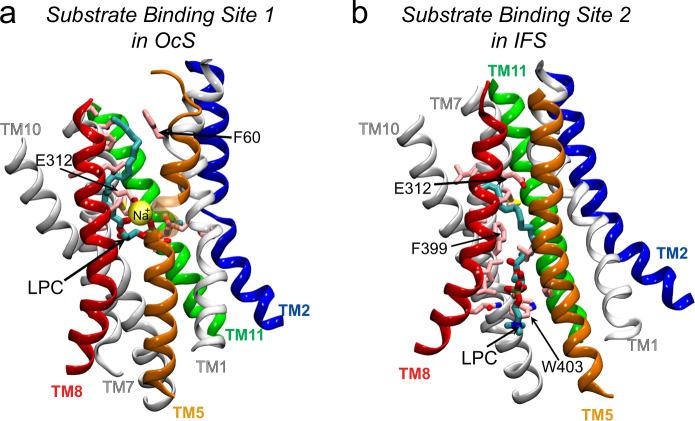
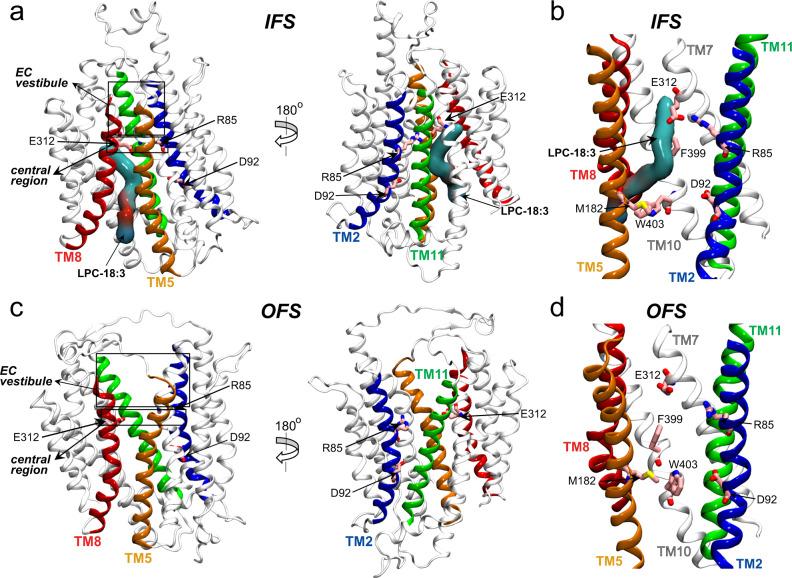
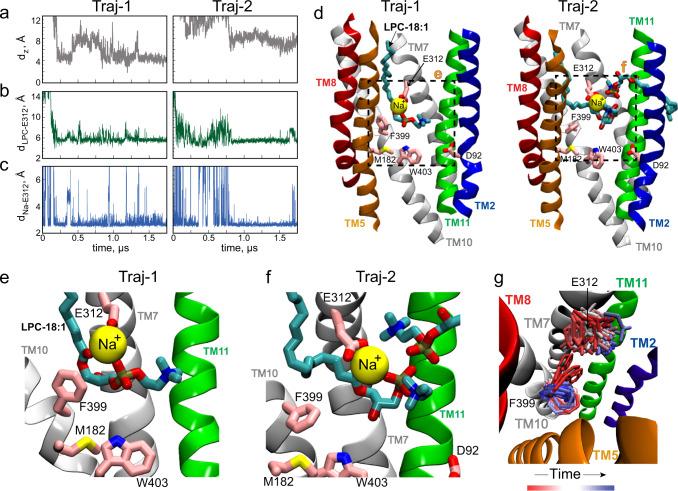
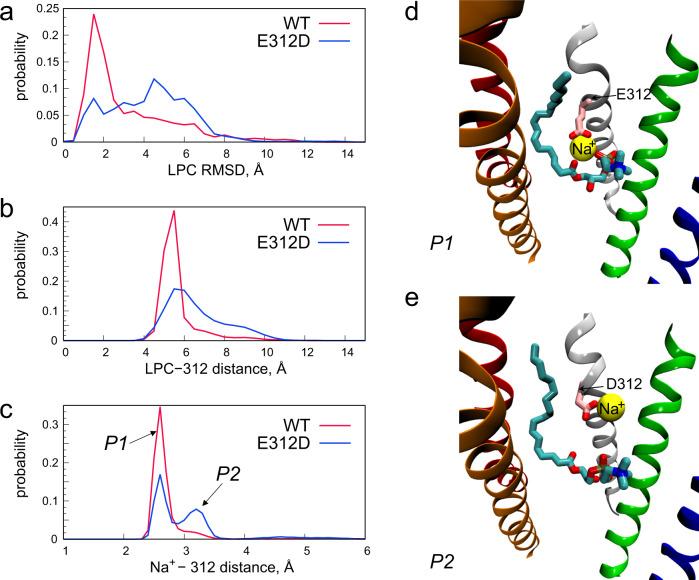
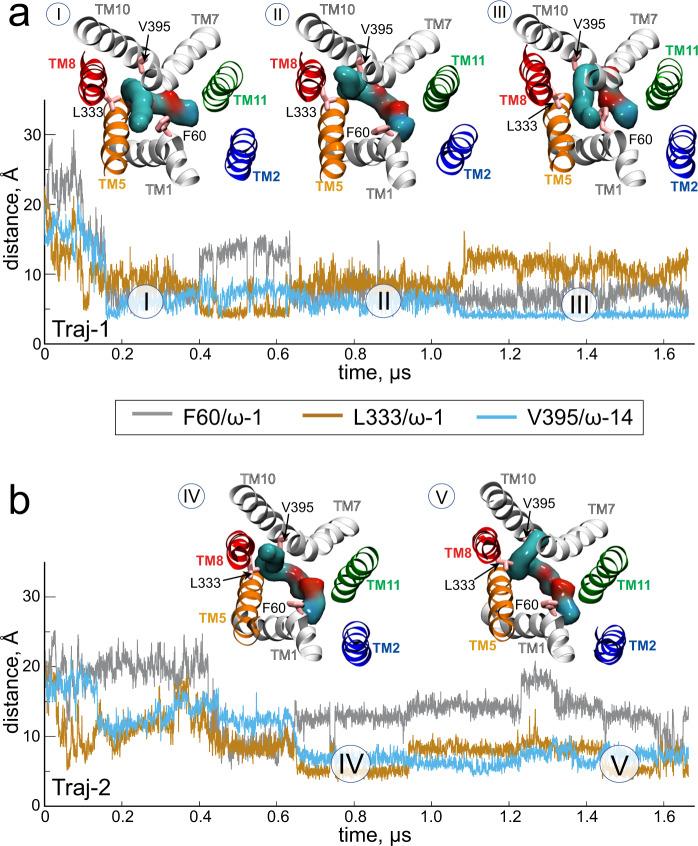
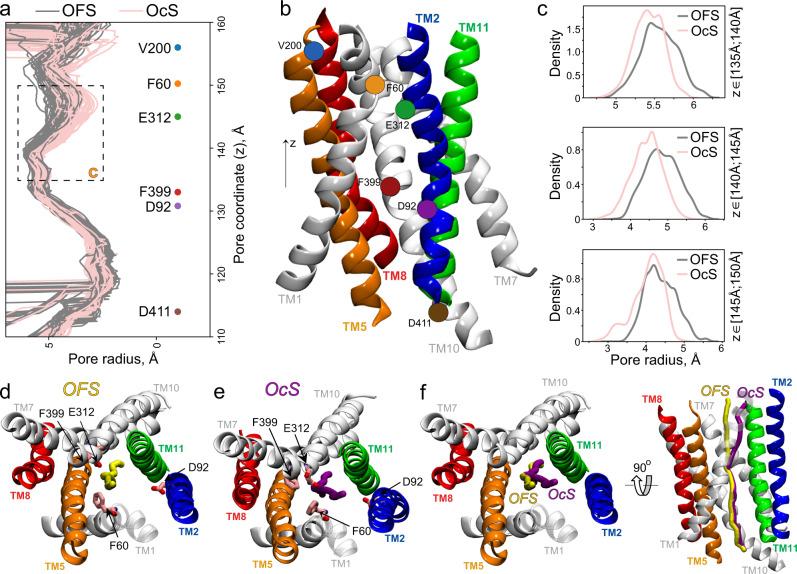
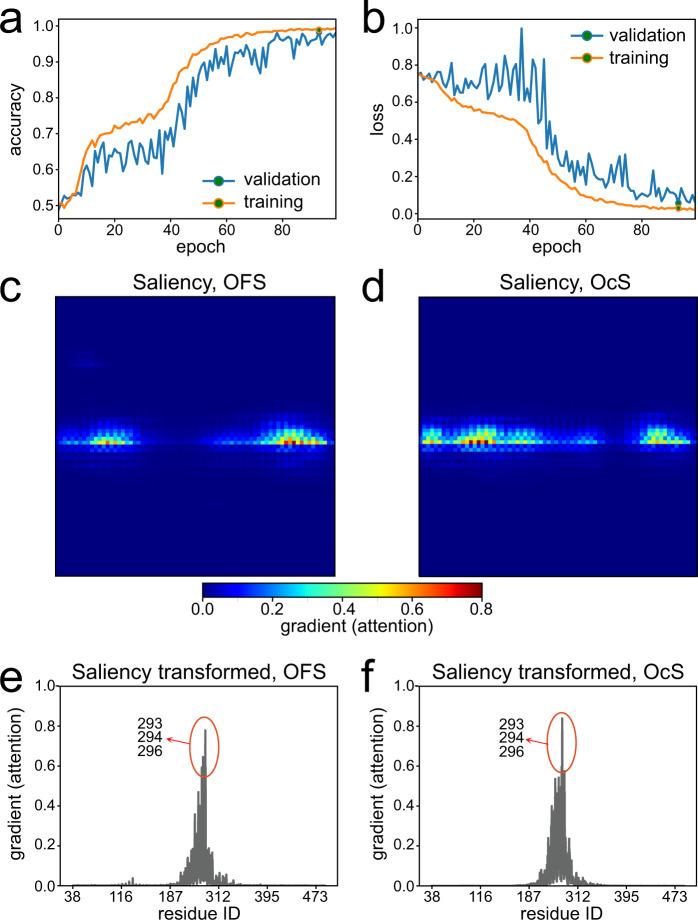
Major Facilitator Superfamily Domain containing 2 A (MFSD2A) is a transporter that is highly enriched at the blood-brain and blood-retinal barriers, where it mediates Na-dependent uptake of ω-3 fatty acids in the form of lysolipids into the brain and eyes, respectively. Despite recent structural insights, it remains unclear how this process is initiated, and driven by Na. Here, we perform Molecular Dynamics simulations which demonstrate that substrates enter outward facing MFSD2A from the outer leaflet of the membrane via lateral openings between transmembrane helices 5/8 and 2/11. The substrate headgroup enters first and engages in Na -bridged interactions with a conserved glutamic acid, while the tail is surrounded by hydrophobic residues. This binding mode is consistent with a "trap-and-flip" mechanism and triggers transition to an occluded conformation. Furthermore, using machine learning analysis, we identify key elements that enable these transitions. These results advance our molecular understanding of the MFSD2A transport cycle.
主要促进因子超家族结构域包含 2A(MFSD2A)是一种在血脑和血视网膜屏障中高度丰富的转运蛋白,分别介导 Na 依赖性摄取形式为溶血磷脂的 ω-3 脂肪酸进入大脑和眼睛。尽管最近有了结构方面的见解,但仍不清楚这一过程是如何被 Na 启动和驱动的。在这里,我们进行分子动力学模拟,表明底物通过跨膜螺旋 5/8 和 2/11 之间的侧开口从膜的外层进入向外开放的 MFSD2A。底物的头部首先进入,并与保守的谷氨酸形成 Na 桥接相互作用,而尾部则被疏水性残基包围。这种结合模式与“捕获-翻转”机制一致,并触发向封闭构象的转变。此外,我们使用机器学习分析,确定了使这些转变发生的关键要素。这些结果推进了我们对 MFSD2A 运输循环的分子理解。



 Zotero 插件