
转移性结直肠癌患者三线或后续靶向治疗的疗效与安全性:一项荟萃分析
Efficacy and safety of third-line or later-line targeted treatment for patients with metastatic colorectal cancer: a meta-analysis.
作者信息
Xue Wen-Hui, Li Xue-Wei, Ding Ya-Qian, Wu Na, Pei Bei-Bei, Ma Xiao-Yan, Xie Jun, Yang Wen-Hui
机构信息
Department of Digestive Oncology, Cancer Center, Shanxi Bethune Hospital, Shanxi Academy of Medical Sciences, Tongji Shanxi Hospital, Third Hospital of Shanxi Medical University, Taiyuan, Shanxi, China.
Department of Biochemistry and Molecular Biology, Shanxi Key Laboratory of Birth Defect and Cell Regeneration, Shanxi Medical University, Taiyuan, Shanxi, China.
出版信息
Front Oncol. 2023 May 31;13:1165040. doi: 10.3389/fonc.2023.1165040. eCollection 2023.
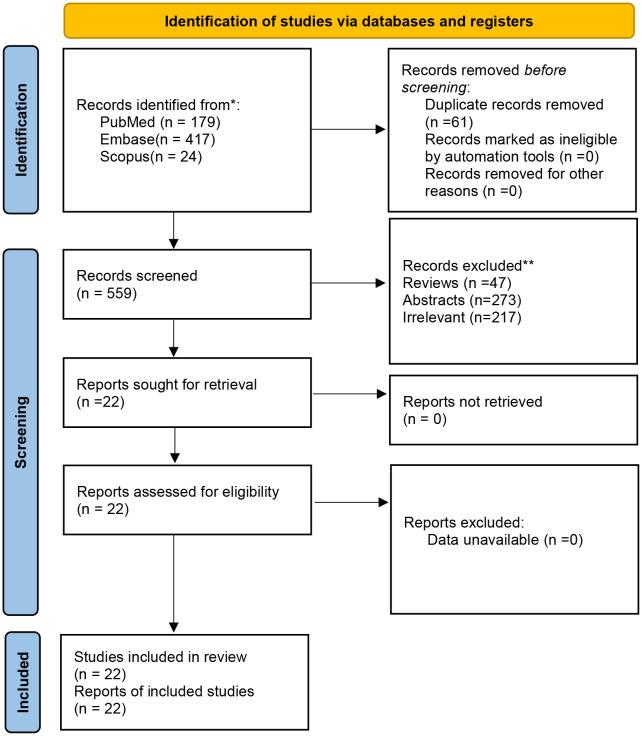
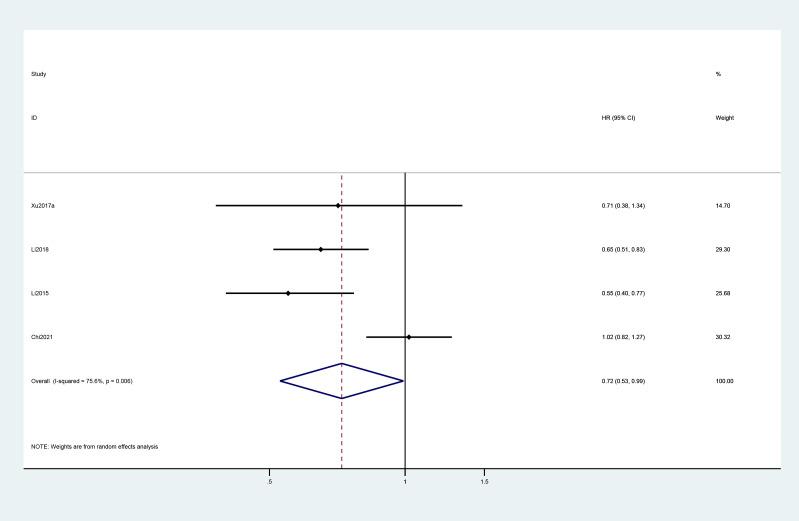
Targeted therapy has been standardized in front-line therapies for metastatic colorectal cancer (mCRC), while explicit recommendations for third- or later-line are still lacking. This study evaluated the efficacy and safety of combining targeted therapy with chemotherapy in the third- or later-line treatment for mCRC meta-analysis, providing evidence-based guidance for clinical or research practice. Comprehensive retrieval of related studies was conducted according to the PRISMA guideline. Studies were stratified with patient characteristics and pharmacological classification of the drugs. For the data available for quantitative analysis, pooled overall response rate, disease control rate, hazard ratios (HRs) for overall survival (OS) and progression-free survival (PFS), and adverse events rate with respective 95% confidence intervals (CIs) were calculated. A total of 22 studies (1,866 patients) were included in this meta-analysis. Data from 17 studies (1,769 patients) involving targets of epidermal growth factor receptor (EGFR) and vascular endothelial growth factor (VEGF) were extracted for meta-analyses. The overall response rates for monotherapy and combined therapy were 4% (95% CI: 3%, 5%) and 20% (95% CI: 11%, 29%). The pooled HRs (combined therapy mono) for OS and PFS were 0.72 (95% CI: 0.53, 0.99) and 0.34 (95% CI: 0.26, 0.45). Another five studies were included in narrative depiction, involving targets of BRAF, HER-2, ROS1, and NTRK. The findings of this meta-analysis indicate that VEGF and EGFR inhibitors manifest promising clinical response rates and prolonged survival in the treatment of mCRC with acceptable adverse events.
靶向治疗已在转移性结直肠癌(mCRC)的一线治疗中实现标准化,但对于三线及后续治疗仍缺乏明确的推荐。本研究评估了靶向治疗联合化疗在mCRC三线及后续治疗中的疗效和安全性,并进行了荟萃分析,为临床或研究实践提供循证指导。根据PRISMA指南全面检索相关研究。根据患者特征和药物的药理学分类对研究进行分层。对于可用于定量分析的数据,计算汇总的总缓解率、疾病控制率、总生存期(OS)和无进展生存期(PFS)的风险比(HR)以及不良事件发生率及其各自的95%置信区间(CI)。本荟萃分析共纳入22项研究(1866例患者)。提取了17项研究(1769例患者)中涉及表皮生长因子受体(EGFR)和血管内皮生长因子(VEGF)靶点的数据进行荟萃分析。单药治疗和联合治疗的总缓解率分别为4%(95%CI:3%,5%)和20%(95%CI:11%,29%)。OS和PFS的汇总HR(联合治疗对比单药治疗)分别为0.72(95%CI:0.53,0.99)和0.34(95%CI:0.26,0.45)。另外五项研究纳入叙述性描述,涉及BRAF、HER-2、ROS1和NTRK靶点。本荟萃分析的结果表明,VEGF和EGFR抑制剂在mCRC治疗中显示出有前景的临床缓解率和延长的生存期,且不良事件可接受。

 Zotero 插件