
通过DNA加工的视角探索碱基编辑中的主导因素。
Explore the dominant factor in prime editing via a view of DNA processing.
作者信息
Xu Zhimeng, Ma Dacheng, Su Houzhen, Jia Xiaodong, Li Yinqing, Lu Yinying, Xie Zhen
机构信息
MOE Key Laboratory of Bioinformatics and Bioinformatics Division, Center for Synthetic and System Biology, Department of Automation, Beijing National Research Center for Information Science and Technology, Tsinghua University, Beijing, 100084, China.
Research Center for Biological Computation, Zhejiang Laboratory, Hangzhou, 311100, China.
出版信息
Synth Syst Biotechnol. 2023 Jun 3;8(3):371-377. doi: 10.1016/j.synbio.2023.05.007. eCollection 2023 Sep.
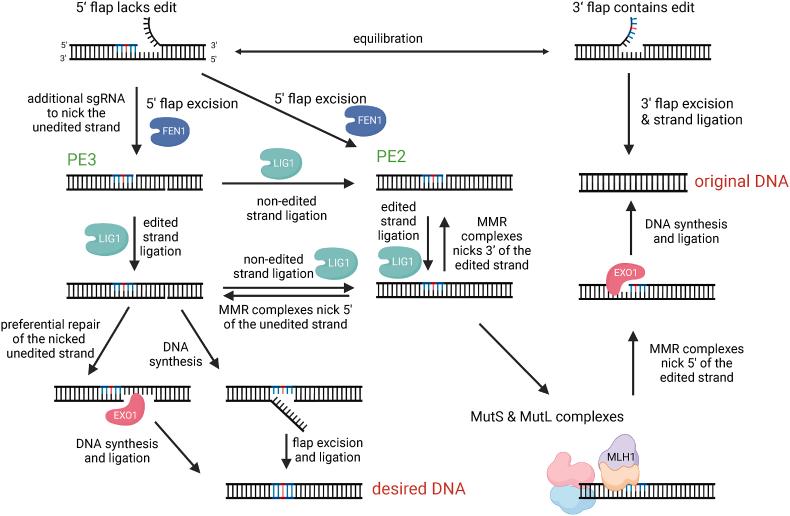
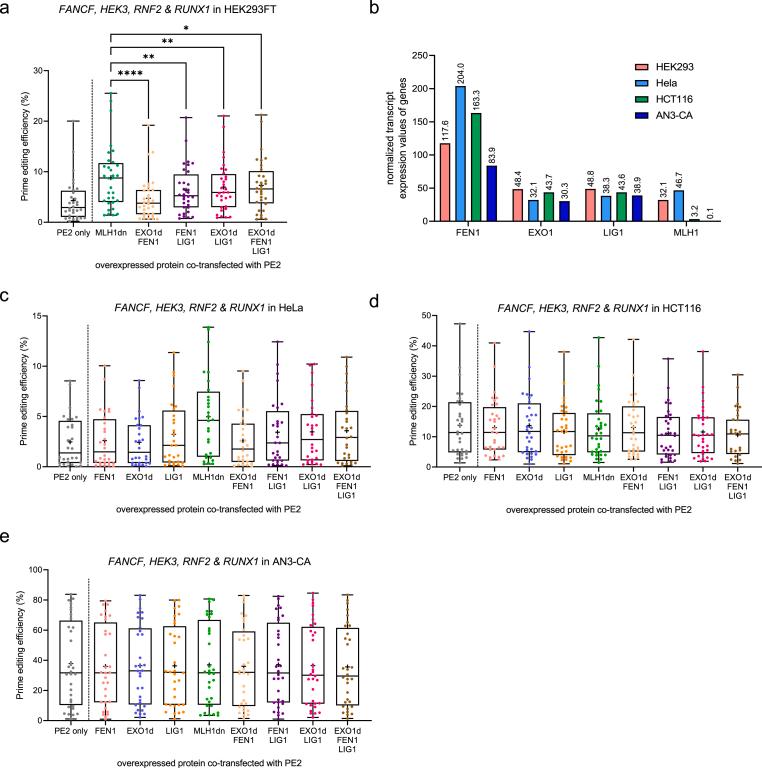
Prime editing is a revolutionary gene-editing method that is capable of introducing insertions, deletions and base substitutions into the genome. However, the editing efficiency of Prime Editor (PE) is limited by the DNA repair process. Here, we show that overexpression of the flap structure-specific endonuclease 1 (FEN1) and the DNA ligase 1 (LIG1) increases the efficiency of prime editing, which is similar to the dominant negative mutL homolog 1 (MLH1dn). In addition, MLH1 is still the dominant factor over FEN1 and LIG1 in prime editing. Our results help to further understand the relationship of proteins involved in prime editing and envisage future directions for the development of PE.
碱基编辑是一种革命性的基因编辑方法,能够在基因组中引入插入、缺失和碱基替换。然而,碱基编辑器(PE)的编辑效率受到DNA修复过程的限制。在此,我们表明翼片结构特异性核酸内切酶1(FEN1)和DNA连接酶1(LIG1)的过表达提高了碱基编辑的效率,这与显性负性mutL同源物1(MLH1dn)相似。此外,在碱基编辑中,MLH1仍然是比FEN1和LIG1更主要的因素。我们的结果有助于进一步理解参与碱基编辑的蛋白质之间的关系,并设想PE未来的发展方向。

 Zotero 插件