
针对癌症治疗的表皮生长因子受体:消除受体的激酶依赖和非依赖功能。
Targeting Epidermal Growth Factor Receptor for Cancer Treatment: Abolishing Both Kinase-Dependent and Kinase-Independent Functions of the Receptor.
机构信息
Department of Pharmacology and Toxicology, School of Medicine, and Massey Comprehensive Cancer Center, Virginia Commonwealth University, Richmond, Virginia
出版信息
Pharmacol Rev. 2023 Nov;75(6):1218-1232. doi: 10.1124/pharmrev.123.000906. Epub 2023 Jun 20.
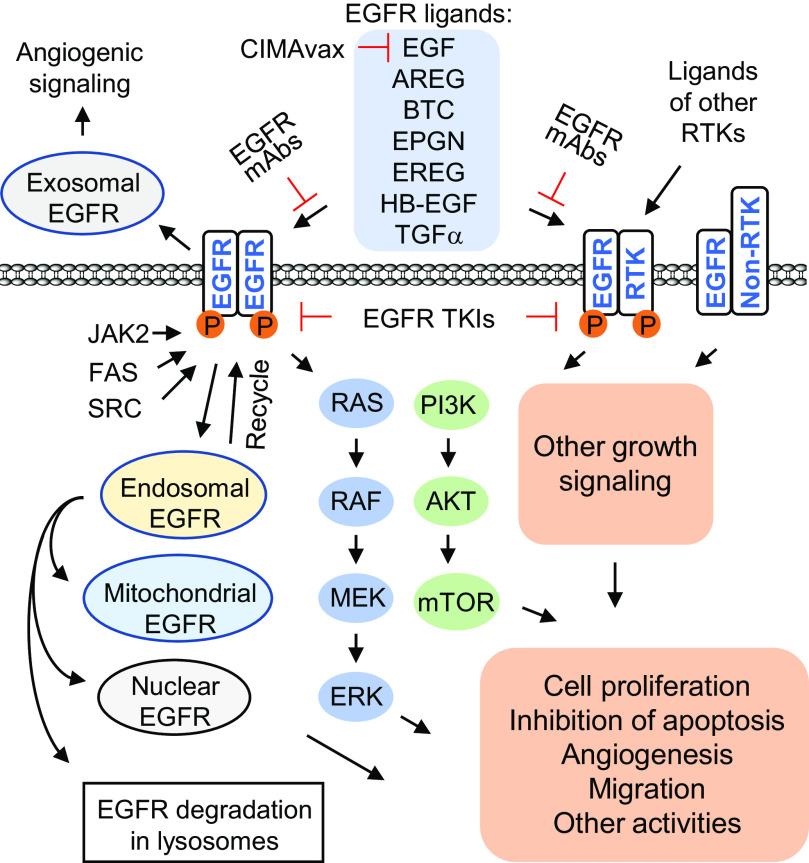
Epidermal growth factor receptor (EGFR), a receptor tyrosine kinase, is activated by ligand binding, overexpression, or mutation. It is well known for its tyrosine kinase-dependent oncogenic activities in a variety of human cancers. A large number of EGFR inhibitors have been developed for cancer treatment, including monoclonal antibodies, tyrosine kinase inhibitors, and a vaccine. The EGFR inhibitors are aimed at inhibiting the activation or the activity of EGFR tyrosine kinase. However, these agents have shown efficacy in only a few types of cancers. Drug resistance, both intrinsic and acquired, is common even in cancers where the inhibitors have shown efficacy. The drug resistance mechanism is complex and not fully known. The key vulnerability of cancer cells that are resistant to EGFR inhibitors has not been identified. Nevertheless, it has been increasingly recognized in recent years that EGFR also possesses kinase-independent oncogenic functions and that these noncanonical functions may play a crucial role in cancer resistance to EGFR inhibitors. In this review, both kinase-dependent and -independent activities of EGFR are discussed. Also discussed are the mechanisms of actions and therapeutic activities of clinically used EGFR inhibitors and sustained EGFR overexpression and EGFR interaction with other receptor tyrosine kinases to counter the EGFR inhibitors. Moreover, this review discusses emerging experimental therapeutics that have shown potential for overcoming the limitation of the current EGFR inhibitors in preclinical studies. The findings underscore the importance and feasibility of targeting both kinase-dependent and -independent functions of EGFR to enhance therapeutic efficacy and minimize drug resistance. SIGNIFICANCE STATEMENT: EGFR is a major oncogenic driver and therapeutic target, but cancer resistance to current EGFR inhibitors remains a significant unmet clinical problem. This article reviews the cancer biology of EGFR as well as the mechanisms of actions and the therapeutic efficacies of current and emerging EGFR inhibitors. The findings could potentially lead to development of more effective treatments for EGFR-positive cancers.
表皮生长因子受体(EGFR)是一种受体酪氨酸激酶,通过配体结合、过表达或突变而被激活。它以其在多种人类癌症中的酪氨酸激酶依赖性致癌活性而闻名。已经开发了大量的 EGFR 抑制剂用于癌症治疗,包括单克隆抗体、酪氨酸激酶抑制剂和疫苗。EGFR 抑制剂旨在抑制 EGFR 酪氨酸激酶的激活或活性。然而,这些药物在少数几种癌症中显示出疗效。即使在抑制剂显示出疗效的癌症中,也经常出现内在和获得性耐药。耐药机制复杂,尚未完全了解。对 EGFR 抑制剂耐药的癌细胞的关键弱点尚未确定。然而,近年来越来越多的人认识到,EGFR 还具有激酶非依赖性致癌功能,这些非典型功能可能在癌症对 EGFR 抑制剂的耐药性中起关键作用。在这篇综述中,讨论了 EGFR 的激酶依赖性和非依赖性活性。还讨论了临床使用的 EGFR 抑制剂的作用机制和治疗活性,以及持续的 EGFR 过表达和 EGFR 与其他受体酪氨酸激酶的相互作用,以对抗 EGFR 抑制剂。此外,本文还讨论了在临床前研究中显示出克服当前 EGFR 抑制剂局限性潜力的新兴实验治疗方法。这些发现强调了靶向 EGFR 的激酶依赖性和非依赖性功能以增强治疗效果和最小化耐药性的重要性和可行性。
意义陈述
EGFR 是主要的致癌驱动因子和治疗靶标,但目前的 EGFR 抑制剂对癌症的耐药性仍然是一个重大的未满足的临床问题。本文综述了 EGFR 的癌症生物学,以及当前和新兴的 EGFR 抑制剂的作用机制和治疗效果。这些发现可能会导致开发出更有效的 EGFR 阳性癌症治疗方法。


 Zotero 插件