
全基因组加倍作为癌症的一个来源:如何、何时、何地以及为何?
Whole-Genome Doubling as a source of cancer: how, when, where, and why?
作者信息
Sanz-Gómez Natalia, González-Álvarez María, De Las Rivas Javier, de Cárcer Guillermo
机构信息
Cell Cycle and Cancer Biomarkers Laboratory, Cancer Biology Department, Instituto de Investigaciones Biomédicas "Alberto Sols". (IIBM) CSIC-UAM, Madrid, Spain.
Bioinformatics and Functional Genomics Group, Cancer Research Center (CiC-IBMCC), Consejo Superior de Investigaciones Científicas (CSIC), University of Salamanca (USAL), Salamanca, Spain.
出版信息
Front Cell Dev Biol. 2023 Jun 5;11:1209136. doi: 10.3389/fcell.2023.1209136. eCollection 2023.
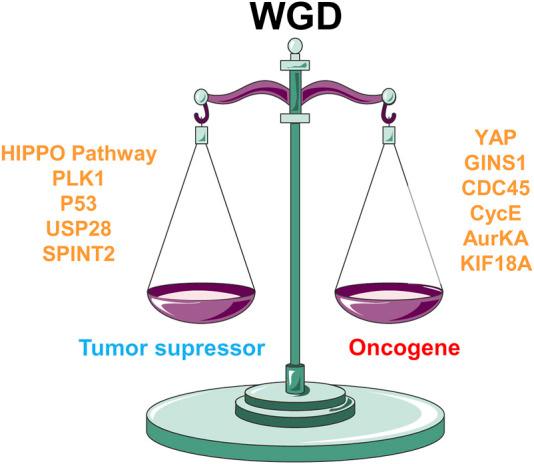
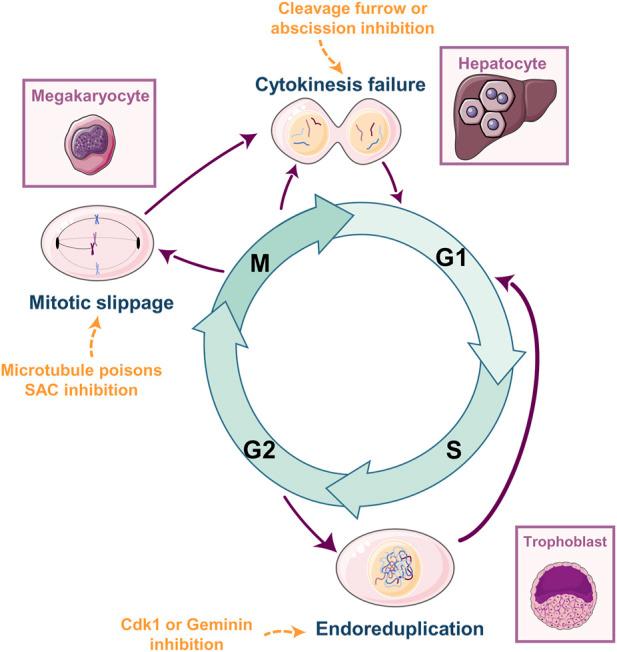
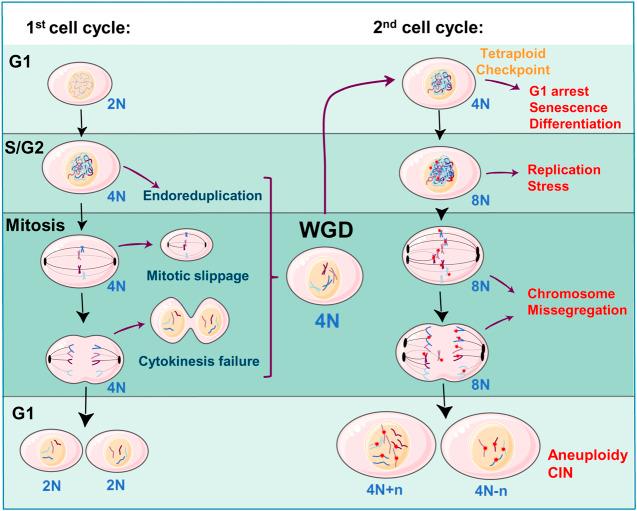
Chromosome instability is a well-known hallmark of cancer, leading to increased genetic plasticity of tumoral cells, which favors cancer aggressiveness, and poor prognosis. One of the main sources of chromosomal instability are events that lead to a Whole-Genome Duplication (WGD) and the subsequently generated cell polyploidy. In recent years, several studies showed that WGD occurs at the early stages of cell transformation, which allows cells to later become aneuploid, thus leading to cancer progression. On the other hand, other studies convey that polyploidy plays a tumor suppressor role, by inducing cell cycle arrest, cell senescence, apoptosis, and even prompting cell differentiation, depending on the tissue cell type. There is still a gap in understanding how cells that underwent WGD can overcome the deleterious effect on cell fitness and evolve to become tumoral. Some laboratories in the chromosomal instability field recently explored this paradox, finding biomarkers that modulate polyploid cells to become oncogenic. This review brings a historical view of how WGD and polyploidy impact cell fitness and cancer progression, and bring together the last studies that describe the genes helping cells to adapt to polyploidy.
染色体不稳定是癌症的一个众所周知的标志,会导致肿瘤细胞的遗传可塑性增加,这有利于癌症的侵袭性和不良预后。染色体不稳定的主要来源之一是导致全基因组复制(WGD)及随后产生的细胞多倍体的事件。近年来,多项研究表明,WGD发生在细胞转化的早期阶段,这使得细胞随后能够变成非整倍体,从而导致癌症进展。另一方面,其他研究表明,多倍体通过诱导细胞周期停滞、细胞衰老、凋亡,甚至根据组织细胞类型促进细胞分化,发挥肿瘤抑制作用。在理解经历WGD的细胞如何克服对细胞适应性的有害影响并演变成肿瘤方面,仍然存在差距。染色体不稳定领域的一些实验室最近探讨了这一矛盾,发现了调节多倍体细胞成为致癌细胞的生物标志物。这篇综述带来了关于WGD和多倍体如何影响细胞适应性和癌症进展的历史观点,并汇集了描述帮助细胞适应多倍体的基因的最新研究。

 Zotero 插件