
微重力 3D 生物打印:机遇、挑战及在太空的可能应用。
3D Bioprinting in Microgravity: Opportunities, Challenges, and Possible Applications in Space.
机构信息
SciSpacE Team, Directorate of Human and Robotic Exploration Programmes (HRE), European Space Agency (ESA), Keplerlaan 1, Noordwijk, 2201AG, The Netherlands.
ESA Topical Team on "3D Bioprinting of living tissue for utilization in space exploration and extraterrestrial human settlements", 01307, Dresden, Germany.
出版信息
Adv Healthc Mater. 2023 Sep;12(23):e2300443. doi: 10.1002/adhm.202300443. Epub 2023 Jun 23.
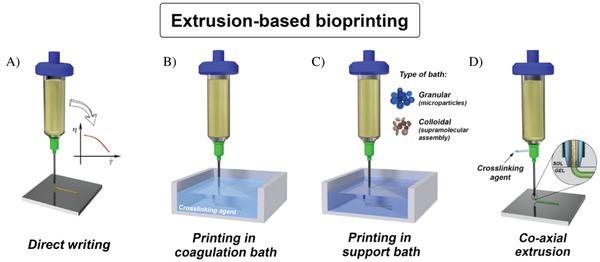
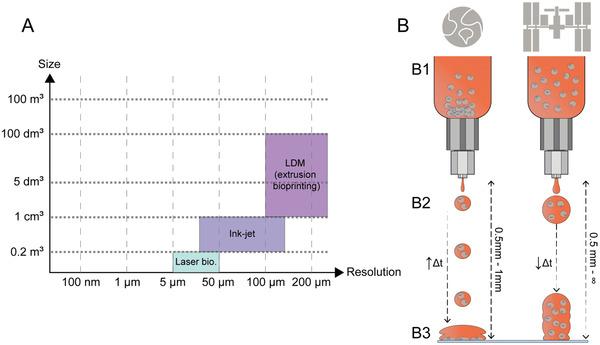
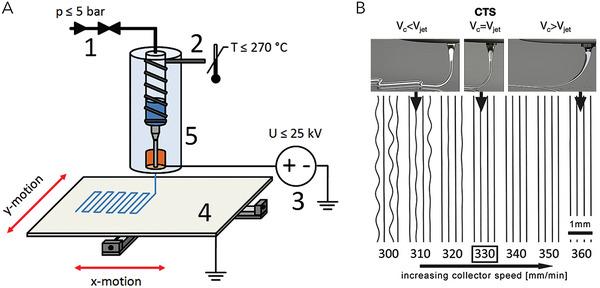
3D bioprinting has developed tremendously in the last couple of years and enables the fabrication of simple, as well as complex, tissue models. The international space agencies have recognized the unique opportunities of these technologies for manufacturing cell and tissue models for basic research in space, in particular for investigating the effects of microgravity and cosmic radiation on different types of human tissues. In addition, bioprinting is capable of producing clinically applicable tissue grafts, and its implementation in space therefore can support the autonomous medical treatment options for astronauts in future long term and far-distant space missions. The article discusses opportunities but also challenges of operating different types of bioprinters under space conditions, mainly in microgravity. While some process steps, most of which involving the handling of liquids, are challenging under microgravity, this environment can help overcome problems such as cell sedimentation in low viscous bioinks. Hopefully, this publication will motivate more researchers to engage in the topic, with publicly available bioprinting opportunities becoming available at the International Space Station (ISS) in the imminent future.
3D 生物打印技术在过去几年中得到了迅猛发展,能够制造简单和复杂的组织模型。国际太空机构已经认识到这些技术在制造用于太空基础研究的细胞和组织模型方面的独特机会,特别是用于研究微重力和宇宙辐射对不同类型人体组织的影响。此外,生物打印技术能够制造临床上可应用的组织移植物,因此在太空中的应用可以为未来长期和远距离太空任务中的宇航员提供自主医疗选择。本文讨论了在太空条件下(主要是微重力下)操作不同类型的生物打印机的机会和挑战。虽然一些涉及处理液体的工艺步骤在微重力下具有挑战性,但这种环境有助于克服生物墨水低粘度下细胞沉降等问题。希望本文的发表将激励更多的研究人员参与到这一课题中来,因为国际空间站(ISS)即将提供公开的生物打印机会。



 Zotero 插件