
用金属纳米颗粒增强纳米纤维口罩的新视角:抗病毒机制研究
A Novel Vision of Reinforcing Nanofibrous Masks with Metal Nanoparticles: Antiviral Mechanisms Investigation.
作者信息
Hadinejad Farinaz, Morad Hamed, Jahanshahi Mohsen, Zarrabi Ali, Pazoki-Toroudi Hamidreza, Mostafavi Ebrahim
机构信息
Nanotechnology Research Institute, Faculty of Chemical Engineering, Babol Noushirvani University of Technology, Babol, 4714873113 Iran.
Department of Pharmaceutics and Pharmaceutical Nanotechnology, School of Pharmacy, Iran University of Medical Sciences, Tehran, 1475886973 Iran.
出版信息
Adv Fiber Mater. 2023 Apr 11:1-45. doi: 10.1007/s42765-023-00275-7.
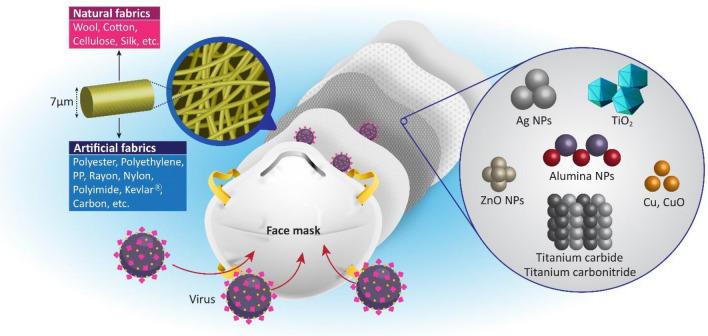
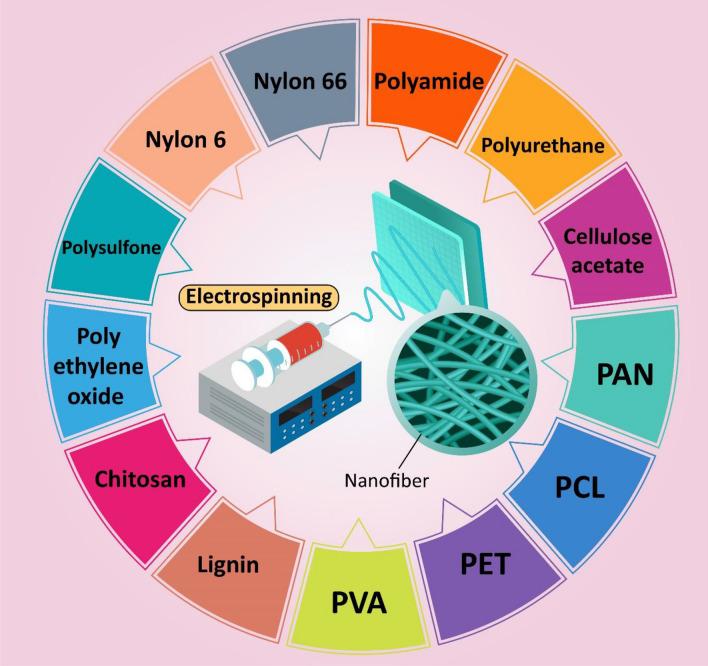
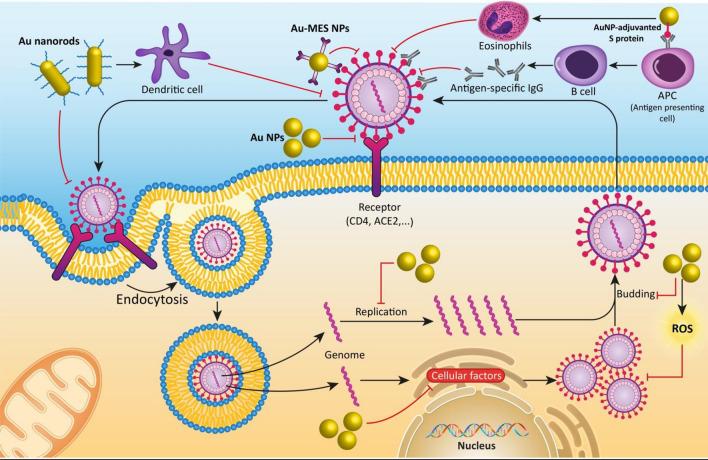
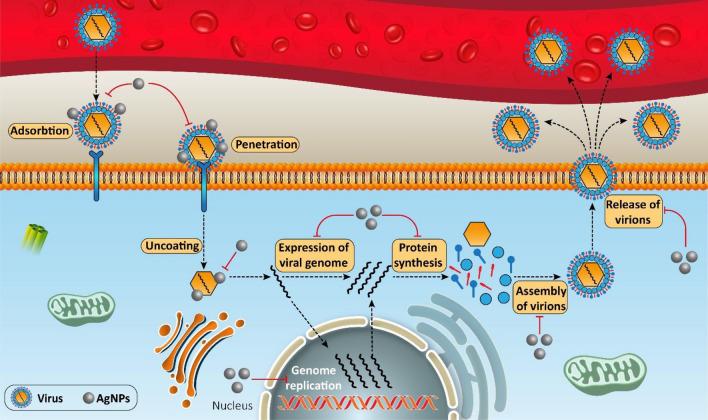
Prevention of spreading viral respiratory disease, especially in case of a pandemic such as coronavirus disease of 2019 (COVID-19), has been proved impossible without considering obligatory face mask-wearing protocols for both healthy and contaminated populations. The widespread application of face masks for long hours and almost everywhere increases the risks of bacterial growth in the warm and humid environment inside the mask. On the other hand, in the absence of antiviral agents on the surface of the mask, the virus may have a chance to stay alive and be carried to different places or even put the wearers at risk of contamination when touching or disposing the masks. In this article, the antiviral activity and mechanism of action of some of the potent metal and metal oxide nanoparticles in the role of promising virucidal agents have been reviewed, and incorporation of them in an electrospun nanofibrous structure has been considered an applicable method for the fabrication of innovative respiratory protecting materials with upgraded safety levels.
预防病毒性呼吸道疾病的传播,尤其是在像2019冠状病毒病(COVID-19)这样的大流行情况下,如果不考虑健康人群和受感染人群都必须佩戴口罩的规定,已被证明是不可能的。长时间且几乎在所有地方广泛使用口罩,增加了口罩内部温暖潮湿环境中细菌生长的风险。另一方面,如果口罩表面没有抗病毒剂,病毒可能有机会存活并被携带到不同地方,甚至在佩戴者触摸或丢弃口罩时使其面临污染风险。在本文中,综述了一些强效金属和金属氧化物纳米颗粒作为有前景的杀病毒剂的抗病毒活性和作用机制,并认为将它们掺入电纺纳米纤维结构中是一种制造具有更高安全水平的新型呼吸道防护材料的适用方法。

 Zotero 插件