
沙特阿拉伯王国的季节性蜂群损失率与蜜蜂管理:养蜂人调查结果
Seasonal Colony Loss Rates and Honey Bee Management in the Kingdom of Saudi Arabia: Results of a Survey of Beekeepers.
作者信息
Albarrak Abdulmajeed Barrak, Gray Alison
机构信息
Department of Mathematics and Statistics, University of Strathclyde, Glasgow G1 1XH, UK.
Mathematics Department, College of Science, Jouf University, Sakaka P.O. Box 2014, Saudi Arabia.
出版信息
Insects. 2023 Jun 1;14(6):513. doi: 10.3390/insects14060513.
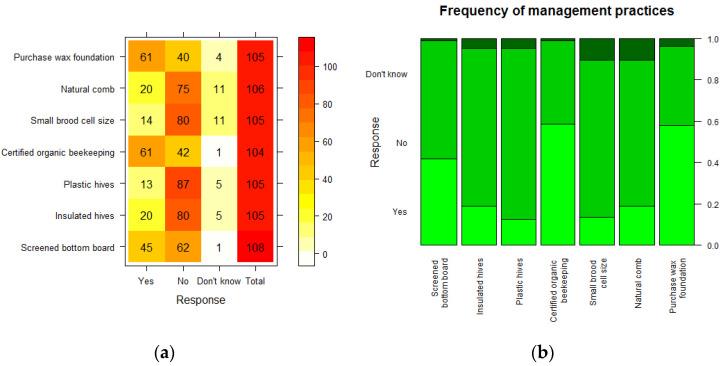
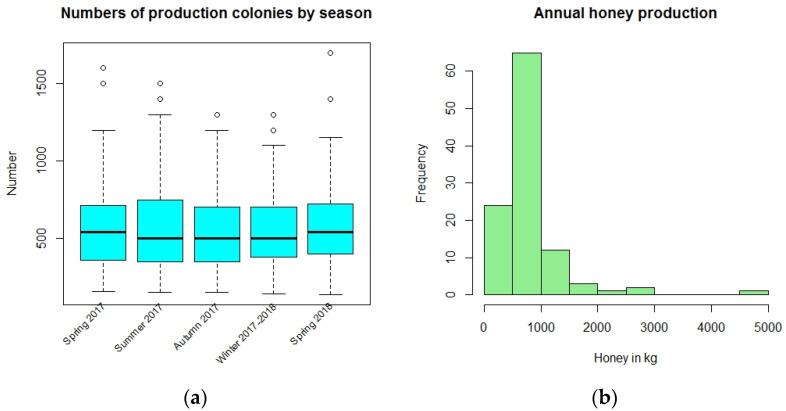
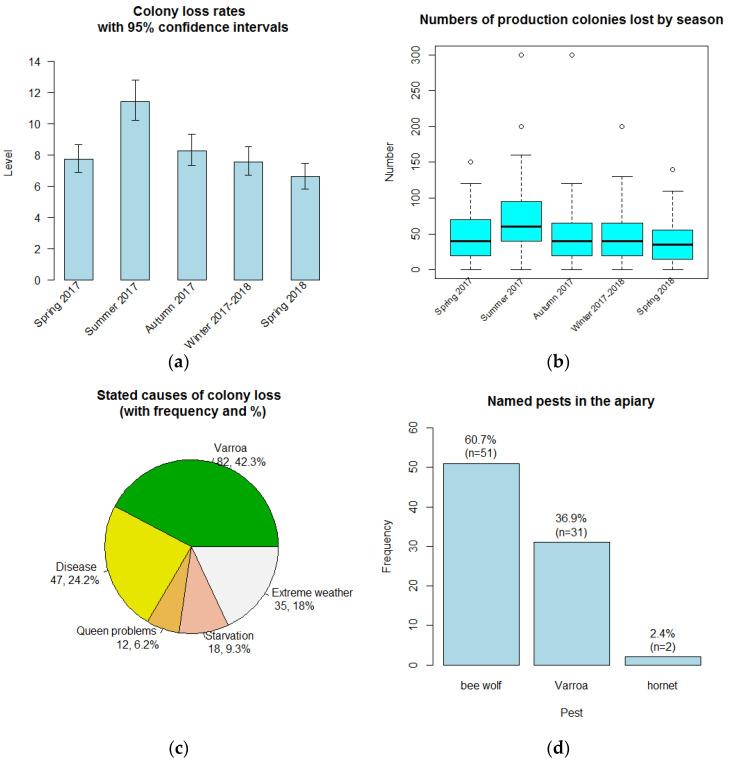
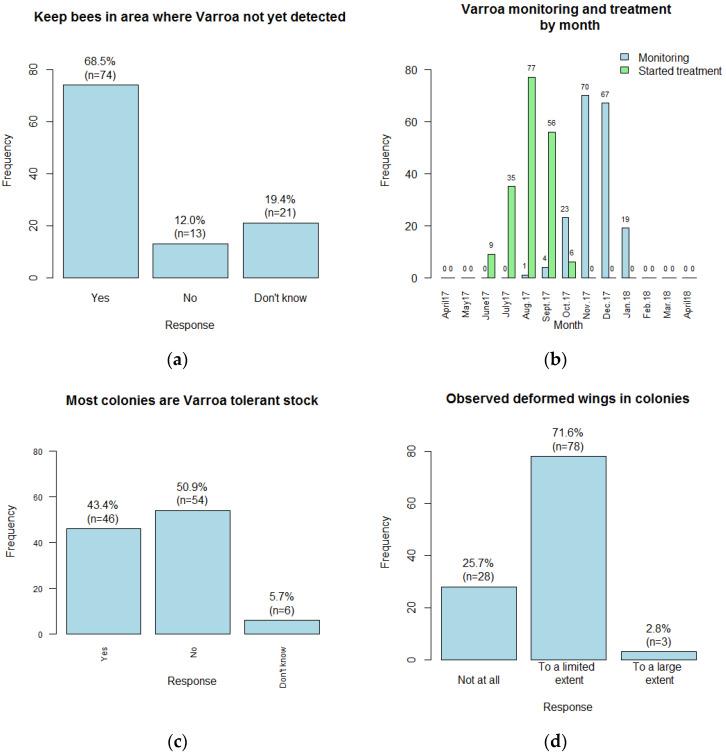
There is high demand for honey in Saudi Arabia, honey bees make a valuable contribution to agriculture and the economy, and therefore it is important to know levels of colony loss and potential reasons for losses. While there is much research into honey bee colony losses worldwide, little is known about colony losses in Saudi Arabia, management practices or beekeeping experience there. The aims of this work were to address this knowledge gap. Results of a survey of beekeepers in southwest Saudi Arabia conducted in summer 2018 are presented, including colony losses in five different seasons. Data collection involved face-to-face interviews, supplemented by an online survey, using a purpose-designed questionnaire. Responses were obtained from 109 beekeepers, all male, managing 135 to 1700 colonies, with 2 to 45 years of beekeeping experience. Most (73.1%) respondents mainly kept local hybrid bees, while 25.9% mainly kept . Honey yields per colony varied much more between beekeepers than between bee races. A high proportion (83.5%) of beekeepers reported losing colonies over the period studied. The reported colony loss rate was significantly higher in summer than in other seasons, but still low. The overall proportion of colonies lost was 11.4% in summer 2017 and was lowest in spring 2018 (6.6%). The main reported causes of loss were and disease. Most beekeepers (88.0%) treated against the Varroa mite, although only one method was reported, tau-fluvalinate as Apistan strips, and only 41.7% used a screened bottom board. The results establish a benchmark for future beekeeper surveys in Saudi Arabia and other environmentally similar countries where colony losses are of interest in all seasons of the year. Informing and supporting Saudi beekeepers concerning Varroa monitoring and treatment and optimal hive management could result in fewer losses, higher honey yields, potential to market organic honey and a greater share of the domestic honey market.
沙特阿拉伯对蜂蜜的需求量很大,蜜蜂对农业和经济做出了宝贵贡献,因此了解蜂群损失水平及损失的潜在原因很重要。虽然全球对蜜蜂蜂群损失有很多研究,但对沙特阿拉伯的蜂群损失、管理实践或养蜂经验却知之甚少。这项工作的目的是填补这一知识空白。本文展示了2018年夏季对沙特阿拉伯西南部养蜂人进行的一项调查结果,包括五个不同季节的蜂群损失情况。数据收集包括面对面访谈,并辅以在线调查,使用的是专门设计的问卷。共获得109位养蜂人的回复,他们均为男性,管理着135至1700个蜂群,养蜂经验在2至45年之间。大多数(73.1%)受访者主要饲养当地杂交蜜蜂,而25.9%主要饲养……每个蜂群的蜂蜜产量在养蜂人之间的差异远大于不同蜜蜂品种之间的差异。高比例(83.5%)的养蜂人报告在所研究期间有蜂群损失。报告的蜂群损失率在夏季显著高于其他季节,但仍然较低。2017年夏季蜂群损失的总体比例为11.4%,在2018年春季最低(6.6%)。报告的主要损失原因是……和疾病。大多数养蜂人(88.0%)对瓦螨进行防治,尽管只报告了一种方法,即使用氟胺氰菊酯作为螨扑片,只有41.7%的人使用了带纱窗的底板。这些结果为沙特阿拉伯以及其他环境相似、全年各季节蜂群损失都受关注的国家未来的养蜂人调查建立了一个基准。在瓦螨监测与防治以及最佳蜂箱管理方面为沙特养蜂人提供信息和支持,可能会减少损失、提高蜂蜜产量、有潜力销售有机蜂蜜并在国内蜂蜜市场中占据更大份额。
需注意原文中部分内容缺失,已按原文完整翻译。


 Zotero 插件