
伤口治疗相关缓冲系统对金纳米颗粒胶体和光学性质的影响研究
Investigation of the Influence of Wound-Treatment-Relevant Buffer Systems on the Colloidal and Optical Properties of Gold Nanoparticles.
作者信息
Selmani Atiđa, Jeitler Ramona, Auinger Michael, Tetyczka Carolin, Banzer Peter, Kantor Brian, Leitinger Gerd, Roblegg Eva
机构信息
Pharmaceutical Technology & Biopharmacy, Institute of Pharmaceutical Sciences, University of Graz, Universitätsplatz 1, 8010 Graz, Austria.
Research Center Pharmaceutical Engineering GmbH, Inffeldgasse 13, 8010 Graz, Austria.
出版信息
Nanomaterials (Basel). 2023 Jun 17;13(12):1878. doi: 10.3390/nano13121878.
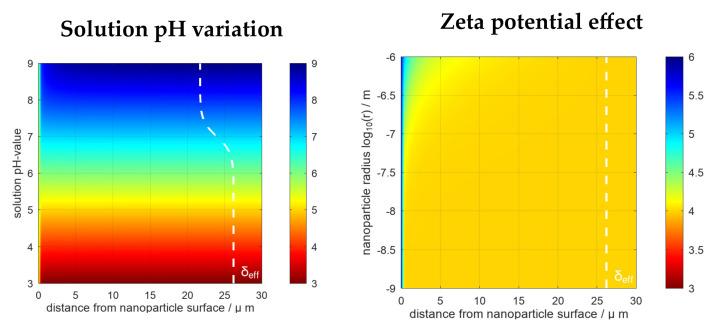
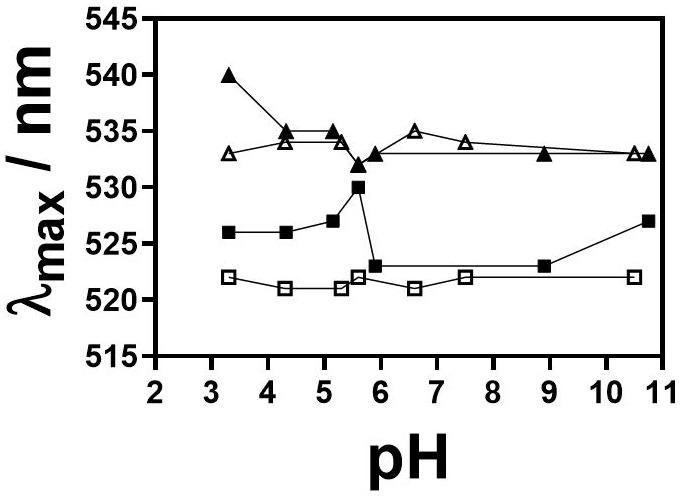
Biocompatible gold nanoparticles (AuNPs) are used in wound healing due to their radical scavenging activity. They shorten wound healing time by, for example, improving re-epithelialization and promoting the formation of new connective tissue. Another approach that promotes wound healing through cell proliferation while inhibiting bacterial growth is an acidic microenvironment, which can be achieved with acid-forming buffers. Accordingly, a combination of these two approaches appears promising and is the focus of the present study. Here, 18 nm and 56 nm gold NP (Au) were prepared with Turkevich reduction synthesis using design-of-experiments methodology, and the influence of pH and ionic strength on their behaviour was investigated. The citrate buffer had a pronounced effect on the stability of AuNPs due to the more complex intermolecular interactions, which was also confirmed by the changes in optical properties. In contrast, AuNPs dispersed in lactate and phosphate buffer were stable at therapeutically relevant ionic strength, regardless of their size. Simulation of the local pH distribution near the particle surface also showed a steep pH gradient for particles smaller than 100 nm. This suggests that the healing potential is further enhanced by a more acidic environment at the particle surface, making this strategy a promising approach.
生物相容性金纳米颗粒(AuNPs)因其自由基清除活性而用于伤口愈合。例如,它们通过改善再上皮化和促进新结缔组织的形成来缩短伤口愈合时间。另一种通过细胞增殖促进伤口愈合同时抑制细菌生长的方法是酸性微环境,这可以通过产酸缓冲液来实现。因此,这两种方法的结合似乎很有前景,是本研究的重点。在此,使用实验设计方法通过Turkevich还原合成制备了18 nm和56 nm的金纳米颗粒(Au),并研究了pH和离子强度对其行为的影响。由于更复杂的分子间相互作用,柠檬酸盐缓冲液对AuNPs的稳定性有显著影响,这也通过光学性质的变化得到了证实。相比之下,分散在乳酸盐和磷酸盐缓冲液中的AuNPs在治疗相关的离子强度下是稳定的,无论其大小如何。对颗粒表面附近局部pH分布的模拟也显示,小于100 nm的颗粒存在陡峭的pH梯度。这表明颗粒表面更酸性的环境进一步增强了愈合潜力,使这种策略成为一种有前景的方法。



 Zotero 插件