
具有过氧化物酶样活性的纳米酶用于铁死亡驱动的胶质母细胞瘤癌症生物催化纳米治疗:二维和三维球体模型
Nanozymes with Peroxidase-like Activity for Ferroptosis-Driven Biocatalytic Nanotherapeutics of Glioblastoma Cancer: 2D and 3D Spheroids Models.
作者信息
Carvalho Sandhra M, Mansur Alexandra A P, da Silveira Izabela B, Pires Thaisa F S, Victória Henrique F V, Krambrock Klaus, Leite M Fátima, Mansur Herman S
机构信息
Center of Nanoscience, Nanotechnology, and Innovation-CeNano2I, Department of Metallurgical and Materials Engineering, Federal University of Minas Gerais, UFMG, Belo Horizonte 31270-901, Brazil.
Department of Physiology and Biophysics, Institute of Biological Sciences-ICB, Federal University of Minas Gerais, UFMG, Belo Horizonte 31270-901, Brazil.
出版信息
Pharmaceutics. 2023 Jun 10;15(6):1702. doi: 10.3390/pharmaceutics15061702.
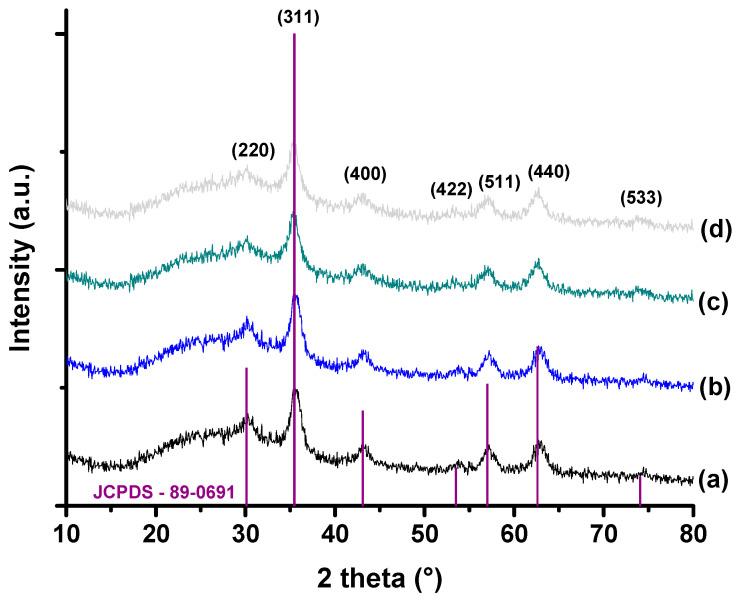
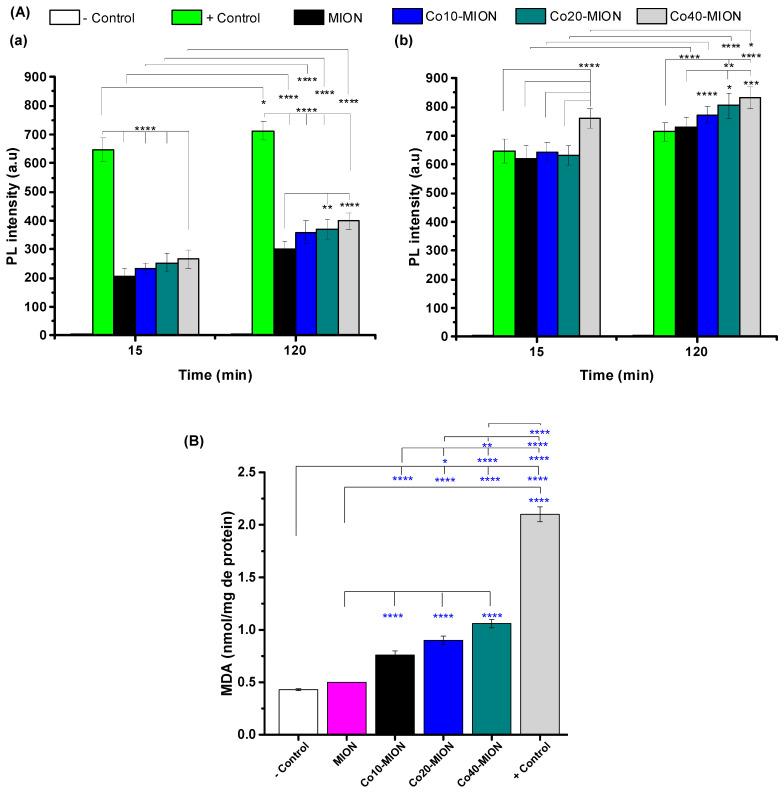
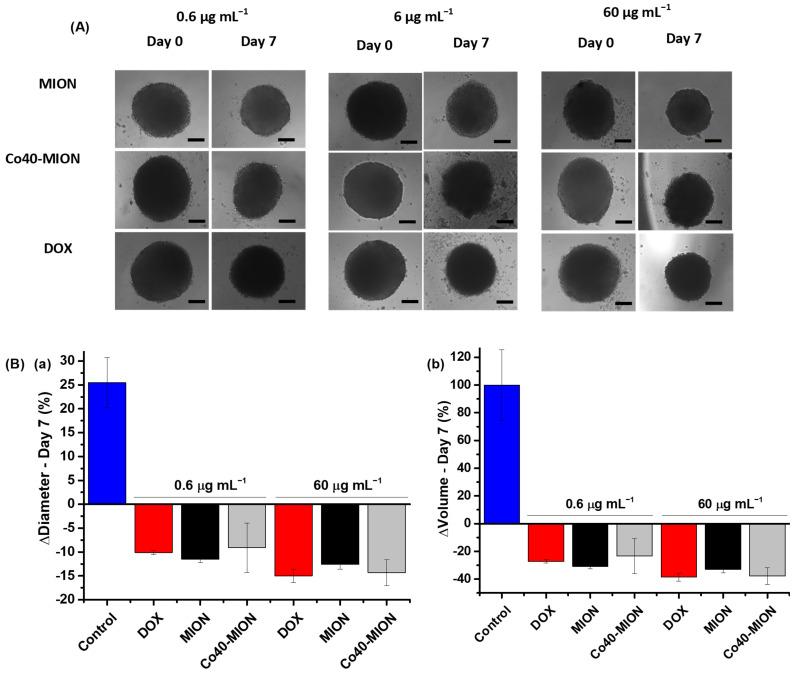
Glioblastoma (GBM) is the most common primary brain cancer in adults. Despite the remarkable advancements in recent years in the realm of cancer diagnosis and therapy, regrettably, GBM remains the most lethal form of brain cancer. In this view, the fascinating area of nanotechnology has emerged as an innovative strategy for developing novel nanomaterials for cancer nanomedicine, such as artificial enzymes, termed nanozymes, with intrinsic enzyme-like activities. Therefore, this study reports for the first time the design, synthesis, and extensive characterization of innovative colloidal nanostructures made of cobalt-doped iron oxide nanoparticles chemically stabilized by a carboxymethylcellulose capping ligand (i.e., Co-MION), creating a peroxidase-like (POD) nanozyme for biocatalytically killing GBM cancer cells. These nanoconjugates were produced using a strictly green aqueous process under mild conditions to create non-toxic bioengineered nanotherapeutics against GBM cells. The nanozyme (Co-MION) showed a magnetite inorganic crystalline core with a uniform spherical morphology (diameter, 2R = 6-7 nm) stabilized by the CMC biopolymer, producing a hydrodynamic diameter (H) of 41-52 nm and a negatively charged surface (ZP-50 mV). Thus, we created supramolecular water-dispersible colloidal nanostructures composed of an inorganic core (Cox-MION) and a surrounding biopolymer shell (CMC). The nanozymes confirmed the cytotoxicity evaluated by an MTT bioassay using a 2D culture in vitro of U87 brain cancer cells, which was concentration-dependent and boosted by increasing the cobalt-doping content in the nanosystems. Additionally, the results confirmed that the lethality of U87 brain cancer cells was predominantly caused by the production of toxic cell-damaging reactive oxygen species (ROS) through the in situ generation of hydroxyl radicals (·OH) by the peroxidase-like activity displayed by nanozymes. Thus, the nanozymes induced apoptosis (i.e., programmed cell death) and ferroptosis (i.e., lipid peroxidation) pathways by intracellular biocatalytic enzyme-like activity. More importantly, based on the 3D spheroids model, these nanozymes inhibited tumor growth and remarkably reduced the malignant tumor volume after the nanotherapeutic treatment (ΔV40%). The kinetics of the anticancer activity of these novel nanotherapeutic agents decreased with the time of incubation of the GBM 3D models, indicating a similar trend commonly observed in tumor microenvironments (TMEs). Furthermore, the results demonstrated that the 2D in vitro model overestimated the relative efficiency of the anticancer agents (i.e., nanozymes and the DOX drug) compared to the 3D spheroid models. These findings are notable as they evidenced that the 3D spheroid model resembles more precisely the TME of "real" brain cancer tumors in patients than 2D cell cultures. Thus, based on our groundwork, 3D tumor spheroid models might be able to offer transitional systems between conventional 2D cell cultures and complex biological in vivo models for evaluating anticancer agents more precisely. These nanotherapeutics offer a wide avenue of opportunities to develop innovative nanomedicines for fighting against cancerous tumors and reducing the frequency of severe side effects in conventionally applied chemotherapy-based treatments.
胶质母细胞瘤(GBM)是成人中最常见的原发性脑癌。尽管近年来癌症诊断和治疗领域取得了显著进展,但遗憾的是,GBM仍然是最致命的脑癌形式。鉴于此,迷人的纳米技术领域已成为开发用于癌症纳米医学的新型纳米材料的创新策略,例如具有内在类酶活性的人工酶,即纳米酶。因此,本研究首次报道了由羧甲基纤维素封端配体化学稳定的钴掺杂氧化铁纳米颗粒制成的创新胶体纳米结构(即Co-MION)的设计、合成和广泛表征,创建了一种用于生物催化杀死GBM癌细胞的过氧化物酶样(POD)纳米酶。这些纳米缀合物是在温和条件下使用严格的绿色水相工艺制备的,以创建针对GBM细胞的无毒生物工程纳米治疗剂。纳米酶(Co-MION)显示出由CMC生物聚合物稳定的具有均匀球形形态(直径,2R = 6-7 nm)的磁铁矿无机晶体核心,产生的流体动力学直径(H)为41-52 nm,表面带负电荷(ZP-50 mV)。因此,我们创建了由无机核心(Cox-MION)和周围生物聚合物壳(CMC)组成的超分子水分散性胶体纳米结构。纳米酶通过使用U87脑癌细胞的二维体外培养MTT生物测定法评估的细胞毒性得到证实,该毒性是浓度依赖性的,并通过增加纳米系统中的钴掺杂含量而增强。此外,结果证实U87脑癌细胞的致死性主要是由纳米酶表现出的过氧化物酶样活性原位产生羟基自由基(·OH)从而产生有毒的细胞损伤活性氧(ROS)所致。因此,纳米酶通过细胞内生物催化类酶活性诱导凋亡(即程序性细胞死亡)和铁死亡(即脂质过氧化)途径。更重要的是,基于三维球体模型,这些纳米酶在纳米治疗后抑制了肿瘤生长并显著减小了恶性肿瘤体积(ΔV40%)。这些新型纳米治疗剂的抗癌活性动力学随着GBM三维模型的孵育时间而降低,这表明在肿瘤微环境(TME)中通常观察到类似趋势。此外,结果表明,与三维球体模型相比,二维体外模型高估了抗癌剂(即纳米酶和阿霉素药物)的相对效率。这些发现值得注意,因为它们证明三维球体模型比二维细胞培养更精确地模拟了患者“真实”脑癌肿瘤的TME。因此,基于我们的基础工作,三维肿瘤球体模型可能能够在传统二维细胞培养和复杂的体内生物模型之间提供过渡系统,以便更精确地评估抗癌剂。这些纳米治疗剂为开发创新纳米药物提供了广泛的机会,以对抗癌性肿瘤并减少传统基于化疗的治疗中严重副作用的发生频率。






 Zotero 插件