
聚合物降解的大规模组学数据集为不同塑料球上的微生物生态位和演替提供了有力的解释。
Large-scale omics dataset of polymer degradation provides robust interpretation for microbial niche and succession on different plastisphere.
作者信息
Yokoyama Daiki, Takamura Ayari, Tsuboi Yuuri, Kikuchi Jun
机构信息
RIKEN Center for Sustainable Resource Science, 1-7-22 Suehiro-cho, Tsurumi-ku, Yokohama, Kanagawa, 230-0045, Japan.
Graduate School of Medical Life Science, Yokohama City University, 1-7-29 Suehiro-cho, Tsurumi-ku, Yokohama, Kanagawa, 230-0045, Japan.
出版信息
ISME Commun. 2023 Jul 3;3(1):67. doi: 10.1038/s43705-023-00275-z.
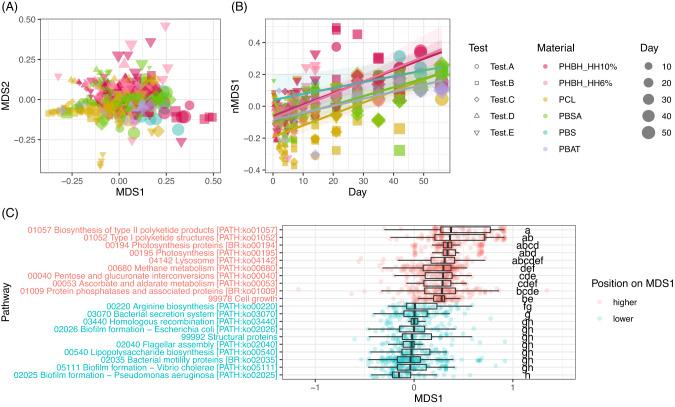
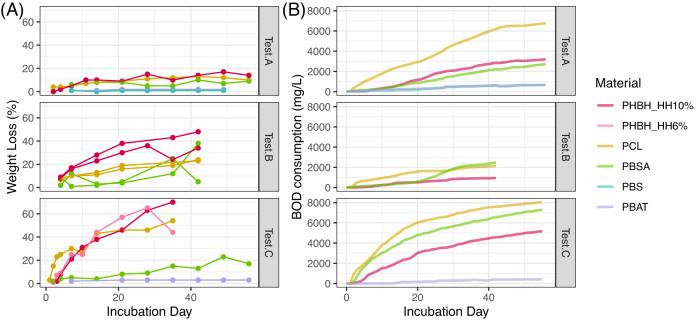
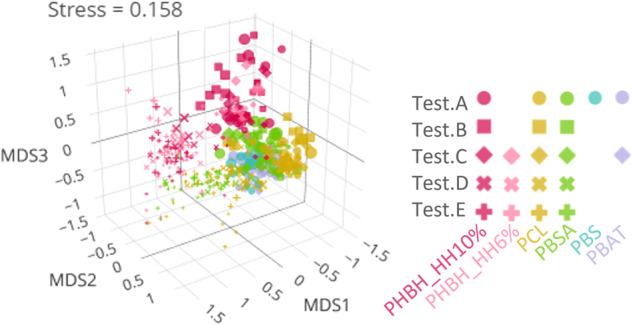
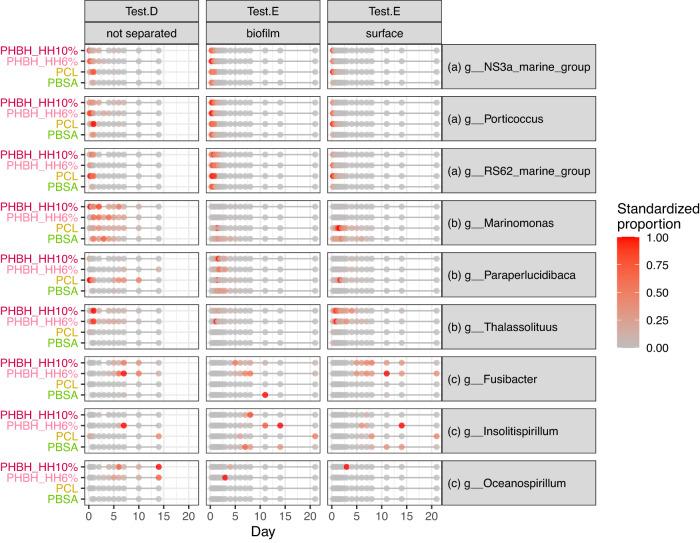
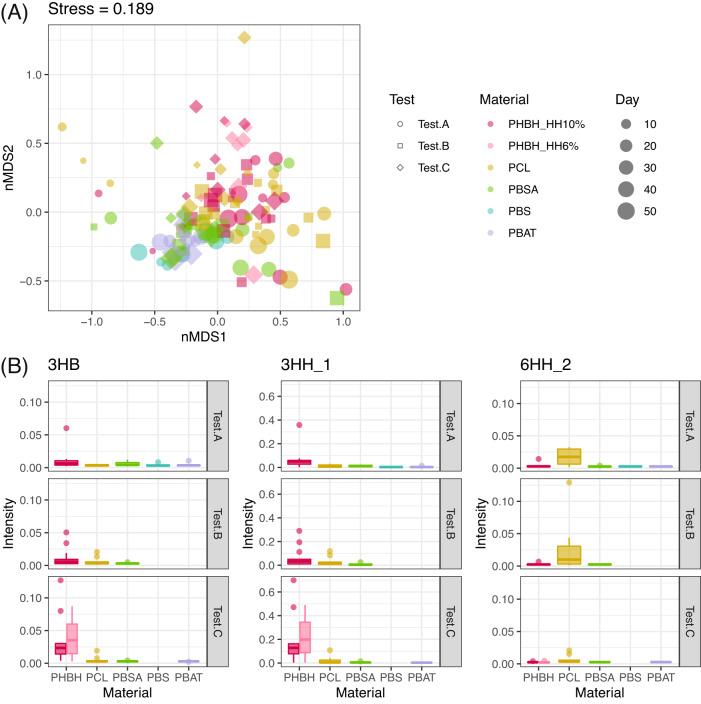
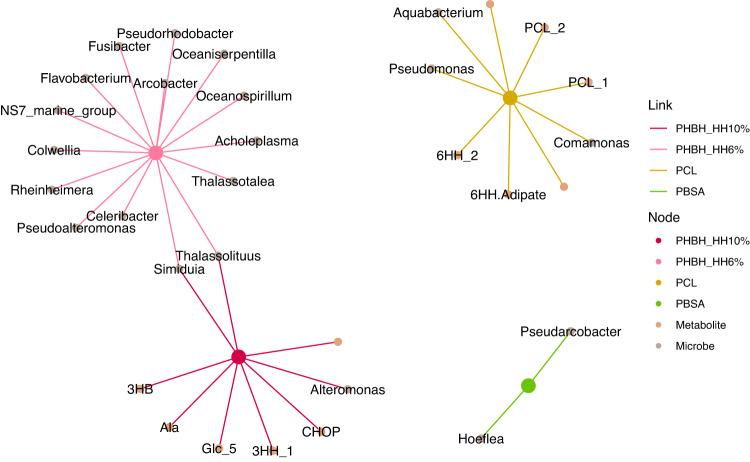
While biodegradable polymers have received increased attention due to the recent marine plastic problem, few studies have compared microbiomes and their degradation processes among biodegradable polymers. In this study, we set up prompt evaluation systems for polymer degradation, allowing us to collect 418 microbiome and 125 metabolome samples to clarify the microbiome and metabolome differences according to degradation progress and polymer material (polycaprolactone [PCL], polybutylene succinate-co-adipate [PBSA], polybutylene succinate [PBS], polybutylene adipate-co-terephthalate [PBAT], and poly(3-hydroxybutyrate-co-3-hydroxyhexanoate) [PHBH]). The microbial community compositions were converged to each polymer material, and the largest differences were observed between PHBH and other polymers. Such gaps were probably formed primarily by the presence of specific hydrolase genes (i.e., 3HB depolymerase, lipase, and cutinase) in the microorganisms. Time-series sampling suggested several steps for microbial succession: (1) initial microbes decrease abruptly after incubation starts; (2) microbes, including polymer degraders, increase soon after the start of incubation and show an intermediate peak; (3) microbes, including biofilm constructers, increase their abundance gradually. Metagenome prediction showed functional changes, where free-swimming microbes with flagella adhered stochastically onto the polymer, and certain microbes started to construct a biofilm. Our large-dataset-based results provide robust interpretations for biodegradable polymer degradation.
尽管由于近期的海洋塑料问题,可生物降解聚合物受到了越来越多的关注,但很少有研究比较可生物降解聚合物之间的微生物群落及其降解过程。在本研究中,我们建立了聚合物降解的快速评估系统,从而能够收集418个微生物群落样本和125个代谢组样本,以根据降解进程和聚合物材料(聚己内酯[PCL]、聚丁二酸丁二醇酯-己二酸共聚物[PBSA]、聚丁二酸丁二醇酯[PBS]、聚己二酸/对苯二甲酸丁二醇酯[PBAT]和聚(3-羟基丁酸酯-3-羟基己酸酯)[PHBH])来阐明微生物群落和代谢组的差异。微生物群落组成趋向于每种聚合物材料,并且在PHBH与其他聚合物之间观察到最大差异。这些差异可能主要是由微生物中特定水解酶基因(即3HB解聚酶、脂肪酶和角质酶)的存在形成的。时间序列采样表明了微生物演替的几个步骤:(1)初始微生物在培养开始后突然减少;(2)包括聚合物降解菌在内的微生物在培养开始后不久增加并出现一个中间峰值;(3)包括生物膜构建菌在内的微生物其丰度逐渐增加。宏基因组预测显示了功能变化,其中带有鞭毛的自由游动微生物随机附着在聚合物上,并且某些微生物开始构建生物膜。我们基于大数据集的结果为可生物降解聚合物的降解提供了有力的解释。
 Zotero 插件