
使用DNA甲基化进行分层反卷积以实现人类大脑中广泛的细胞类型解析
Hierarchical deconvolution for extensive cell type resolution in the human brain using DNA methylation.
作者信息
Zhang Ze, Wiencke John K, Kelsey Karl T, Koestler Devin C, Molinaro Annette M, Pike Steven C, Karra Prasoona, Christensen Brock C, Salas Lucas A
机构信息
Department of Epidemiology, Geisel School of Medicine, Dartmouth College, Lebanon, NH, United States.
Department of Neurological Surgery, Institute for Human Genetics, University of California, San Francisco, San Francisco, CA, United States.
出版信息
Front Neurosci. 2023 Jun 19;17:1198243. doi: 10.3389/fnins.2023.1198243. eCollection 2023.
INTRODUCTION
The human brain comprises heterogeneous cell types whose composition can be altered with physiological and pathological conditions. New approaches to discern the diversity and distribution of brain cells associated with neurological conditions would significantly advance the study of brain-related pathophysiology and neuroscience. Unlike single-nuclei approaches, DNA methylation-based deconvolution does not require special sample handling or processing, is cost-effective, and easily scales to large study designs. Existing DNA methylation-based methods for brain cell deconvolution are limited in the number of cell types deconvolved.
METHODS
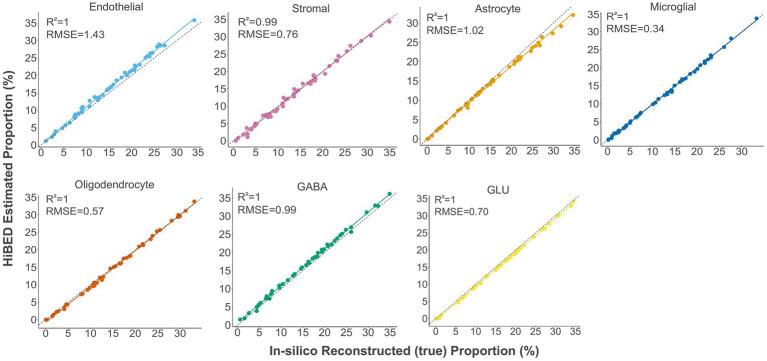
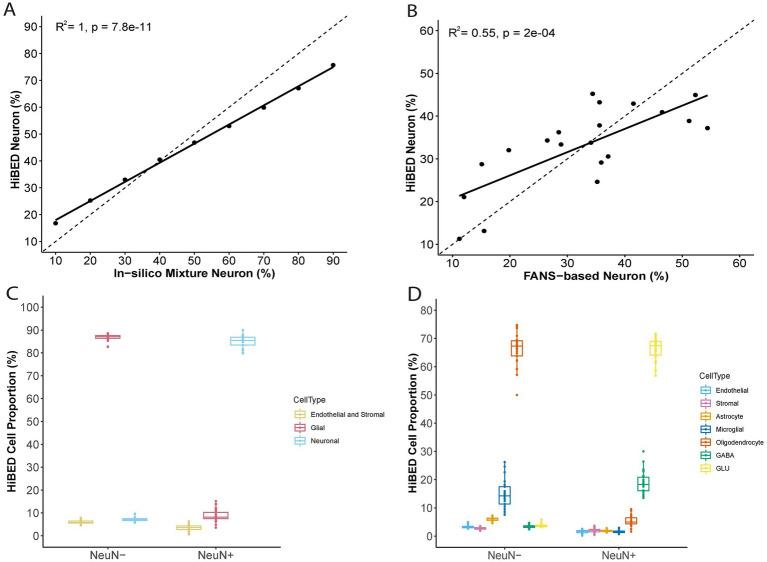
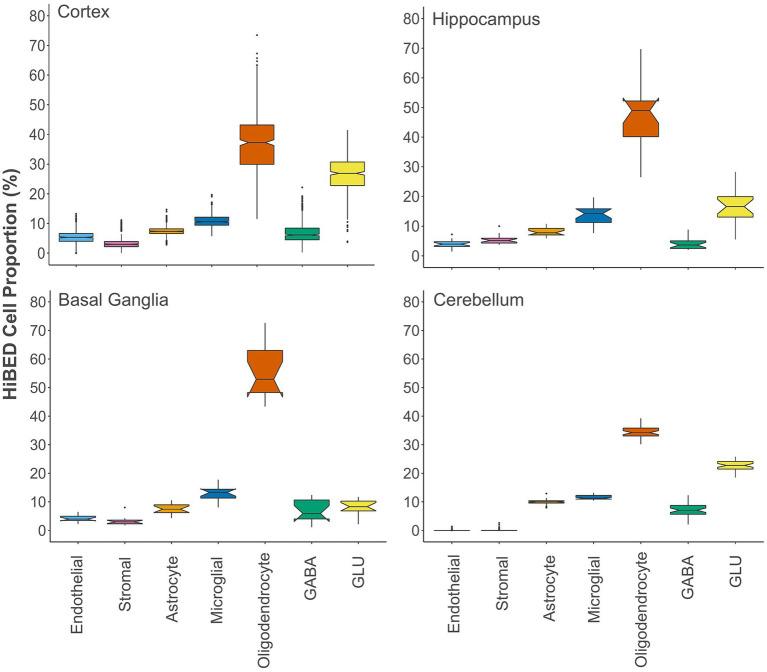
Using DNA methylation profiles of the top cell-type-specific differentially methylated CpGs, we employed a hierarchical modeling approach to deconvolve GABAergic neurons, glutamatergic neurons, astrocytes, microglial cells, oligodendrocytes, endothelial cells, and stromal cells.
RESULTS
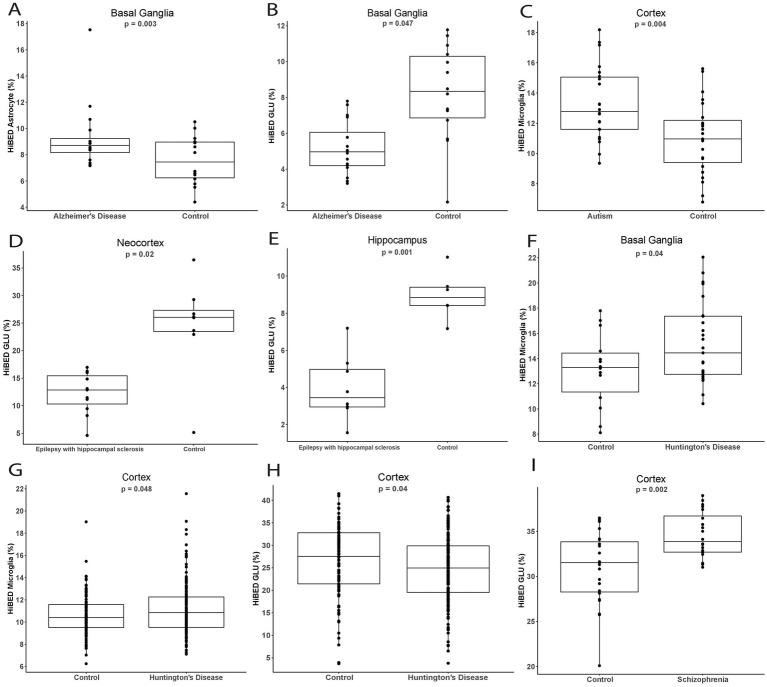
We demonstrate the utility of our method by applying it to data on normal tissues from various brain regions and in aging and diseased tissues, including Alzheimer's disease, autism, Huntington's disease, epilepsy, and schizophrenia.
DISCUSSION
We expect that the ability to determine the cellular composition in the brain using only DNA from bulk samples will accelerate understanding brain cell type composition and cell-type-specific epigenetic states in normal and diseased brain tissues.
引言
人类大脑由多种异质细胞类型组成,其组成会随生理和病理状况而改变。识别与神经疾病相关的脑细胞多样性和分布的新方法将显著推动脑相关病理生理学和神经科学的研究。与单核方法不同,基于DNA甲基化的反卷积不需要特殊的样本处理,具有成本效益,并且易于扩展到大型研究设计。现有的基于DNA甲基化的脑细胞反卷积方法在可反卷积的细胞类型数量上有限。
方法
利用顶级细胞类型特异性差异甲基化CpG的DNA甲基化谱,我们采用分层建模方法对γ-氨基丁酸能神经元、谷氨酸能神经元、星形胶质细胞、小胶质细胞、少突胶质细胞、内皮细胞和基质细胞进行反卷积。
结果
我们将该方法应用于来自不同脑区的正常组织以及衰老和患病组织(包括阿尔茨海默病、自闭症、亨廷顿舞蹈病、癫痫和精神分裂症)的数据,证明了我们方法的实用性。
讨论
我们预计,仅使用大量样本中的DNA来确定大脑细胞组成的能力将加速对正常和患病脑组织中脑细胞类型组成以及细胞类型特异性表观遗传状态的理解。

 Zotero 插件