
天然产物作为新型抗肥胖药物:作用机制及治疗管理潜力的见解
Natural products as novel anti-obesity agents: insights into mechanisms of action and potential for therapeutic management.
作者信息
Shaik Mohamed Sayed Ummul Fathima, Moshawih Said, Goh Hui Poh, Kifli Nurolaini, Gupta Gaurav, Singh Sachin Kumar, Chellappan Dinesh Kumar, Dua Kamal, Hermansyah Andi, Ser Hooi Leng, Ming Long Chiau, Goh Bey Hing
机构信息
PAPRSB Institute of Health Sciences, Universiti Brunei Darussalam, Gadong, Brunei.
School of Pharmacy, Suresh Gyan Vihar University, Jaipur, India.
出版信息
Front Pharmacol. 2023 Jun 20;14:1182937. doi: 10.3389/fphar.2023.1182937. eCollection 2023.
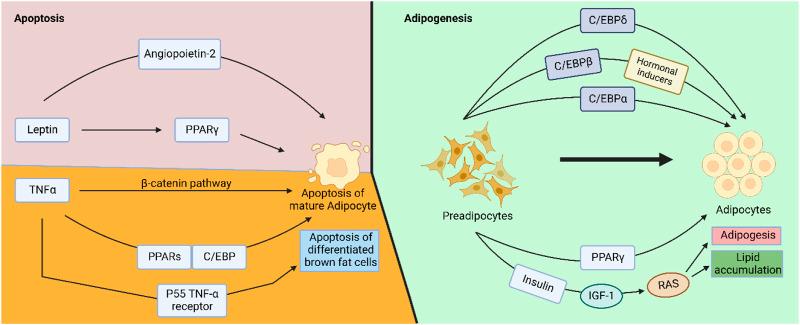
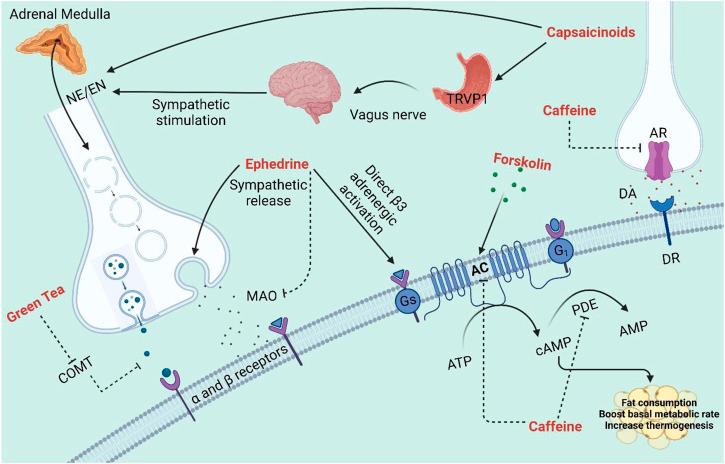
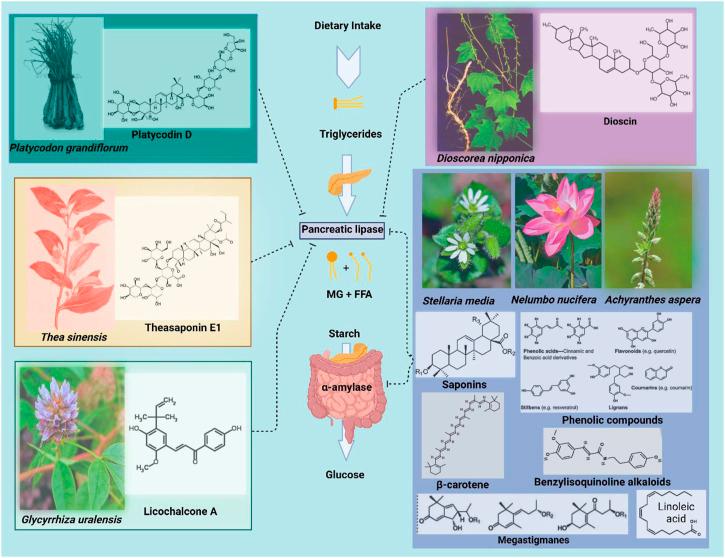
Obesity affects more than 10% of the adult population globally. Despite the introduction of diverse medications aimed at combating fat accumulation and obesity, a significant number of these pharmaceutical interventions are linked to substantial occurrences of severe adverse events, occasionally leading to their withdrawal from the market. Natural products serve as attractive sources for anti-obesity agents as many of them can alter the host metabolic processes and maintain glucose homeostasis via metabolic and thermogenic stimulation, appetite regulation, pancreatic lipase and amylase inhibition, insulin sensitivity enhancing, adipogenesis inhibition and adipocyte apoptosis induction. In this review, we shed light on the biological processes that control energy balance and thermogenesis as well as metabolic pathways in white adipose tissue browning, we also highlight the anti-obesity potential of natural products with their mechanism of action. Based on previous findings, the crucial proteins and molecular pathways involved in adipose tissue browning and lipolysis induction are uncoupling protein-1, PR domain containing 16, and peroxisome proliferator-activated receptor-γ in addition to Sirtuin-1 and AMP-activated protein kinase pathway. Given that some phytochemicals can also lower proinflammatory substances like TNF-α, IL-6, and IL-1 secreted from adipose tissue and change the production of adipokines like leptin and adiponectin, which are important regulators of body weight, natural products represent a treasure trove for anti-obesity agents. In conclusion, conducting comprehensive research on natural products holds the potential to accelerate the development of an improved obesity management strategy characterized by heightened efficacy and reduced incidence of side effects.
肥胖影响着全球超过10%的成年人口。尽管已经推出了多种旨在对抗脂肪堆积和肥胖的药物,但这些药物干预措施中有相当一部分与大量严重不良事件的发生有关,偶尔还会导致它们退出市场。天然产物是抗肥胖药物的诱人来源,因为其中许多可以通过代谢和产热刺激、食欲调节、抑制胰腺脂肪酶和淀粉酶、增强胰岛素敏感性、抑制脂肪生成和诱导脂肪细胞凋亡来改变宿主代谢过程并维持葡萄糖稳态。在这篇综述中,我们阐明了控制能量平衡和产热的生物学过程以及白色脂肪组织褐变中的代谢途径,我们还强调了天然产物的抗肥胖潜力及其作用机制。根据先前的研究结果,除了沉默调节蛋白-1和AMP激活的蛋白激酶途径外,参与脂肪组织褐变和诱导脂肪分解的关键蛋白质和分子途径还有解偶联蛋白-1、含PR结构域的蛋白16和过氧化物酶体增殖物激活受体-γ。鉴于一些植物化学物质还可以降低脂肪组织分泌的促炎物质如肿瘤坏死因子-α、白细胞介素-6和白细胞介素-1,并改变瘦素和脂联素等脂肪因子的产生,而这些都是体重的重要调节因子,天然产物是抗肥胖药物的宝库。总之,对天然产物进行全面研究有可能加速开发一种改进的肥胖管理策略,其特点是疗效提高且副作用发生率降低。



 Zotero 插件