
多巴胺信号调节捕食者驱动的产卵行为变化。
Dopamine signaling regulates predator-driven changes in egg laying behavior.
机构信息
Biological Sciences Graduate Program, University of California, San Diego, La Jolla, United States.
Molecular Neurobiology Laboratory, The Salk Institute for Biological Studies, La Jolla, United States.
出版信息
Elife. 2023 Jul 11;12:e83957. doi: 10.7554/eLife.83957.
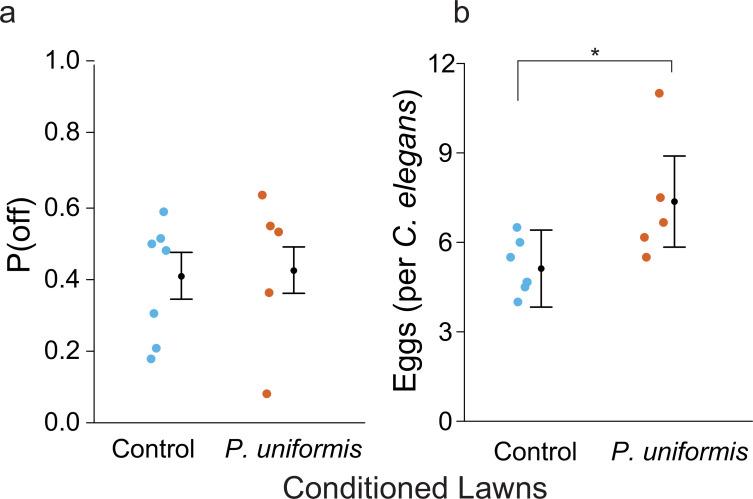
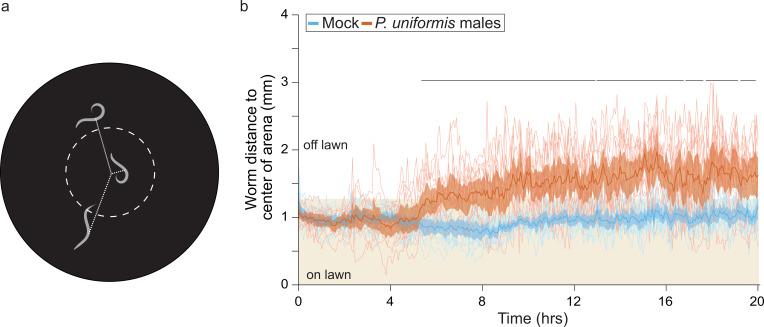
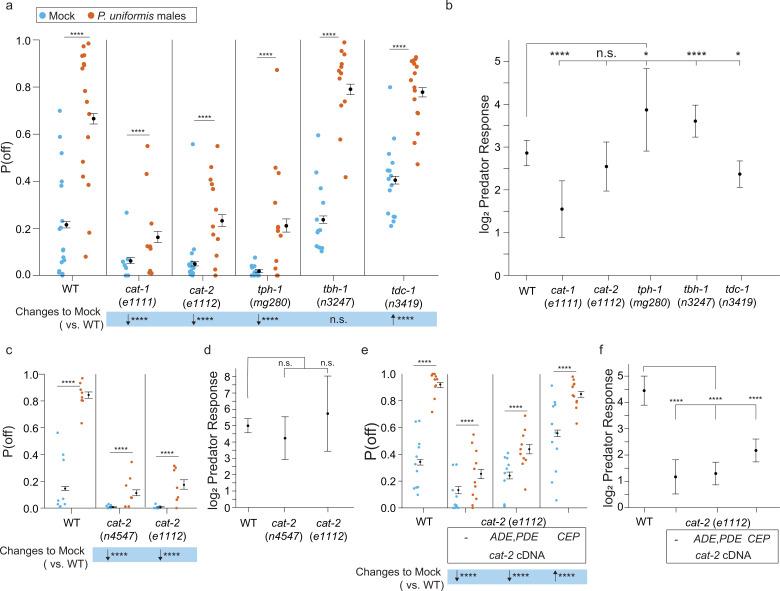
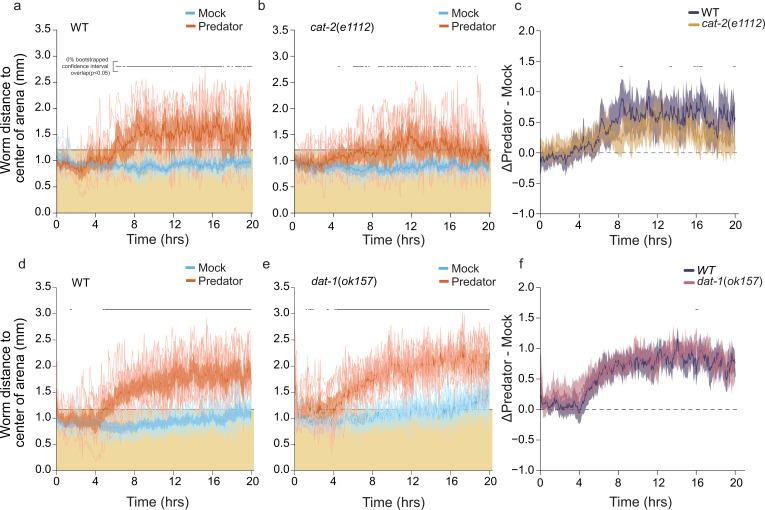
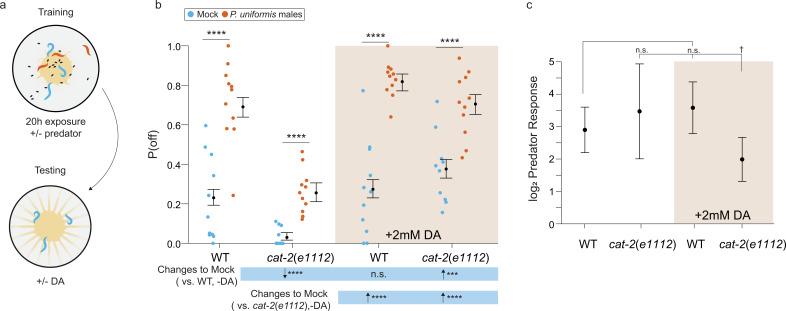
Prey respond to predators by altering their behavior to optimize their own fitness and survival. Specifically, prey are known to avoid predator-occupied territories to reduce their risk of harm or injury to themselves and their progeny. We probe the interactions between and its naturally cohabiting predator to reveal the pathways driving changes in prey behavior. While prefers to lay its eggs on a bacteria food lawn, the presence of a predator inside a lawn induces to lay more eggs away from that lawn. We confirm that this change in egg laying is in response to bites from predators, rather than to predatory secretions. Moreover, predator-exposed prey continue to lay their eggs away from the dense lawn even after the predator is removed, indicating a form of learning. Next, we find that mutants in dopamine synthesis significantly reduce egg laying behavior off the lawn in both predator-free and predator-inhabited lawns, which we can rescue by transgenic complementation or supplementation with exogenous dopamine. Moreover, we find that dopamine is likely released from multiple dopaminergic neurons and requires combinations of both D1- (DOP-1) and D2-like (DOP-2 and DOP-3) dopamine receptors to alter predator-induced egg laying behavior, whereas other combinations modify baseline levels of egg laying behavior. Together, we show that dopamine signaling can alter both predator-free and predator-induced foraging strategies, suggesting a role for this pathway in defensive behaviors.
猎物通过改变行为来优化自身适应度和生存能力,从而对捕食者做出反应。具体来说,猎物通常会避免在捕食者占据的领地活动,以降低自身及其后代受到伤害的风险。我们探究了 和其天然共栖捕食者 之间的相互作用,以揭示驱动猎物行为变化的途径。虽然 喜欢在细菌食物草坪上产卵,但捕食者在草坪内的存在会促使 更多地在远离草坪的地方产卵。我们证实,这种产卵地点的改变是对捕食者的叮咬做出的反应,而不是对捕食者分泌物的反应。此外,即使捕食者被移除后,暴露在捕食者下的猎物仍会继续将卵产在远离密集草坪的地方,这表明存在一种学习形式。接下来,我们发现多巴胺合成突变体在无捕食者和有捕食者的草坪中产卵行为明显减少,通过转基因互补或外源多巴胺补充可以挽救这种减少。此外,我们发现多巴胺可能由多个多巴胺能神经元释放,并需要 D1-(DOP-1)和 D2 样(DOP-2 和 DOP-3)多巴胺受体的组合来改变捕食者诱导的产卵行为,而其他组合则会改变基础产卵行为水平。总之,我们表明多巴胺信号可以改变无捕食者和捕食者诱导的觅食策略,这表明该途径在防御行为中发挥作用。





 Zotero 插件