
肠道免疫共生与生物调节剂。
Gut Immunobiosis and Biomodulators.
机构信息
Nutrition Unit, Department of Pediatrics, "Giovanni XXIII" Children Hospital, University of Bari Aldo Moro, 70126 Bari, Italy.
Department of Emergency and Organ Transplantation, School of Allergology and Clinical Immunology, University of Bari Aldo Moro, Policlinico di Bari, 70126 Bari, Italy.
出版信息
Nutrients. 2023 Apr 28;15(9):2114. doi: 10.3390/nu15092114.
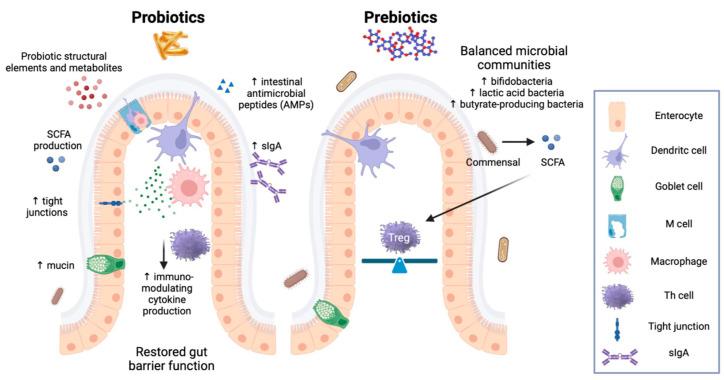
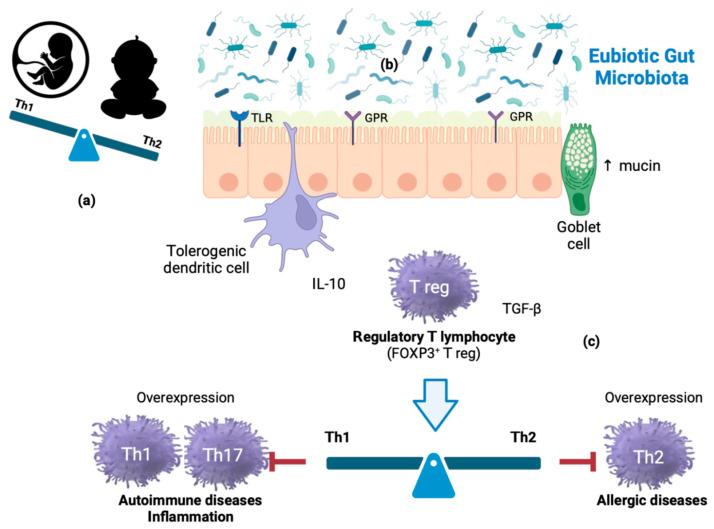
The human gastrointestinal (GI) tract hosts complex and dynamic populations of microorganisms (gut microbiota) in advantageous symbiosis with the host organism through sophisticated molecular cross-talk. The balance and diversification within microbial communities (eubiosis) are crucial for the immune and metabolic homeostasis of the host, as well as for inhibiting pathogen penetration. In contrast, compositional dysregulation of the microbiota (dysbiosis) is blamed for the determinism of numerous diseases. Although further advances in the so-called 'omics' disciplines are needed, dietary manipulation of the gut microbial ecosystem through biomodulators (prebiotics, probiotics, symbionts, and postbiotics) represents an intriguing target to stabilize and/or restore eubiosis. Recently, new approaches have been developed for the production of infant formulas supplemented with prebiotics (human milk oligosaccharides [HMOs], galacto-oligosaccharides [GOS], fructo-oligosaccharides [FOS]), probiotics, and postbiotics to obtain formulas that are nutritionally and biologically equivalent to human milk (closer to the reference).
人类胃肠道(GI)中栖息着复杂而动态的微生物群体(肠道微生物群),它们通过复杂的分子交流与宿主生物体建立有利的共生关系。微生物群落内部的平衡和多样化(共生)对于宿主的免疫和代谢稳态以及抑制病原体穿透至关重要。相比之下,微生物群落的组成失调(失调)被认为是许多疾病的决定因素。尽管需要进一步推进所谓的“组学”学科的发展,但通过生物调节剂(益生元、益生菌、共生体和后生元)对肠道微生物生态系统进行饮食干预,以稳定和/或恢复共生状态,这代表了一个有趣的目标。最近,已经开发出了新的方法来生产添加了益生元(人乳寡糖[HMO]、半乳糖寡糖[GOS]、果糖寡糖[FOS])、益生菌和后生元的婴儿配方奶粉,以获得在营养和生物学上与母乳等效的配方(更接近参考)。
 Zotero 插件