
第三磨牙冠周炎相关疼痛模式:一项形态计量学观察性回顾性研究。
Patterns of Third-Molar-Pericoronitis-Related Pain: A Morphometrical Observational Retrospective Study.
作者信息
Chisci Dafne, Parrini Stefano, Baldini Nicola, Chisci Glauco
机构信息
Oral Surgery School, Dentistry and Dental Prosthodontics, Department of Medical Biotechnologies, University of Siena, 53100 Siena, Italy.
出版信息
Healthcare (Basel). 2023 Jun 30;11(13):1890. doi: 10.3390/healthcare11131890.
BACKGROUND
Mandibular third molar (M3M) removal and the management of postoperative complications represent a common matter of interest in oral and maxillofacial surgery. Pain represents a great symptom for patients affected by pericoronitis and it is the most common indication for third molar removal. The aim of the present article is to search for patterns of pre-operative pain in patients before undergoing third molar surgery and to test for a relation between some patterns of symptoms, such as pain intensity, site of symptomatic tooth, and referred area of pain.
METHODS
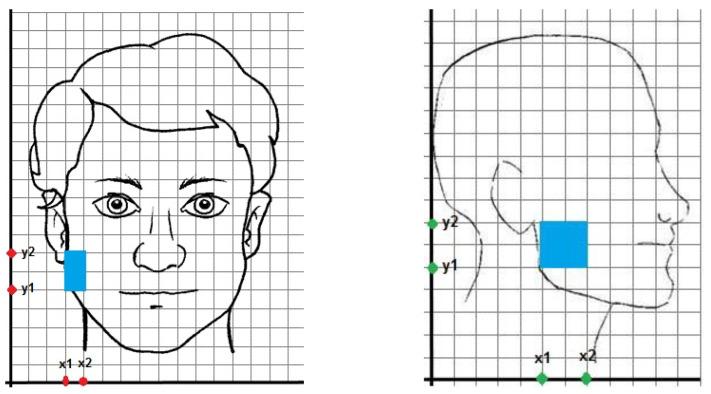
This retrospective observational study enrolled a total of 86 patients, aged (mean ± SD) 34.54 ± 13.62 years (range 17-78 years), scheduled for outpatient third molar extraction at the Oral Surgery School, Department of Medical Biotechnologies, Policlinico "Le Scotte", University of Siena. Pericoronitis and pain were the symptoms of the patients and the indication of extraction. Inclusion criteria were the presence of partially impacted third molars, confirmed with a preoperative panoramic radiograph, and preoperative pain. Exclusion criteria were known neurological disease (such as previous trigeminal or facial nerve injuries), impaired communicative or cognitive disease, diagnosed diabetes mellitus, and oral surgical intervention within 30 days before data collection. Patients were visited and asked to answer a morphometric analytic questionnaire about their perception of pain referred to the third molar. Analyses were performed on statistical evaluation on age, age ranges, patient gender, prior third molar extraction, site of pericoronitis, pain score (1-10), and pain area. Two-tailed values of less than 0.05 were considered significant if not otherwise specified.
RESULTS
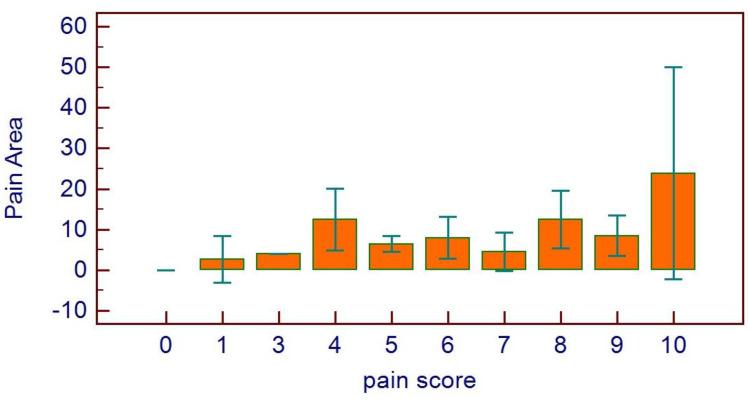
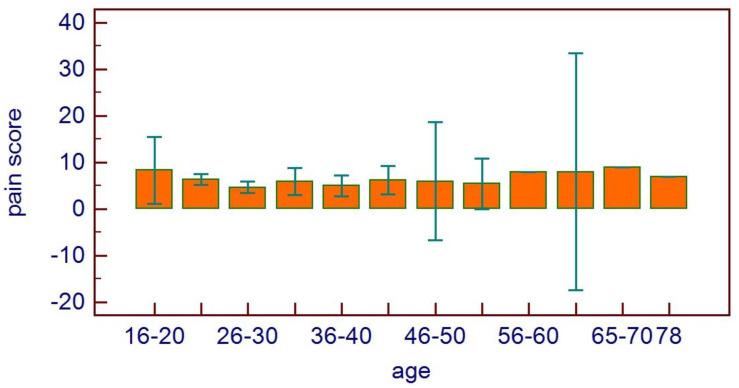
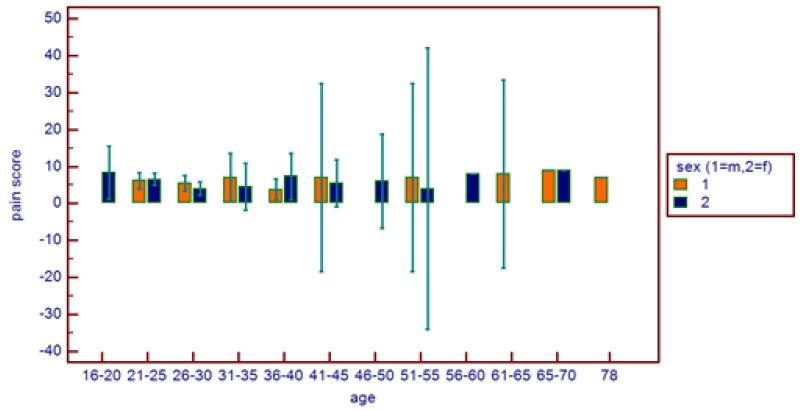
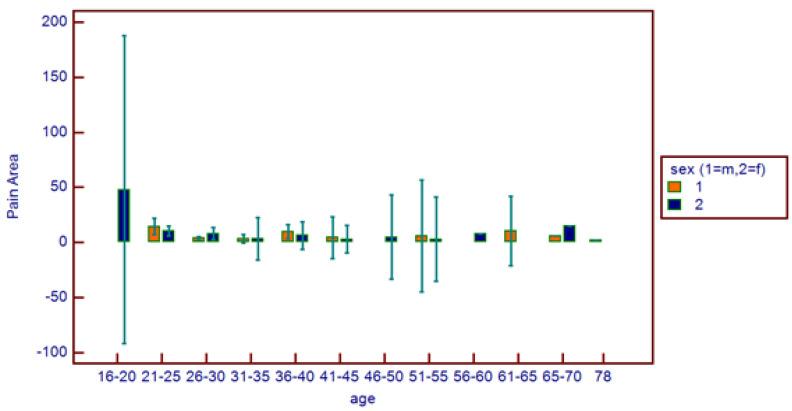
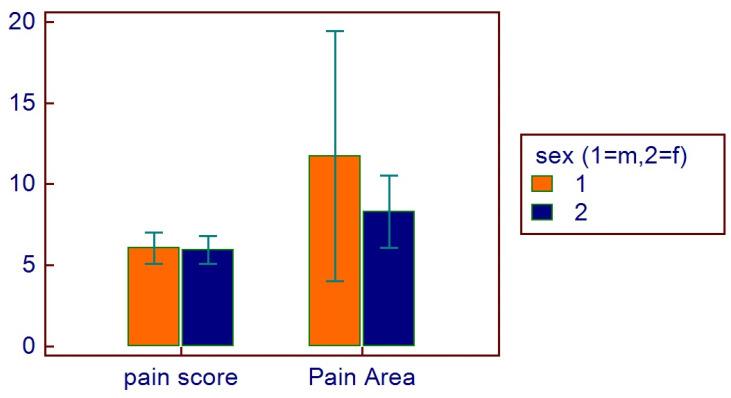
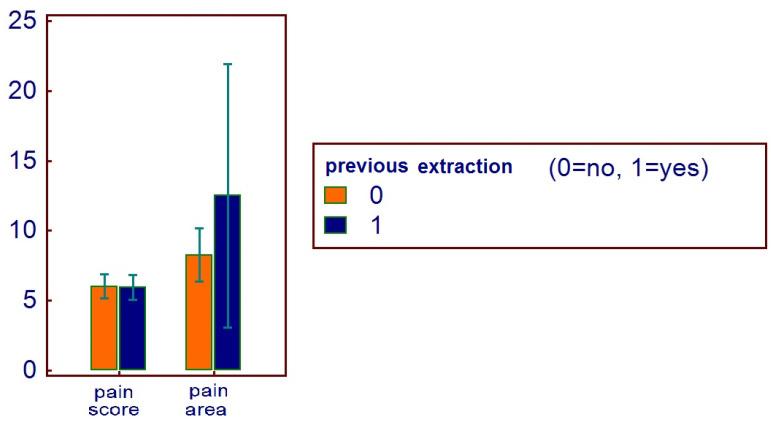
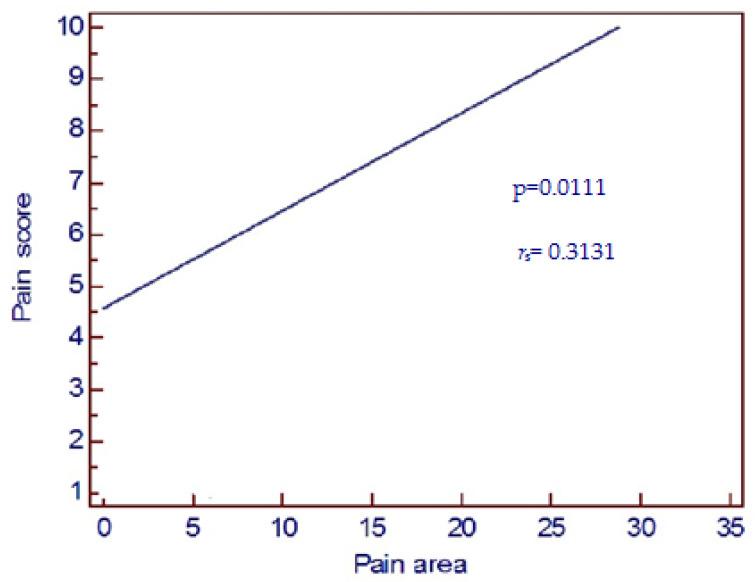
No correlations were found between age, gender, previous extraction, tooth site (maxillar on mandible), pain score, and pain area. Patterns of third molar pericoronitis pain among 86 patients were reported. A significant correlation was found between pain score and pain area ( = 0.0111, = 0.3131).
CONCLUSIONS
Pain intensity has indeed some kind of responsibility in determining the orofacial distribution of pain. The pain area referral patterns of the present article could be considered as a pain model resulting from the pericoronitis of maxillar and mandibular third molars.
背景
下颌第三磨牙(M3M)拔除及术后并发症的处理是口腔颌面外科中一个常见的关注点。疼痛是冠周炎患者的一个主要症状,也是第三磨牙拔除最常见的指征。本文旨在探寻第三磨牙手术患者术前疼痛的模式,并检验一些症状模式之间的关系,如疼痛强度、患牙部位及疼痛放射区域。
方法
这项回顾性观察研究共纳入86例患者,年龄(均值±标准差)为34.54±13.62岁(范围17 - 78岁),他们计划在锡耶纳大学“Le Scotte”综合医院医学生物技术系口腔外科门诊进行第三磨牙拔除。冠周炎和疼痛是患者的症状及拔牙指征。纳入标准为术前全景X线片证实存在部分阻生第三磨牙且有术前疼痛。排除标准为已知的神经系统疾病(如既往三叉神经或面神经损伤)、沟通或认知障碍性疾病、确诊的糖尿病以及在数据收集前30天内进行过口腔外科手术。对患者进行访视,并要求他们回答一份关于其对第三磨牙相关疼痛感知的形态学分析问卷。对年龄、年龄范围、患者性别、既往第三磨牙拔除情况、冠周炎部位、疼痛评分(1 - 10)及疼痛区域进行统计学评估分析。未另行说明时,双侧P值小于0.05被认为具有统计学意义。
结果
在年龄、性别、既往拔牙情况、牙位(上颌或下颌)、疼痛评分及疼痛区域之间未发现相关性。报告了86例患者第三磨牙冠周炎疼痛的模式。发现疼痛评分与疼痛区域之间存在显著相关性(P = 0.0111,r = 0.3131)。
结论
疼痛强度在确定口面部疼痛分布方面确实有一定作用。本文的疼痛区域放射模式可被视为上颌和下颌第三磨牙冠周炎导致的一种疼痛模型。





 Zotero 插件