
悬停时间 HAR:使用腕戴惯性传感器的篮球活动识别基准数据集。
Hang-Time HAR: A Benchmark Dataset for Basketball Activity Recognition Using Wrist-Worn Inertial Sensors.
机构信息
Ubiquitous Computing, University of Siegen, 57076 Siegen, Germany.
Computer Science, University of Colorado Boulder, Boulder, CO 80302, USA.
出版信息
Sensors (Basel). 2023 Jun 25;23(13):5879. doi: 10.3390/s23135879.
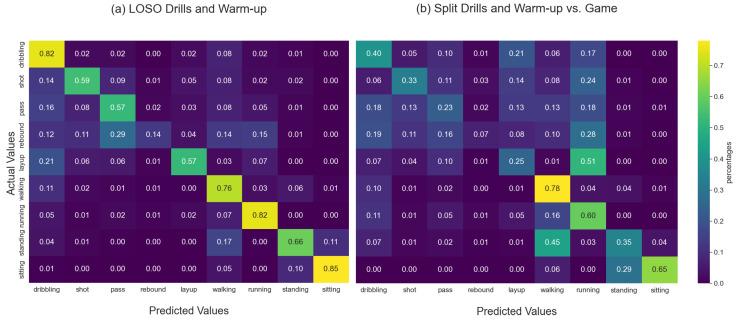
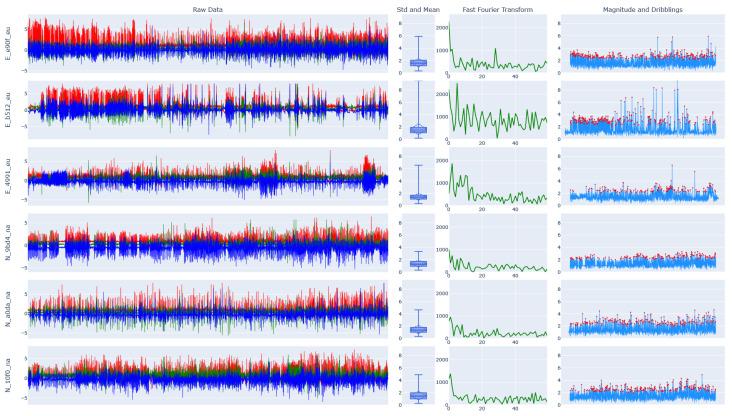
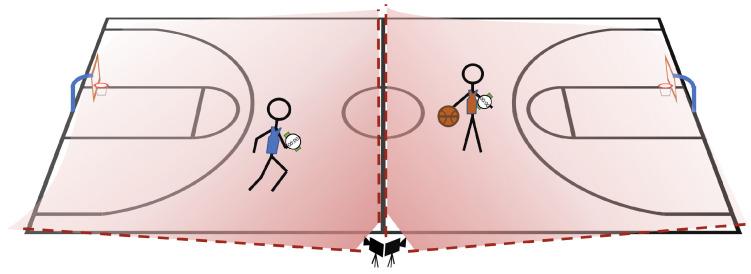
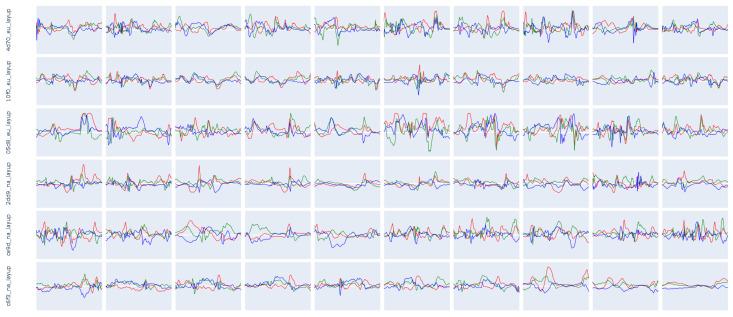
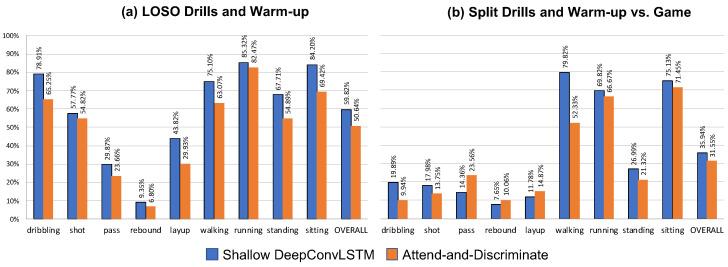
We present a benchmark dataset for evaluating physical human activity recognition methods from wrist-worn sensors, for the specific setting of basketball training, drills, and games. Basketball activities lend themselves well for measurement by wrist-worn inertial sensors, and systems that are able to detect such sport-relevant activities could be used in applications of game analysis, guided training, and personal physical activity tracking. The dataset was recorded from two teams in separate countries (USA and Germany) with a total of 24 players who wore an inertial sensor on their wrist, during both a repetitive basketball training session and a game. Particular features of this dataset include an inherent variance through cultural differences in game rules and styles as the data was recorded in two countries, as well as different sport skill levels since the participants were heterogeneous in terms of prior basketball experience. We illustrate the dataset's features in several time-series analyses and report on a baseline classification performance study with two state-of-the-art deep learning architectures.
我们提出了一个基准数据集,用于评估来自腕戴传感器的物理人体活动识别方法,特别是针对篮球训练、练习和比赛的特定设置。篮球活动非常适合通过腕戴惯性传感器进行测量,能够检测到此类与运动相关活动的系统可应用于比赛分析、指导训练和个人体育活动跟踪等领域。该数据集是从两个国家(美国和德国)的两支队伍中记录的,共有 24 名球员在重复的篮球训练和比赛中佩戴腕部惯性传感器。该数据集的特点包括由于两国之间比赛规则和风格的文化差异而导致的固有差异,以及由于参与者在篮球经验方面存在差异,因此运动技能水平也不同。我们在几个时间序列分析中说明了数据集的特点,并报告了使用两种最先进的深度学习架构进行的基线分类性能研究。






 Zotero 插件