
与常见慢性病多种疾病相关的生活方式因素:基于人群的横断面研究。
Lifestyle factors related to prevalent chronic disease multimorbidity: A population-based cross-sectional study.
机构信息
Department of Epidemiology, University of Groningen, University Medical Center Groningen, Groningen, The Netherlands.
出版信息
PLoS One. 2023 Jul 24;18(7):e0287263. doi: 10.1371/journal.pone.0287263. eCollection 2023.
BACKGROUND
Multimorbidity is associated with poor quality of life, polypharmacy, health care costs and mortality, with those affected potentially benefitting from a healthy lifestyle. We assessed a comprehensive set of lifestyle factors in relation to multimorbidity with major chronic diseases.
METHODS
This cross-sectional study utilised baseline data for adults from the prospective Lifelines Cohort in the north of the Netherlands (N = 79,345). We defined multimorbidity as the co-existence of two or more chronic diseases (i.e. cardiovascular disease, cancer, respiratory disease, type 2 diabetes) and evaluated factors in six lifestyle domains (nutrition, physical (in)activity, substance abuse, sleep, stress, relationships) among groups by the number of chronic diseases (≥2, 1, 0). Multinomial logistic regression models were created, adjusted for appropriate confounders, and odds ratios (OR) with 95% confidence intervals (95%CI) were reported.
RESULTS
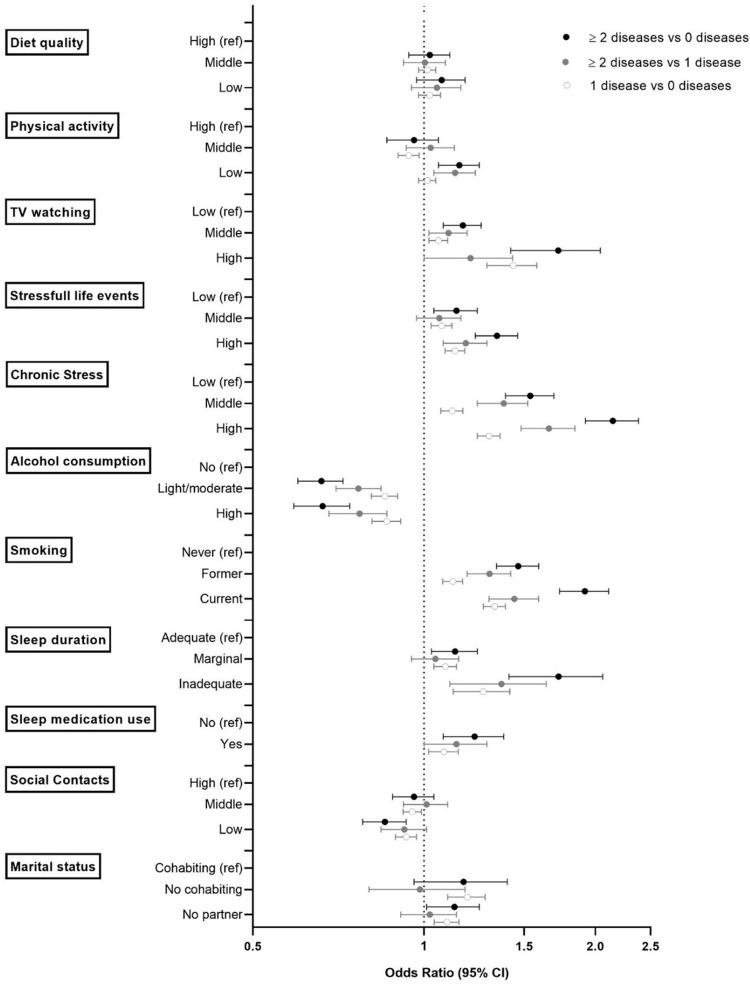
3,712 participants had multimorbidity (4.7%, age 53.5 ± 12.5 years), and this group tended to have less healthy lifestyles. Compared to those without chronic diseases, those with multimorbidity reported physical inactivity more often (OR, 1.15; 95%CI, 1.06-1.25; not significant for one condition), chronic stress (OR, 2.14; 95%CI, 1.92-2.38) and inadequate sleep (OR, 1.70; 95%CI, 1.41-2.06); as expected, they more often watched television (OR, 1.70; 95%CI, 1.42-2.04) and currently smoked (OR, 1.91; 95%CI, 1.73-2.11), but they also had lower alcohol intakes (OR, 0.66; 95%CI, 0.59-0.74).
CONCLUSIONS
Chronic stress and poor sleep, in addition to physical inactivity and smoking, are lifestyle factors of great concern in patients with multimorbidity.
背景
多种疾病与生活质量差、多种药物治疗、医疗保健费用和死亡率相关,受影响的人可能受益于健康的生活方式。我们评估了与多种主要慢性疾病相关的一系列综合生活方式因素。
方法
本横断面研究利用荷兰北部前瞻性 Lifelines 队列的成年人基线数据(N=79345)。我们将多种疾病定义为两种或多种慢性疾病(即心血管疾病、癌症、呼吸疾病、2 型糖尿病)共存,并根据慢性疾病数量(≥2、1、0)评估六个生活方式领域(营养、身体(活动)、物质滥用、睡眠、压力、关系)中的因素。创建了多分类逻辑回归模型,并调整了适当的混杂因素,报告了比值比(OR)及其 95%置信区间(95%CI)。
结果
3712 名参与者患有多种疾病(4.7%,年龄 53.5±12.5 岁),他们的生活方式往往不太健康。与没有慢性疾病的人相比,患有多种疾病的人更经常报告身体不活动(OR,1.15;95%CI,1.06-1.25;一种疾病无统计学意义)、慢性压力(OR,2.14;95%CI,1.92-2.38)和睡眠不足(OR,1.70;95%CI,1.41-2.06);正如预期的那样,他们更经常看电视(OR,1.70;95%CI,1.42-2.04)和当前吸烟(OR,1.91;95%CI,1.73-2.11),但他们的酒精摄入量也较低(OR,0.66;95%CI,0.59-0.74)。
结论
除了身体不活动和吸烟外,慢性压力和睡眠不佳也是多种疾病患者生活方式中非常值得关注的因素。

 Zotero 插件