
铜(I)与铜(II)光催化的融合:开发一种通用的氧卤化方案,用于乙烯基芳烃的连续铜(II)/铜(I)催化的氧烯丙基化反应。
Merging Cu(I) and Cu(II) Photocatalysis: Development of a Versatile Oxohalogenation Protocol for the Sequential Cu(II)/Cu(I)-Catalyzed Oxoallylation of Vinylarenes.
作者信息
Mandal Tirtha, Katta Narenderreddy, Paps Hendrik, Reiser Oliver
机构信息
Institut für Organische Chemie, Universität Regensburg, Universitätsstrasse 31, 93053 Regensburg, Germany.
出版信息
ACS Org Inorg Au. 2023 May 22;3(4):171-176. doi: 10.1021/acsorginorgau.3c00011. eCollection 2023 Aug 2.
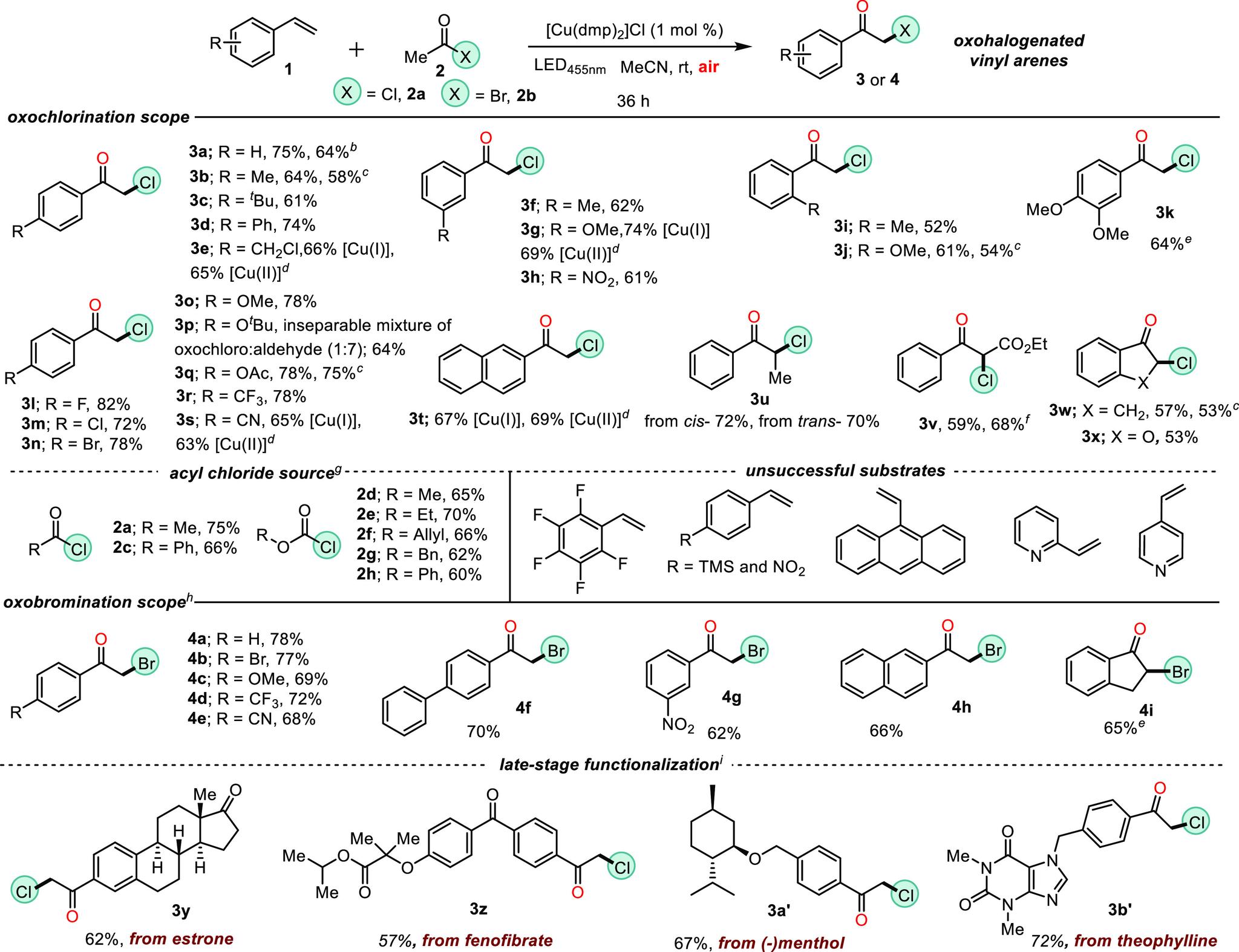
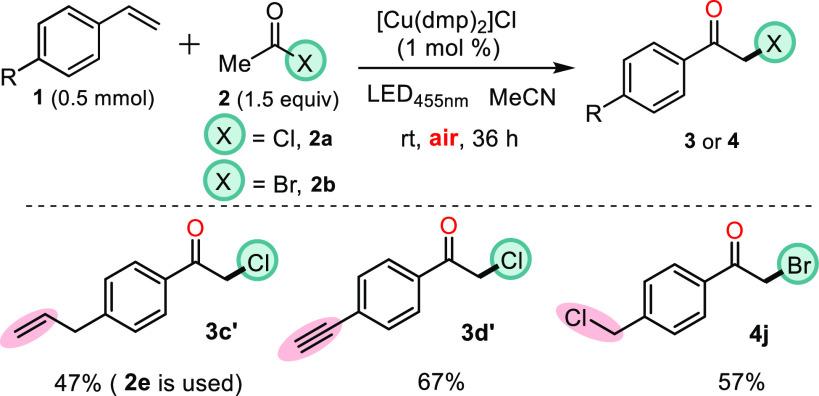
A sequential photocatalytic strategy is developed via the merger of Cu(II)/Cu(I)-catalytic cycles for the oxoallylation of vinyl arenes via α-haloketones. The initial Cu(II)-photocatalyzed oxohalogenation exploits ligand-to-metal charge transfer (LMCT) to generate halide radicals from acyl halides utilizing air as a terminal oxidant and can be employed for the late-stage modification of pharmaceuticals and agrochemicals. α-Bromoketones obtained this way can be subsequently subjected to a one-pot Cu(I)-photocatalyzed allylation. This sequential photocatalysis proceeds in a highly regio- and chemoselective fashion and is inconsequential to the electronic nature of styrenes.
通过铜(II)/铜(I)催化循环的合并,开发了一种用于通过α-卤代酮对乙烯基芳烃进行氧代烯丙基化的顺序光催化策略。最初的铜(II)光催化氧卤化利用配体到金属的电荷转移(LMCT),以空气作为终端氧化剂从酰卤中产生卤化物自由基,并且可用于药物和农用化学品的后期修饰。以这种方式获得的α-溴代酮随后可以进行一锅法铜(I)光催化烯丙基化。这种顺序光催化以高度区域选择性和化学选择性的方式进行,并且与苯乙烯的电子性质无关。



 Zotero 插件