
用于全基因组遗传筛选的人类单倍体神经干细胞系的产生。
Generation of a human haploid neural stem cell line for genome-wide genetic screening.
作者信息
Wang Hai-Song, Ma Xin-Rui, Niu Wen-Bin, Shi Hao, Liu Yi-Dong, Ma Ning-Zhao, Zhang Nan, Jiang Zi-Wei, Sun Ying-Pu
机构信息
Center for Reproductive Medicine, The First Affiliated Hospital of Zhengzhou University, Zhengzhou University, Zhengzhou 450052, Henan Province, China.
Basic Medical School, Zhengzhou University, Zhengzhou 450052, Henan Province, China.
出版信息
World J Stem Cells. 2023 Jul 26;15(7):734-750. doi: 10.4252/wjsc.v15.i7.734.
BACKGROUND
Haploid embryonic stem cells (haESCs) have been established in many species. Differentiated haploid cell line types in mammals are lacking due to spontaneous diploidization during differentiation that compromises lineage-specific screens.
AIM
To derive human haploid neural stem cells (haNSCs) to carry out lineage-specific screens.
METHODS
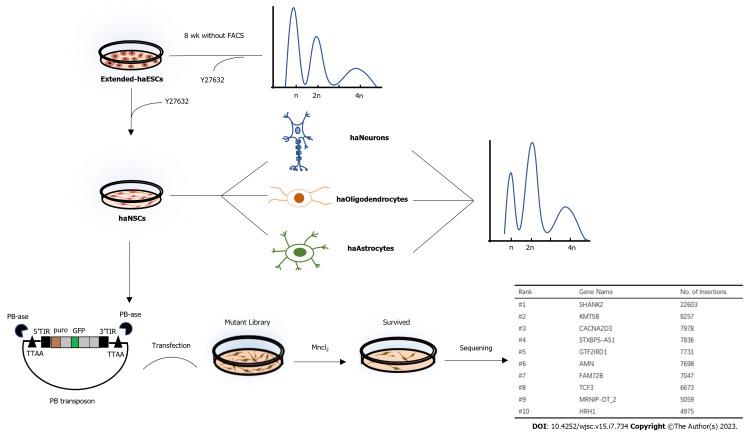
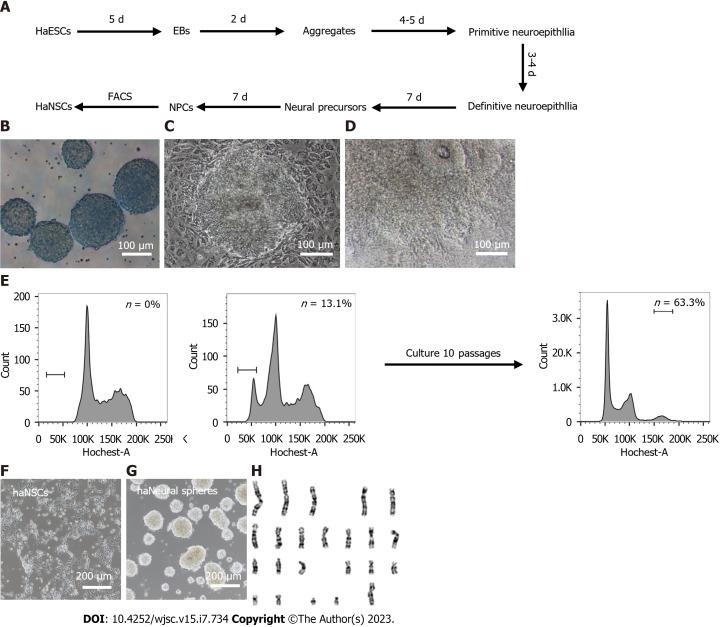
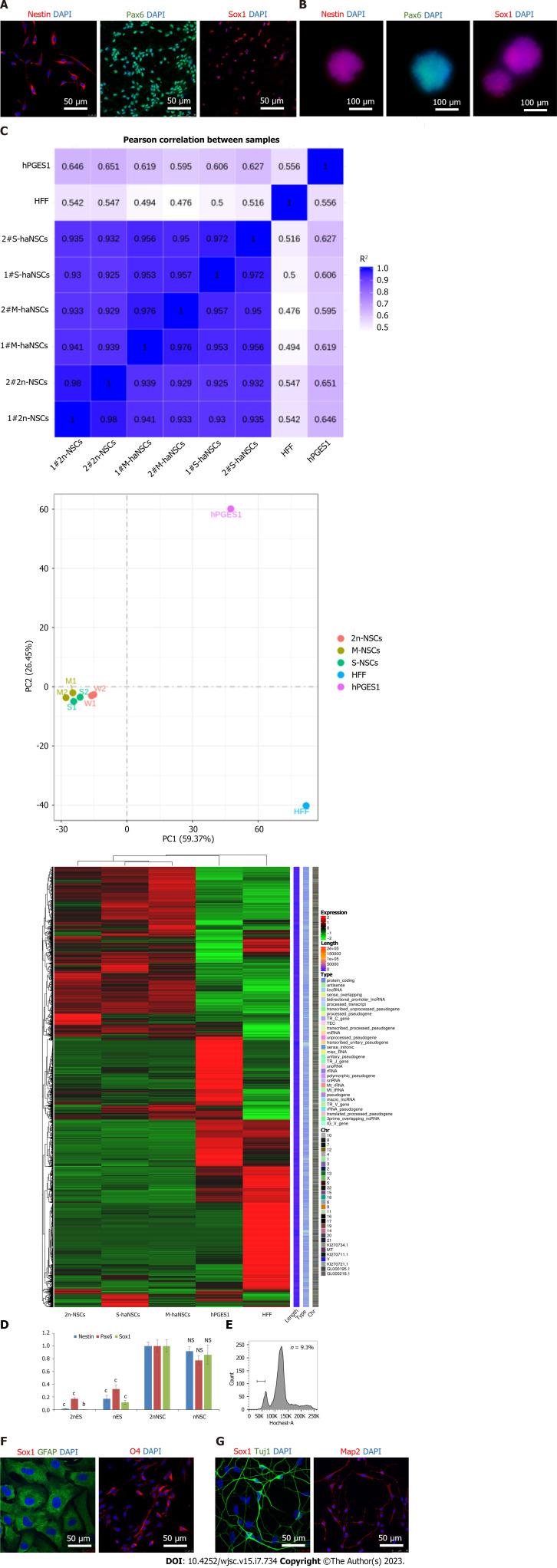
Human haNSCs were differentiated from human extended haESCs with the help of Y27632 (ROCK signaling pathway inhibitor) and a series of cytokines to reduce diploidization. Neuronal differentiation of haNSCs was performed to examine their neural differentiation potency. Global gene expression analysis was con-ducted to compare haNSCs with diploid NSCs and haESCs. Fluorescence activated cell sorting was performed to assess the diploidization rate of extended haESCs and haNSCs. Genetic manipulation and screening were utilized to evaluate the significance of human haNSCs as genetic screening tools.
RESULTS
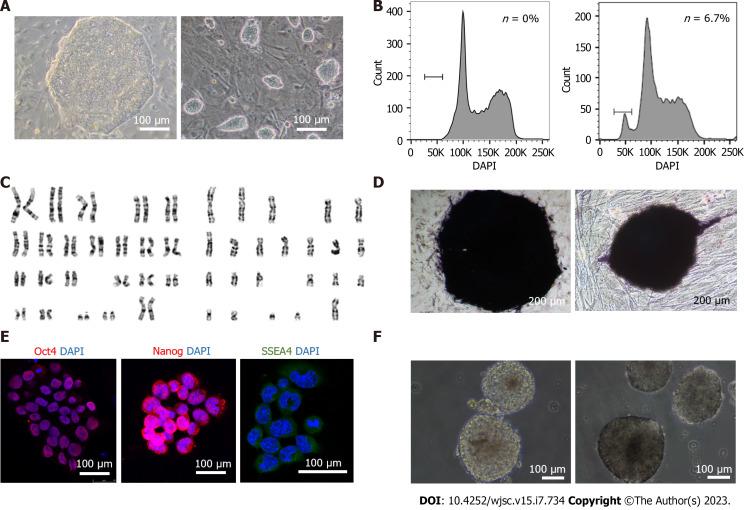
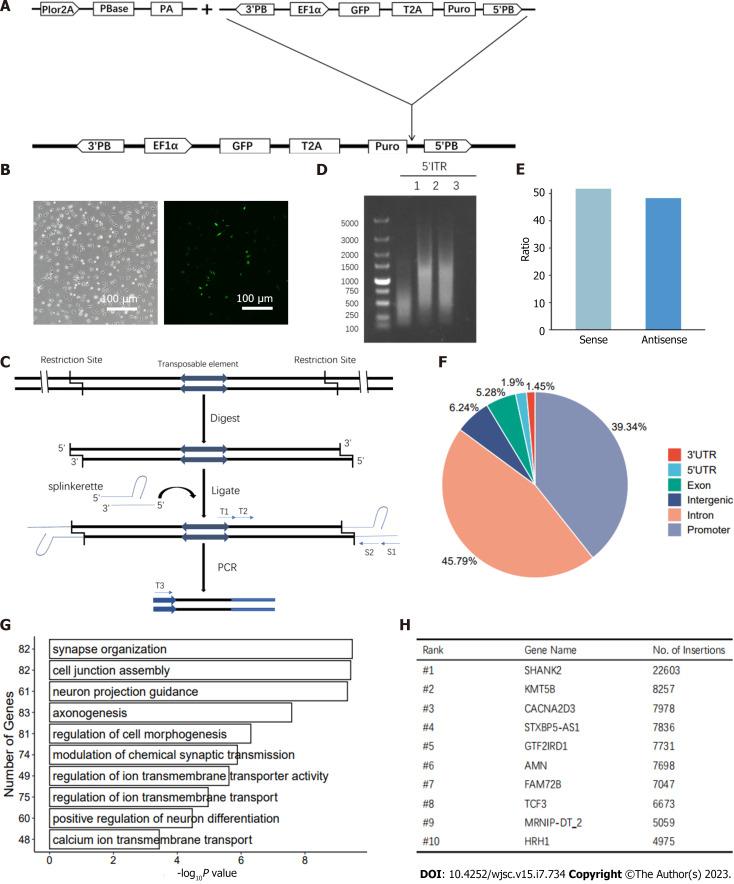
Human haESCs in extended pluripotent culture medium showed more compact and smaller colonies, a higher efficiency in neural differentiation, a higher cell survival ratio and higher stability in haploidy maintenance. These characteristics effectively facilitated the derivation of human haNSCs. These human haNSCs can be generated by differentiation and maintain haploidy and multipotency to neurons and glia in the long term . After PiggyBac transfection, there were multiple insertion sites in the human haNSCs' genome, and the insertion sites were evenly spread across all chromosomes. In addition, after the cells were treated with manganese, we were able to generate a list of manganese-induced toxicity genes, demonstrating their utility as genetic screening tools.
CONCLUSION
This is the first report of a generated human haploid somatic cell line with a complete genome, proliferative ability and neural differentiation potential that provides cell resources for recessive inheritance and drug targeted screening.
背景
单倍体胚胎干细胞(haESCs)已在许多物种中建立。由于分化过程中的自发二倍体化会影响谱系特异性筛选,哺乳动物中缺乏分化的单倍体细胞系类型。
目的
获得人类单倍体神经干细胞(haNSCs)以进行谱系特异性筛选。
方法
在Y27632(ROCK信号通路抑制剂)和一系列细胞因子的帮助下,从人类扩展型haESCs分化出人类haNSCs,以减少二倍体化。对haNSCs进行神经元分化以检测其神经分化潜能。进行全基因表达分析以比较haNSCs与二倍体神经干细胞和haESCs。进行荧光激活细胞分选以评估扩展型haESCs和haNSCs的二倍体化率。利用基因操作和筛选来评估人类haNSCs作为基因筛选工具的意义。
结果
处于扩展多能培养基中的人类haESCs显示出更紧凑、更小的集落,神经分化效率更高,细胞存活率更高,单倍体维持稳定性更高。这些特性有效地促进了人类haNSCs的获得。这些人类haNSCs可通过分化产生,并长期维持单倍体状态以及向神经元和神经胶质细胞分化的多能性。经PiggyBac转染后,人类haNSCs基因组中有多个插入位点,且插入位点均匀分布于所有染色体。此外,在用锰处理细胞后,我们能够生成一份锰诱导毒性基因列表,证明了它们作为基因筛选工具的效用。
结论
这是关于生成具有完整基因组、增殖能力和神经分化潜能的人类单倍体体细胞系的首次报道,为隐性遗传和药物靶向筛选提供了细胞资源。

 Zotero 插件