
2019冠状病毒病与心血管疾病
Coronavirus disease 2019 and cardiovascular disease.
作者信息
Song Jenn-Yeu, Huang Jian-You, Hsu Yi-Chiung, Lo Men-Tzung, Lin Chen, Shen Ta-Chung, Liao Min-Tser, Lu Kuo-Cheng
机构信息
Division of Cardiovascular Surgery, Department of Surgery, Taipei Tzu Chi Hospital, Buddhist Tzu Chi Medical Foundation, New Taipei, Taiwan.
Department of Biomedical Sciences and Engineering, National Central University, Taoyuan, Taiwan.
出版信息
Tzu Chi Med J. 2023 Jun 13;35(3):213-220. doi: 10.4103/tcmj.tcmj_219_22. eCollection 2023 Jul-Sep.
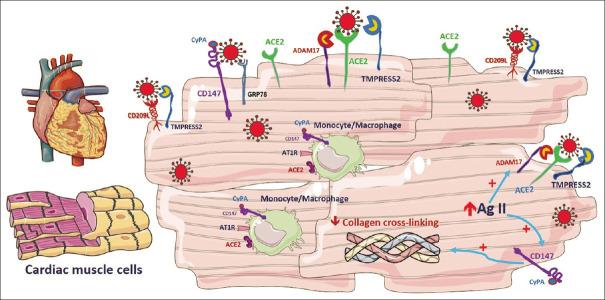
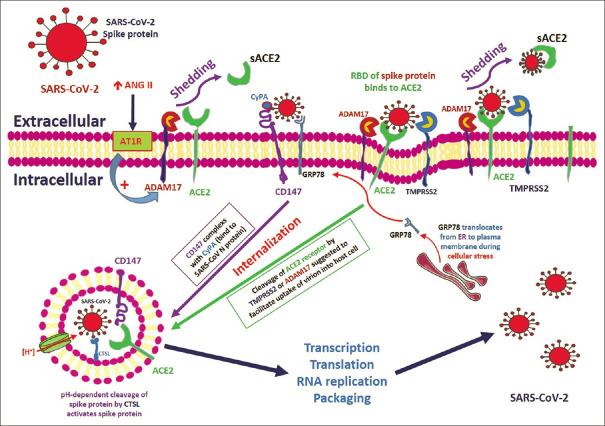
Severe acute respiratory syndrome coronavirus 2 (SARS-CoV-2), the virus behind the coronavirus disease 2019 (COVID-19) pandemic, is a type of RNA virus that is nonsegmented. Cardiovascular diseases (CVDs) increase the mortality risk of patients. In this review article, we overview the existing evidence regarding the potential mechanisms of myocardial damage in coronavirus disease 2019 (COVID-19) patients. Having a comprehensive knowledge of the cardiovascular damage caused by SARS-CoV-2 and its underlying mechanisms is essential for providing prompt and efficient treatment, ultimately leading to a reduction in mortality rates. Severe COVID-19 causes acute respiratory distress syndrome and shock in patients. In addition, awareness regarding COVID-19 cardiovascular manifestations has increased, including the adverse impact on prognosis with cardiovascular involvement. Angiotensin-converting enzyme 2 receptor may play a role in acute myocardial injury caused by SARS-CoV-2 infection. COVID-19 patients experiencing heart failure may have their condition exacerbated by various contributing factors and mechanisms. Increased oxygen demand, myocarditis, stress cardiomyopathy, elevated pulmonary pressures, and venous thrombosis are potential health issues. The combination of these factors may lead to COVID-19-related cardiogenic shock, resulting in acute systolic heart failure. Extracorporeal membrane oxygenation (ECMO) and left ventricular assist devices (LVADs) are treatment options when inotropic support fails for effective circulatory support. To ensure effective COVID-19-related cardiovascular disease (CVD) surveillance, it is crucial to closely monitor the future host adaptation, viral evolution, and transmissibility of SARS-CoV-2, given the virus's pandemic potential.
严重急性呼吸综合征冠状病毒2(SARS-CoV-2)是2019冠状病毒病(COVID-19)大流行背后的病毒,是一种非分段的RNA病毒。心血管疾病(CVD)会增加患者的死亡风险。在这篇综述文章中,我们概述了关于2019冠状病毒病(COVID-19)患者心肌损伤潜在机制的现有证据。全面了解SARS-CoV-2引起的心血管损伤及其潜在机制对于提供及时有效的治疗至关重要,最终可降低死亡率。严重的COVID-19会导致患者出现急性呼吸窘迫综合征和休克。此外,人们对COVID-19心血管表现的认识有所提高,包括心血管受累对预后的不利影响。血管紧张素转换酶2受体可能在SARS-CoV-2感染引起的急性心肌损伤中起作用。患有心力衰竭的COVID-19患者可能会因各种促成因素和机制而使病情加重。氧需求增加、心肌炎、应激性心肌病、肺压力升高和静脉血栓形成都是潜在的健康问题。这些因素的综合作用可能导致COVID-19相关的心源性休克,进而导致急性收缩性心力衰竭。当正性肌力支持无法有效循环支持时,体外膜肺氧合(ECMO)和左心室辅助装置(LVAD)是治疗选择。鉴于SARS-CoV-2的大流行潜力,密切监测其未来宿主适应性、病毒进化和传播性对于确保有效的COVID-19相关心血管疾病(CVD)监测至关重要。

 Zotero 插件