
mTOR 信号对 CD8 T 细胞记忆和耗竭的调节。
Regulation of CD8 T memory and exhaustion by the mTOR signals.
机构信息
Shanghai Institute of Immunology, Department of Immunology and Microbiology, and The Ministry of Education Key Laboratory of Cell Death and Differentiation, Shanghai Jiao Tong University School of Medicine, Shanghai, 200025, China.
Department of Tumor Biology, Shanghai Chest Hospital, Shanghai Jiao Tong University School of Medicine, Shanghai, 200025, China.
出版信息
Cell Mol Immunol. 2023 Sep;20(9):1023-1039. doi: 10.1038/s41423-023-01064-3. Epub 2023 Aug 15.
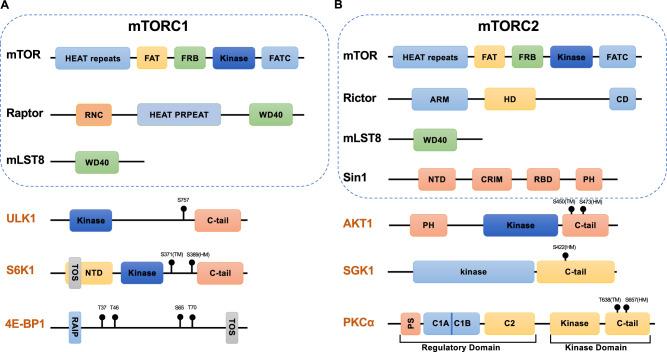
CD8 T cells are the key executioners of the adaptive immune arm, which mediates antitumor and antiviral immunity. Naïve CD8 T cells develop in the thymus and are quickly activated in the periphery after encountering a cognate antigen, which induces these cells to proliferate and differentiate into effector cells that fight the initial infection. Simultaneously, a fraction of these cells become long-lived memory CD8 T cells that combat future infections. Notably, the generation and maintenance of memory cells is profoundly affected by various in vivo conditions, such as the mode of primary activation (e.g., acute vs. chronic immunization) or fluctuations in host metabolic, inflammatory, or aging factors. Therefore, many T cells may be lost or become exhausted and no longer functional. Complicated intracellular signaling pathways, transcription factors, epigenetic modifications, and metabolic processes are involved in this process. Therefore, understanding the cellular and molecular basis for the generation and fate of memory and exhausted CD8 cells is central for harnessing cellular immunity. In this review, we focus on mammalian target of rapamycin (mTOR), particularly signaling mediated by mTOR complex (mTORC) 2 in memory and exhausted CD8 T cells at the molecular level.
CD8 T 细胞是适应性免疫的关键执行者,介导抗肿瘤和抗病毒免疫。幼稚 CD8 T 细胞在胸腺中发育,并在遇到同源抗原后在外周迅速激活,诱导这些细胞增殖并分化为效应细胞,以对抗初始感染。同时,这些细胞中的一部分成为具有长期记忆的 CD8 T 细胞,以抵御未来的感染。值得注意的是,记忆细胞的产生和维持受到各种体内条件的深刻影响,例如初级激活的方式(例如急性与慢性免疫接种)或宿主代谢、炎症或衰老因素的波动。因此,许多 T 细胞可能会丢失或变得衰竭,不再具有功能。在此过程中涉及复杂的细胞内信号通路、转录因子、表观遗传修饰和代谢过程。因此,了解记忆和衰竭的 CD8 细胞的产生和命运的细胞和分子基础对于利用细胞免疫至关重要。在这篇综述中,我们重点关注哺乳动物雷帕霉素靶蛋白(mTOR),特别是在分子水平上,mTOR 复合物(mTORC)2 在记忆和衰竭的 CD8 T 细胞中的信号转导。


 Zotero 插件