
过继细胞治疗中的挑战和新技术。
Challenges and new technologies in adoptive cell therapy.
机构信息
Center for Protein and Cell-based Drugs, Institute of Biomedicine and Biotechnology, Shenzhen Institute of Advanced Technology, Chinese Academy of Sciences, 1068 Xueyuan Avenue, Nanshan District, Shenzhen, 518055, People's Republic of China.
University of Chinese Academy of Sciences, Beijing, 100049, People's Republic of China.
出版信息
J Hematol Oncol. 2023 Aug 18;16(1):97. doi: 10.1186/s13045-023-01492-8.
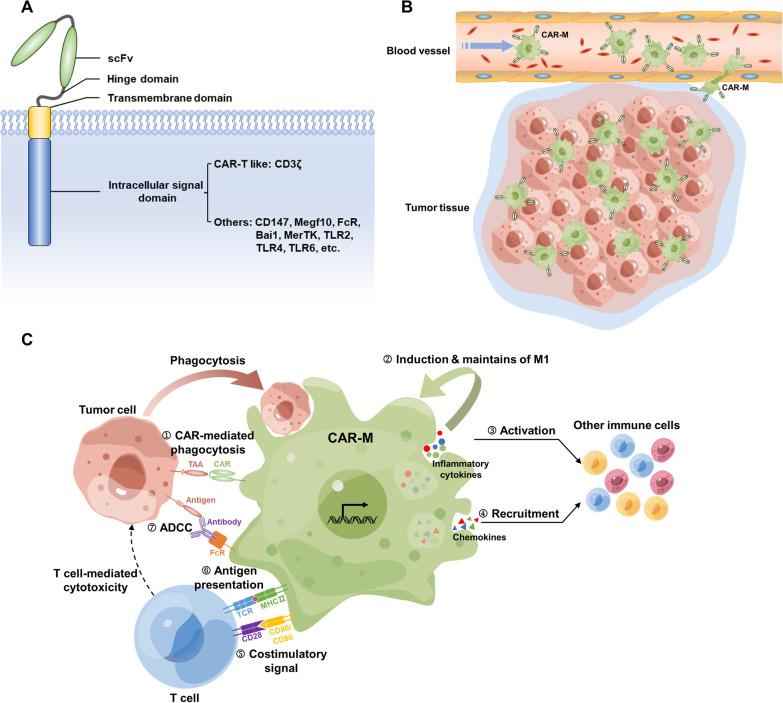
Adoptive cell therapies (ACTs) have existed for decades. From the initial infusion of tumor-infiltrating lymphocytes to the subsequent specific enhanced T cell receptor (TCR)-T and chimeric antigen receptor (CAR)-T cell therapies, many novel strategies for cancer treatment have been developed. Owing to its promising outcomes, CAR-T cell therapy has revolutionized the field of ACTs, particularly for hematologic malignancies. Despite these advances, CAR-T cell therapy still has limitations in both autologous and allogeneic settings, including practicality and toxicity issues. To overcome these challenges, researchers have focused on the application of CAR engineering technology to other types of immune cell engineering. Consequently, several new cell therapies based on CAR technology have been developed, including CAR-NK, CAR-macrophage, CAR-γδT, and CAR-NKT. In this review, we describe the development, advantages, and possible challenges of the aforementioned ACTs and discuss current strategies aimed at maximizing the therapeutic potential of ACTs. We also provide an overview of the various gene transduction strategies employed in immunotherapy given their importance in immune cell engineering. Furthermore, we discuss the possibility that strategies capable of creating a positive feedback immune circuit, as healthy immune systems do, could address the flaw of a single type of ACT, and thus serve as key players in future cancer immunotherapy.
过继细胞疗法(ACT)已经存在了几十年。从最初输注肿瘤浸润淋巴细胞,到随后的特异性增强 T 细胞受体(TCR)-T 和嵌合抗原受体(CAR)-T 细胞疗法,许多新的癌症治疗策略已经被开发出来。由于其前景广阔,CAR-T 细胞疗法彻底改变了 ACT 领域,尤其是在血液恶性肿瘤方面。尽管取得了这些进展,但 CAR-T 细胞疗法在自体和同种异体环境中仍然存在一些局限性,包括实用性和毒性问题。为了克服这些挑战,研究人员专注于将 CAR 工程技术应用于其他类型的免疫细胞工程。因此,已经开发出几种基于 CAR 技术的新型细胞疗法,包括 CAR-NK、CAR-巨噬细胞、CAR-γδT 和 CAR-NKT。在这篇综述中,我们描述了上述 ACT 的发展、优势和可能的挑战,并讨论了旨在最大限度发挥 ACT 治疗潜力的当前策略。我们还概述了免疫疗法中使用的各种基因转导策略,因为它们在免疫细胞工程中非常重要。此外,我们还讨论了创造正反馈免疫回路的策略的可能性,就像健康的免疫系统一样,这可能会解决单一类型 ACT 的缺陷,并成为未来癌症免疫治疗的关键参与者。




 Zotero 插件