
从泰国餐馆食品接触面分离的 流行情况和毒力基因。
Prevalence and virulence genes of from food contact surfaces in Thai restaurants.
机构信息
Microbiology and Parasitology, Naresuan University, Muang, Phitsanulok, Thailand.
Centre of Excellence in Medical Biotechnology, Faculty of Medical Science, Naresuan University, Muang, Phitsanulok, Thailand.
出版信息
PeerJ. 2023 Aug 14;11:e15824. doi: 10.7717/peerj.15824. eCollection 2023.
BACKGROUND
is one of the most common pathogens responsible for food poisoning due to its ability to produce staphylococcal enterotoxin (SE). can form biofilms on the surfaces of food processing devices, enabling the distribution of SE on foods through cross-contamination events. Thailand is known for its exotic cuisine, but there is no data on the prevalence of SE-harboring in restaurants in Thailand.
METHODS
In this study, we conducted surface swabs on surfaces of kitchen utensil that come into contact with food and on the hands of food handlers working in restaurants in the north part of Thailand. Isolated was investigated for biofilm formation, virulence, and SE genes.
RESULTS
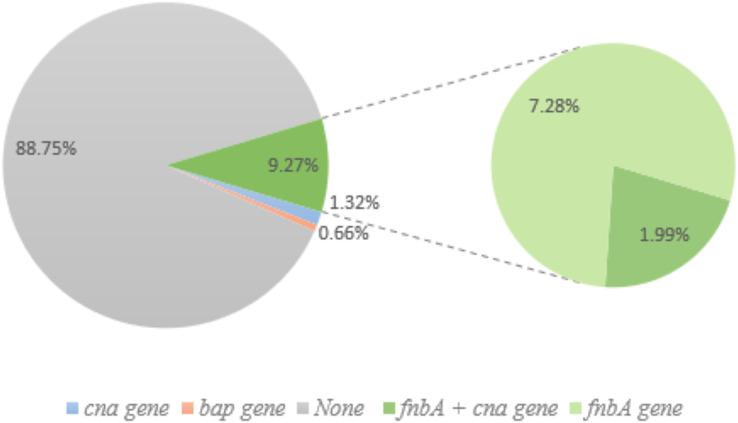
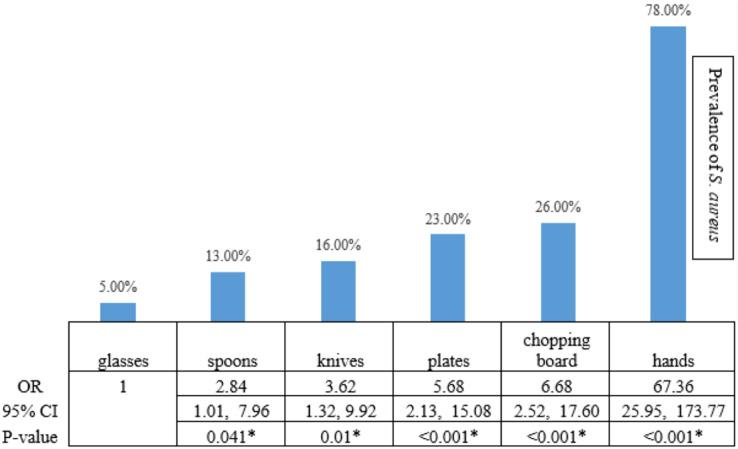
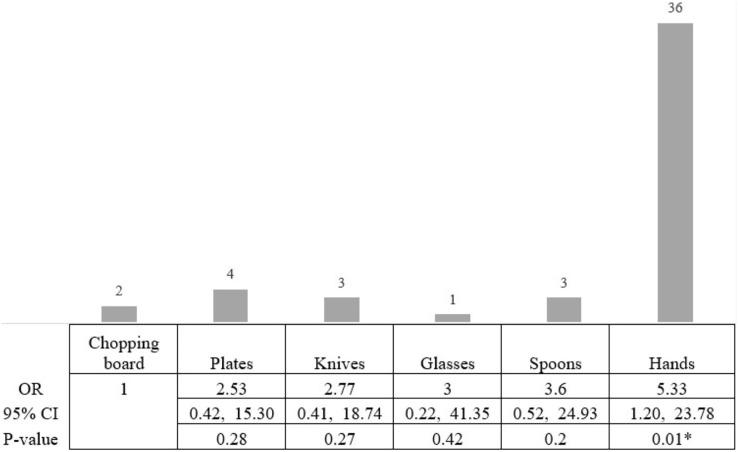
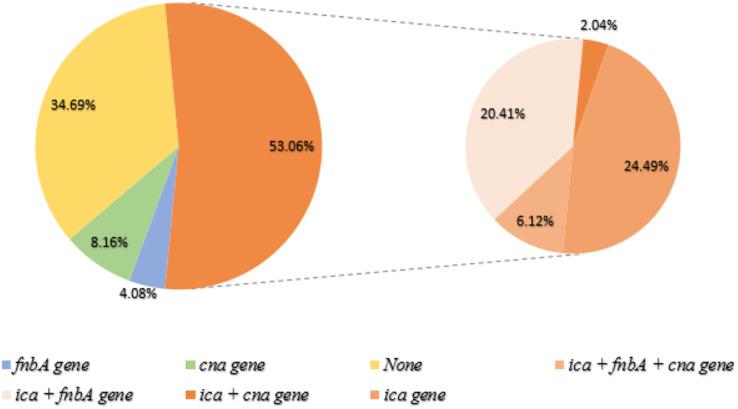
Two hundred were isolated from 650 samples. The highest prevalence of contamination was detected on the hands of food handlers (78%), followed by chopping boards (26%), plates (23%), knives (16%), spoons (13%), and glasses (5%). All of them were methicillin-sensitive (MSSA) and the gene was not present in any strains. Biofilm formation was detected using the CRA method, and 49 (24.5%) were identified as biofilm-producing strains, with the hands of food handlers identified as the primary source of biofilm-producing strains. The prevelence of biofilm-related adhesion genes detected were: AD (13%), A (14.5%), (6.5%), and (0.5%). Two classical enterotoxin genes, and , were also found in four and six of the isolates, respectively, from hands and utensils.
CONCLUSION
The highest prevelence of was detected on the hands of food handlers. strains with biofilm and enterotoxin production abilities were discovered on food contact surfaces and the hands of food handlers, implying significant risk of food contamination from these sources that could be harmful to consumers. To avoid cross-contamination of food with food contact items, the food handlers' hands should be properly washed, and all food preparation equipment should be thoroughly cleaned.
背景
金黄色葡萄球菌是导致食物中毒的最常见病原体之一,其能够产生肠毒素(SE)。金黄色葡萄球菌能够在食品加工设备表面形成生物膜,通过交叉污染事件将 SE 分布在食品上。泰国以其异国美食而闻名,但泰国餐厅中携带 SE 的金黄色葡萄球菌的流行情况尚无数据。
方法
本研究对泰国北部地区餐厅中与食品接触的厨房用具表面和食品处理人员的手部进行表面拭子采样。对分离出的金黄色葡萄球菌进行生物膜形成、毒力和 SE 基因研究。
结果
从 650 个样本中分离出 200 株金黄色葡萄球菌。食品处理人员手部金黄色葡萄球菌污染的检出率最高(78%),其次是砧板(26%)、盘子(23%)、刀(16%)、勺子(13%)和玻璃杯(5%)。所有分离株均为甲氧西林敏感金黄色葡萄球菌(MSSA),且均未检出 基因。使用 CRA 法检测到生物膜形成,其中 49 株(24.5%)被鉴定为产生物膜菌株,并且发现食品处理人员的手部是产生物膜菌株的主要来源。检测到的与生物膜相关的粘附基因的流行率为:AD(13%)、A(14.5%)、 (6.5%)和 (0.5%)。在手部和器具分离株中,分别有 4 株和 6 株金黄色葡萄球菌携带两种经典肠毒素基因 和 。
结论
在食品处理人员的手部检测到金黄色葡萄球菌的最高检出率。在食品接触表面和食品处理人员的手部发现了具有生物膜和肠毒素产生能力的金黄色葡萄球菌菌株,这意味着这些来源的食品污染对消费者构成重大风险。为避免食品与食品接触物品的交叉污染,应正确清洗食品处理人员的手部,并彻底清洁所有食品制备设备。
 Zotero 插件