
用于剂量依赖性化学扰动的单细胞基因表达生成建模。
Generative modeling of single-cell gene expression for dose-dependent chemical perturbations.
作者信息
Kana Omar, Nault Rance, Filipovic David, Marri Daniel, Zacharewski Tim, Bhattacharya Sudin
机构信息
Department of Pharmacology and Toxicology, Michigan State University, East Lansing, MI 48824, USA.
Institute for Integrative Toxicology, Michigan State University, East Lansing, MI 48824, USA.
出版信息
Patterns (N Y). 2023 Aug 11;4(8):100817. doi: 10.1016/j.patter.2023.100817.
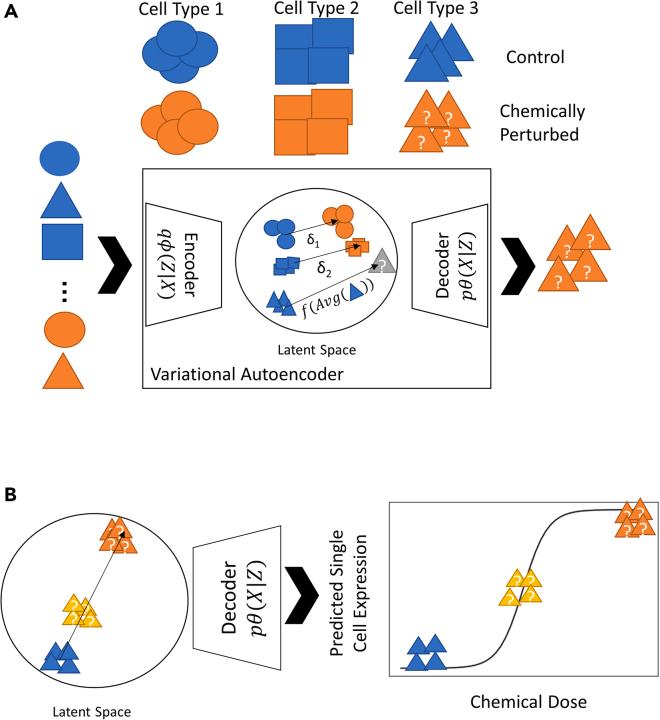
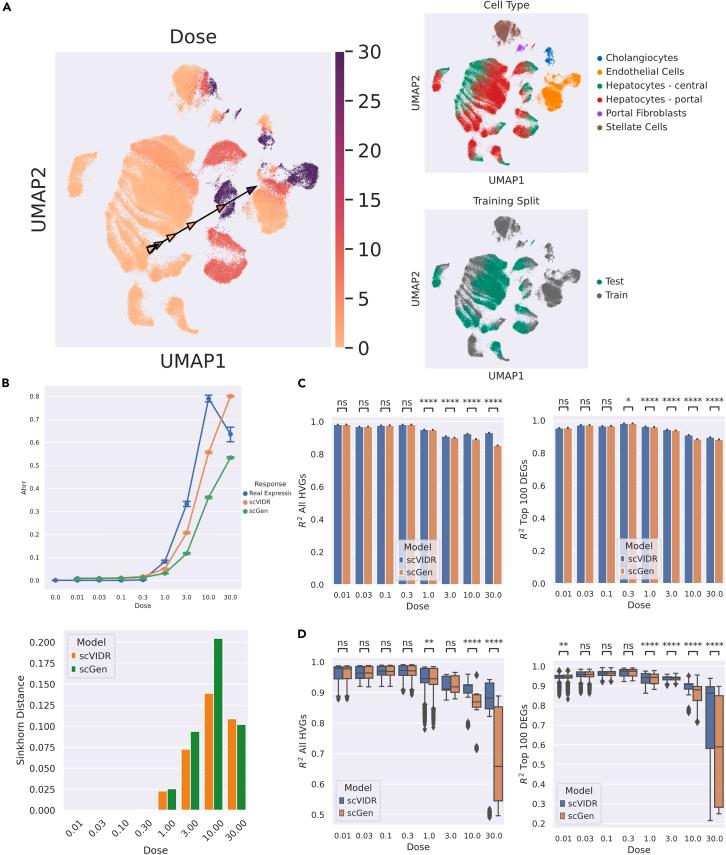
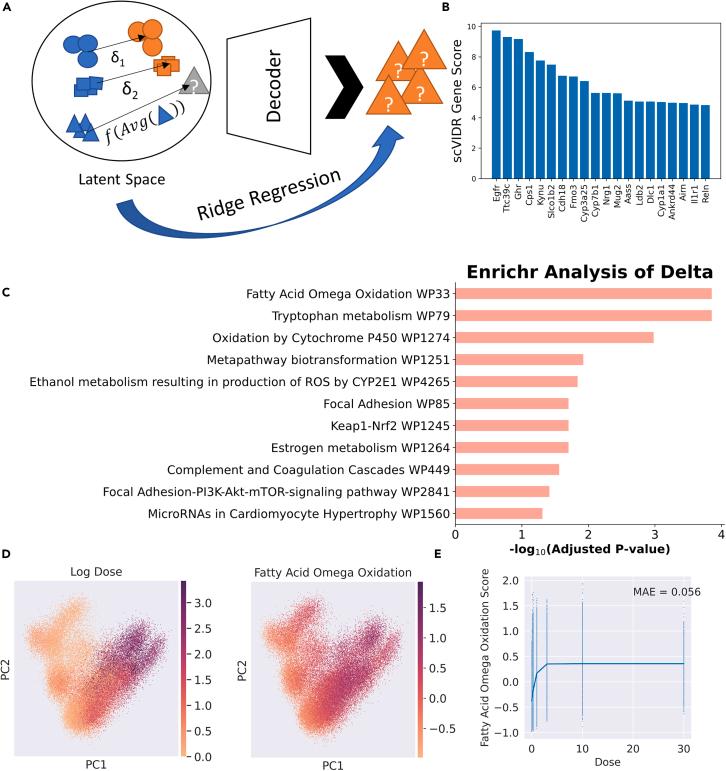
Single-cell sequencing reveals the heterogeneity of cellular response to chemical perturbations. However, testing all relevant combinations of cell types, chemicals, and doses is a daunting task. A deep generative learning formalism called variational autoencoders (VAEs) has been effective in predicting single-cell gene expression perturbations for single doses. Here, we introduce single-cell variational inference of dose-response (scVIDR), a VAE-based model that predicts both single-dose and multiple-dose cellular responses better than existing models. We show that scVIDR can predict dose-dependent gene expression across mouse hepatocytes, human blood cells, and cancer cell lines. We biologically interpret the latent space of scVIDR using a regression model and use scVIDR to order individual cells based on their sensitivity to chemical perturbation by assigning each cell a "pseudo-dose" value. We envision that scVIDR can help reduce the need for repeated animal testing across tissues, chemicals, and doses.
单细胞测序揭示了细胞对化学扰动反应的异质性。然而,测试细胞类型、化学物质和剂量的所有相关组合是一项艰巨的任务。一种称为变分自编码器(VAE)的深度生成学习形式在预测单剂量的单细胞基因表达扰动方面很有效。在这里,我们介绍了剂量反应的单细胞变分推理(scVIDR),这是一种基于VAE的模型,它在预测单剂量和多剂量细胞反应方面比现有模型表现更好。我们表明,scVIDR可以预测小鼠肝细胞、人类血细胞和癌细胞系中的剂量依赖性基因表达。我们使用回归模型对scVIDR的潜在空间进行生物学解释,并通过为每个细胞分配一个“伪剂量”值,使用scVIDR根据单个细胞对化学扰动的敏感性对其进行排序。我们设想,scVIDR可以帮助减少在不同组织、化学物质和剂量上重复进行动物试验的需求。


 Zotero 插件