
一项为期十二周的适度有氧运动计划对肠易激综合征患者胃肠道症状特征及心理健康的影响:来自意大利南部一个队列的初步数据。
The Impact of a Twelve-Week Moderate Aerobic Exercise Program on Gastrointestinal Symptom Profile and Psychological Well-Being of Irritable Bowel Syndrome Patients: Preliminary Data from a Southern Italy Cohort.
作者信息
Riezzo Giuseppe, Prospero Laura, D'Attoma Benedetta, Ignazzi Antonia, Bianco Antonella, Franco Isabella, Curci Ritanna, Campanella Angelo, Bonfiglio Caterina, Osella Alberto Ruben, Russo Francesco
机构信息
Functional Gastrointestinal Disorders Research Group, National Institute of Gastroenterology IRCCS "S. de Bellis", 70013 Castellana Grotte, Italy.
Laboratory of Epidemiology and Biostatistics, National Institute of Gastroenterology IRCCS "S. de Bellis", 70013 Castellana Grotte, Italy.
出版信息
J Clin Med. 2023 Aug 17;12(16):5359. doi: 10.3390/jcm12165359.
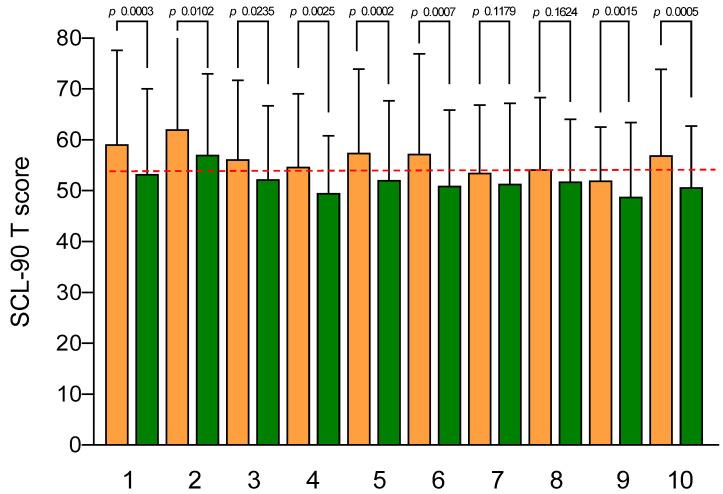
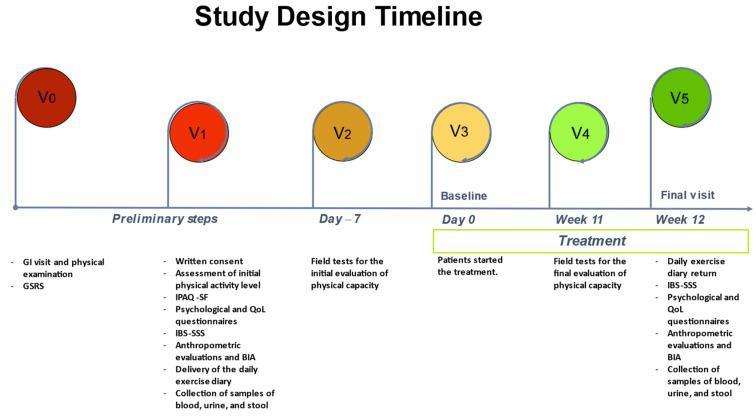
Walking is popular moderate-intensity aerobic exercise that improves mental and gastrointestinal (GI) health. It can relieve symptoms associated with irritable bowel syndrome (IBS), e.g., intestinal gas, abdominal distension, and bowel disturbances. This study examined the impact of a moderate-intensity aerobic exercise program on the clinical and psychological parameters of IBS patients. In total, 40 IBS patients (11 males and 29 females; mean age 51.9 ± 7.8 years) participated in a 12-week aerobic exercise program. Participants completed questionnaires assessing GI symptoms, psychological profiles, and quality of life (QoL) before and after the intervention. Field tests, anthropometric measurements, and bioimpedance assessments were also conducted. The present findings confirmed a significant improvement in IBS symptoms after the aerobic exercise program. Bloating was the most common symptom and, together with abdominal pain, was significantly reduced after treatment. Psychological and QoL questionnaires indicated decreased anxiety, depression, somatization, and stress levels. Correlations were found between anxiety/depression and the severity of abdominal pain as well as between stress and the severity of abdominal distension. Moderate-intensity aerobic exercise positively impacted GI symptoms and psychological well-being, complementing dietary and psychological support as a non-pharmacological therapy for the management of IBS. These findings emphasize the importance of alternative approaches for IBS treatment.
步行是一种广受欢迎的中等强度有氧运动,对精神和胃肠道(GI)健康有益。它可以缓解与肠易激综合征(IBS)相关的症状,如肠道气体、腹胀和肠道功能紊乱。本研究考察了中等强度有氧运动计划对IBS患者临床和心理参数的影响。共有40名IBS患者(11名男性和29名女性;平均年龄51.9±7.8岁)参与了一项为期12周的有氧运动计划。参与者在干预前后完成了评估胃肠道症状、心理状况和生活质量(QoL)的问卷调查。还进行了现场测试、人体测量和生物阻抗评估。目前的研究结果证实,有氧运动计划后IBS症状有显著改善。腹胀是最常见的症状,与腹痛一起,治疗后显著减轻。心理和生活质量问卷调查显示焦虑、抑郁、躯体化和压力水平降低。发现焦虑/抑郁与腹痛严重程度之间以及压力与腹胀严重程度之间存在相关性。中等强度有氧运动对胃肠道症状和心理健康有积极影响,作为IBS管理的非药物治疗方法,可补充饮食和心理支持。这些发现强调了IBS治疗替代方法的重要性。


 Zotero 插件