
血浆硬化蛋白水平升高与认知功能正常的老年人脑内高淀粉样蛋白β负荷相关。
Elevated plasma sclerostin is associated with high brain amyloid-β load in cognitively normal older adults.
作者信息
Yuan Jun, Pedrini Steve, Thota Rohith, Doecke James, Chatterjee Pratishtha, Sohrabi Hamid R, Teunissen Charlotte E, Verberk Inge M W, Stoops Erik, Vanderstichele Hugo, Meloni Bruno P, Mitchell Christopher, Rainey-Smith Stephanie, Goozee Kathryn, Tai Andrew Chi Pang, Ashton Nicholas, Zetterberg Henrik, Blennow Kaj, Gao Junjie, Liu Delin, Mastaglia Frank, Inderjeeth Charles, Zheng Minghao, Martins Ralph N
机构信息
Perron Institute for Neurological and Translational Science, Nedlands, WA, Australia.
Centre for Orthopaedic Translational Research, Medical School, The University of Western Australia, Nedlands, WA, Australia.
出版信息
NPJ Aging. 2023 Sep 4;9(1):17. doi: 10.1038/s41514-023-00114-4.
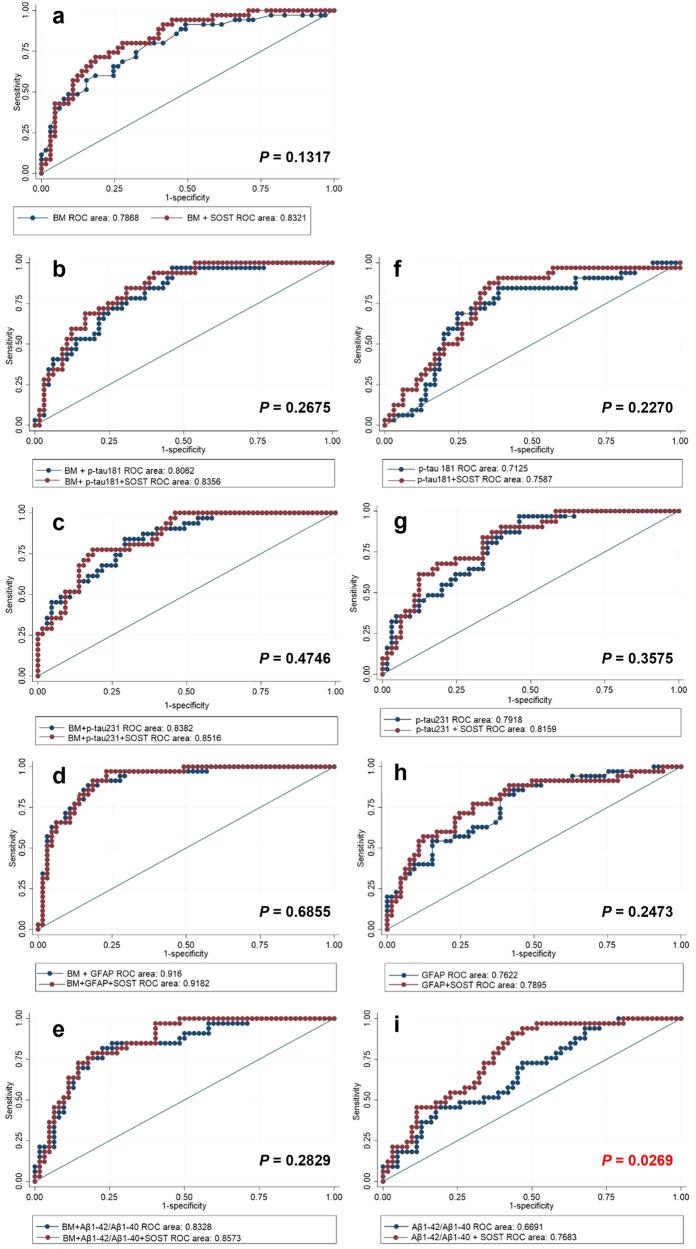
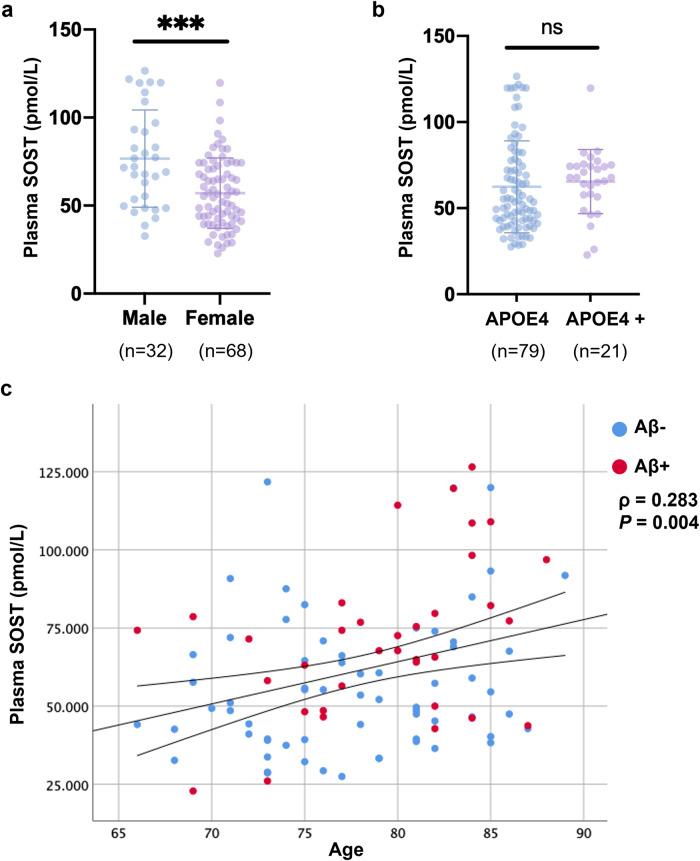
Osteoporosis and Alzheimer's disease (AD) mainly affect older individuals, and the possibility of an underlying link contributing to their shared epidemiological features has rarely been investigated. In the current study, we investigated the association between levels of plasma sclerostin (SOST), a protein primarily produced by bone, and brain amyloid-beta (Aβ) load, a pathological hallmark of AD. The study enrolled participants meeting a set of screening inclusion and exclusion criteria and were stratified into Aβ- (n = 65) and Aβ+ (n = 35) according to their brain Aβ load assessed using Aβ-PET (positron emission tomography) imaging. Plasma SOST levels, apolipoprotein E gene (APOE) genotype and several putative AD blood-biomarkers including Aβ40, Aβ42, Aβ42/Aβ40, neurofilament light (NFL), glial fibrillary acidic protein (GFAP), total tau (t-tau) and phosphorylated tau (p-tau181 and p-tau231) were detected and compared. It was found that plasma SOST levels were significantly higher in the Aβ+ group (71.49 ± 25.00 pmol/L) compared with the Aβ- group (56.51 ± 22.14 pmol/L) (P < 0.01). Moreover, Spearman's correlation analysis showed that plasma SOST concentrations were positively correlated with brain Aβ load (ρ = 0.321, P = 0.001). Importantly, plasma SOST combined with Aβ42/Aβ40 ratio significantly increased the area under the curve (AUC) when compared with using Aβ42/Aβ40 ratio alone (AUC = 0.768 vs 0.669, P = 0.027). In conclusion, plasma SOST levels are elevated in cognitively unimpaired older adults at high risk of AD and SOST could complement existing plasma biomarkers to assist in the detection of preclinical AD.
骨质疏松症和阿尔茨海默病(AD)主要影响老年人,而导致它们具有共同流行病学特征的潜在联系可能性很少被研究。在本研究中,我们调查了主要由骨骼产生的蛋白质——血浆硬化蛋白(SOST)水平与AD的病理标志——脑淀粉样β蛋白(Aβ)负荷之间的关联。该研究纳入了符合一系列筛查纳入和排除标准的参与者,并根据使用Aβ正电子发射断层扫描(PET)成像评估的脑Aβ负荷将他们分为Aβ-组(n = 65)和Aβ+组(n = 35)。检测并比较了血浆SOST水平、载脂蛋白E基因(APOE)基因型以及几种假定的AD血液生物标志物,包括Aβ40、Aβ42、Aβ42/Aβ40、神经丝轻链(NFL)、胶质纤维酸性蛋白(GFAP)、总tau蛋白(t-tau)和磷酸化tau蛋白(p-tau181和p-tau231)。结果发现,与Aβ-组(56.51±22.14 pmol/L)相比,Aβ+组的血浆SOST水平显著更高(71.49±25.00 pmol/L)(P < 0.01)。此外,Spearman相关性分析表明,血浆SOST浓度与脑Aβ负荷呈正相关(ρ = 0.321,P = 0.001)。重要的是,与单独使用Aβ42/Aβ40比值相比,血浆SOST与Aβ42/Aβ40比值联合使用时显著增加了曲线下面积(AUC)(AUC = 0.768对0.669,P = 0.027)。总之,在有AD高风险的认知未受损老年人中,血浆SOST水平升高,并且SOST可以补充现有的血浆生物标志物以协助检测临床前AD。
 Zotero 插件