
新冠病毒感染相关神经疾病中的免疫景观与氧化还原失衡。
Immune landscape and redox imbalance during neurological disorders in COVID-19.
机构信息
Centre for Regenerative Medicine and Health, Hong Kong Institute of Science and Innovation-CAS Limited, Hong Kong SAR, Hong Kong.
Department of Molecular and Human Genetics, Institute of Science, Banaras Hindu University, Varanasi, Uttar Pradesh, India.
出版信息
Cell Death Dis. 2023 Sep 6;14(9):593. doi: 10.1038/s41419-023-06102-6.
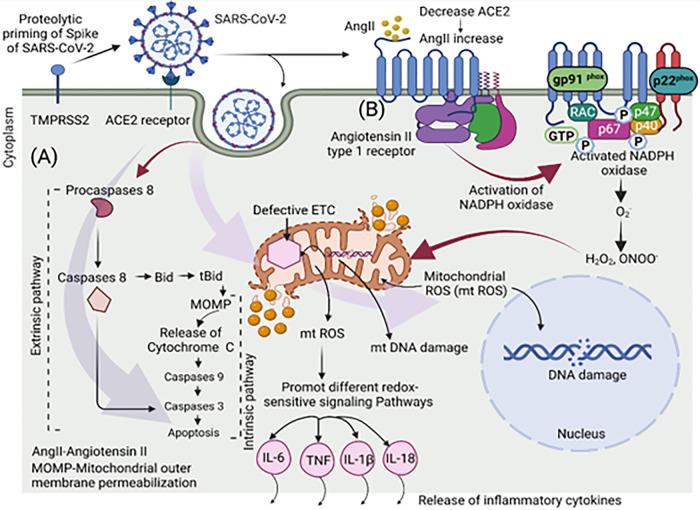
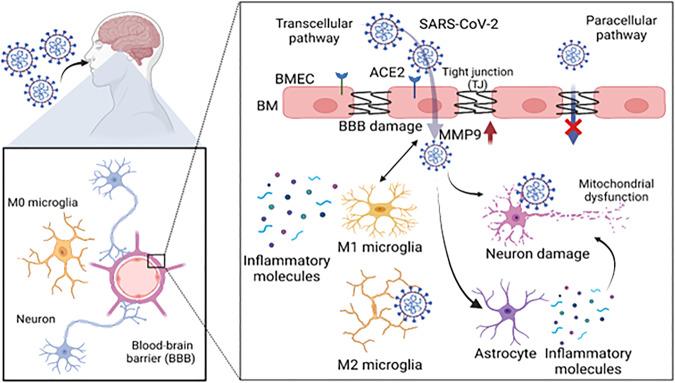
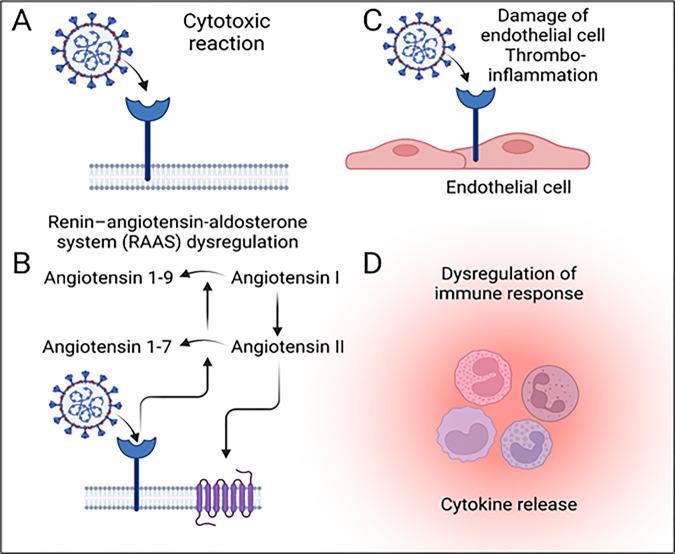
The outbreak of Coronavirus Disease 2019 (COVID-19) has prompted the scientific community to explore potential treatments or vaccines against severe acute respiratory syndrome coronavirus 2 (SARS-CoV-2), the virus that causes the illness. While SARS-CoV-2 is mostly considered a respiratory pathogen, several neurological complications have been reported, raising questions about how it may enter the Central Nervous System (CNS). Receptors such as ACE2, CD147, TMPRSS2, and NRP1 have been identified in brain cells and may be involved in facilitating SARS-CoV-2 entry into the CNS. Moreover, proteins like P2X7 and Panx-1 may contribute to the pathogenesis of COVID-19. Additionally, the role of the immune system in the gravity of COVID-19 has been investigated with respect to both innate and adaptive immune responses caused by SARS-CoV-2 infection, which can lead to a cytokine storm, tissue damage, and neurological manifestations. A redox imbalance has also been linked to the pathogenesis of COVID-19, potentially causing mitochondrial dysfunction, and generating proinflammatory cytokines. This review summarizes different mechanisms of reactive oxygen species and neuro-inflammation that may contribute to the development of severe COVID-19, and recent progress in the study of immunological events and redox imbalance in neurological complications of COVID-19, and the role of bioinformatics in the study of neurological implications of COVID-19.
2019 年冠状病毒病(COVID-19)的爆发促使科学界探索针对严重急性呼吸综合征冠状病毒 2(SARS-CoV-2)的潜在治疗方法或疫苗,该病毒是引起该病的病原体。虽然 SARS-CoV-2 主要被认为是一种呼吸道病原体,但已报告了几种神经系统并发症,这引发了人们对其如何进入中枢神经系统(CNS)的疑问。已在脑细胞中鉴定出 ACE2、CD147、TMPRSS2 和 NRP1 等受体,它们可能参与促进 SARS-CoV-2 进入 CNS。此外,P2X7 和 Panx-1 等蛋白可能有助于 COVID-19 的发病机制。此外,还研究了 SARS-CoV-2 感染引起的先天和适应性免疫反应对 COVID-19 严重程度的作用,这可能导致细胞因子风暴、组织损伤和神经表现。氧化还原失衡也与 COVID-19 的发病机制有关,可能导致线粒体功能障碍,并产生促炎细胞因子。这篇综述总结了活性氧和神经炎症的不同机制,这些机制可能导致严重 COVID-19 的发生,以及 COVID-19 神经系统并发症中免疫事件和氧化还原失衡的最新研究进展,以及生物信息学在 COVID-19 神经影响研究中的作用。
 Zotero 插件