
DNA 甲基化与急性髓系白血病低氧环境的相互作用。
Crosstalk between DNA methylation and hypoxia in acute myeloid leukaemia.
机构信息
School of Biomedical Sciences and Pharmacy, The University of Newcastle, Callaghan, NSW, 2308, Australia.
Precision Medicine Research Program, Hunter Medical Research Institute, New Lambton Heights, NSW, 2305, Australia.
出版信息
Clin Epigenetics. 2023 Sep 13;15(1):150. doi: 10.1186/s13148-023-01566-x.
BACKGROUND
Acute myeloid leukaemia (AML) is a deadly disease characterised by the uncontrolled proliferation of immature myeloid cells within the bone marrow. Altered regulation of DNA methylation is an important epigenetic driver of AML, where the hypoxic bone marrow microenvironment can help facilitate leukaemogenesis. Thus, interactions between epigenetic regulation and hypoxia signalling will have important implications for AML development and treatment.
MAIN BODY
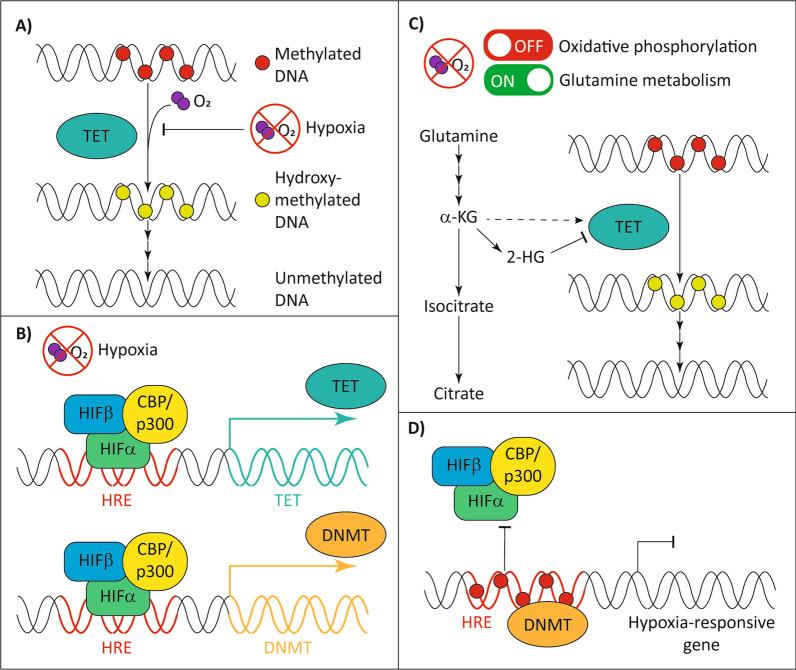
This review summarises the importance of DNA methylation and the hypoxic bone marrow microenvironment in the development, progression, and treatment of AML. Here, we focus on the role hypoxia plays on signalling and the subsequent regulation of DNA methylation. Hypoxia is likely to influence DNA methylation through altered metabolic pathways, transcriptional control of epigenetic regulators, and direct effects on the enzymatic activity of epigenetic modifiers. DNA methylation may also prevent activation of hypoxia-responsive genes, demonstrating bidirectional crosstalk between epigenetic regulation and the hypoxic microenvironment. Finally, we consider the clinical implications of these interactions, suggesting that reduced cell cycling within the hypoxic bone marrow may decrease the efficacy of hypomethylating agents.
CONCLUSION
Hypoxia is likely to influence AML progression through complex interactions with DNA methylation, where the therapeutic efficacy of hypomethylating agents may be limited within the hypoxic bone marrow. To achieve optimal outcomes for AML patients, future studies should therefore consider co-treatments that can promote cycling of AML cells within the bone marrow or encourage their dissociation from the bone marrow.
背景
急性髓系白血病(AML)是一种致命疾病,其特征是骨髓内未成熟髓样细胞的不受控制增殖。DNA 甲基化的改变调控是 AML 的一个重要表观遗传驱动因素,其中缺氧的骨髓微环境有助于促成白血病发生。因此,表观遗传调控与缺氧信号之间的相互作用将对 AML 的发展和治疗具有重要意义。
主要内容
本文总结了 DNA 甲基化和缺氧骨髓微环境在 AML 的发生、进展和治疗中的重要性。在这里,我们重点关注缺氧信号在 DNA 甲基化的调控中的作用。缺氧可能通过改变代谢途径、表观遗传调控因子的转录控制以及对表观遗传修饰酶的直接作用来影响 DNA 甲基化。DNA 甲基化也可能阻止缺氧反应基因的激活,从而证明了表观遗传调控与缺氧微环境之间的双向相互作用。最后,我们考虑了这些相互作用的临床意义,表明在缺氧骨髓中细胞周期减少可能会降低去甲基化剂的疗效。
结论
缺氧可能通过与 DNA 甲基化的复杂相互作用影响 AML 的进展,而去甲基化剂的治疗效果在缺氧骨髓中可能受到限制。因此,为了使 AML 患者获得最佳治疗效果,未来的研究应考虑联合治疗方法,以促进骨髓中 AML 细胞的循环或促使其从骨髓中分离。
 Zotero 插件