
多组学分析揭示了暴露于环境浓度的聚苯乙烯微塑料和纳米塑料中的家蚕(Bombyx mori)体重增加的分子基础。
Multiomics analysis reveals the molecular basis for increased body weight in silkworms (Bombyx mori) exposed to environmental concentrations of polystyrene micro- and nanoplastics.
机构信息
Max Planck Partner Group, Institute of Sericulture and Apiculture, Faculty of Agriculture, Life and Environmental Sciences, Zhejiang University, Hangzhou, China.
Analysis Center of Agrobiology and Environmental Sciences, Zhejiang University, Hangzhou, China.
出版信息
J Adv Res. 2024 Mar;57:43-57. doi: 10.1016/j.jare.2023.09.010. Epub 2023 Sep 22.
INTRODUCTION
Micro- and nanoplastics (MNPs) are emerging environmental pollutants that have raised serious concerns about their potential impact on ecosystem and organism health. Despite increasing efforts to investigate the impacts of micro- and nanoplastics (MNPs) on biota little is known about their potential impacts on terrestrial organisms, especially insects, at environmental concentrations.
OBJECTIVES
To address this gap, we used an insect model, silkworm Bombyx mori to examine the potential long-term impacts of different sizes of polystyrene (PS) MNPs at environmentally realistic concentrations (0.25 to 1.0 μg/mL).
METHODS
After exposure to PS-MNPs over most of the larval lifetime (from second to last instar), the endpoints were examined by an integrated physiological (growth and survival) and multiomics approach (metabolomics, 16S rRNA, and transcriptomics).
RESULTS
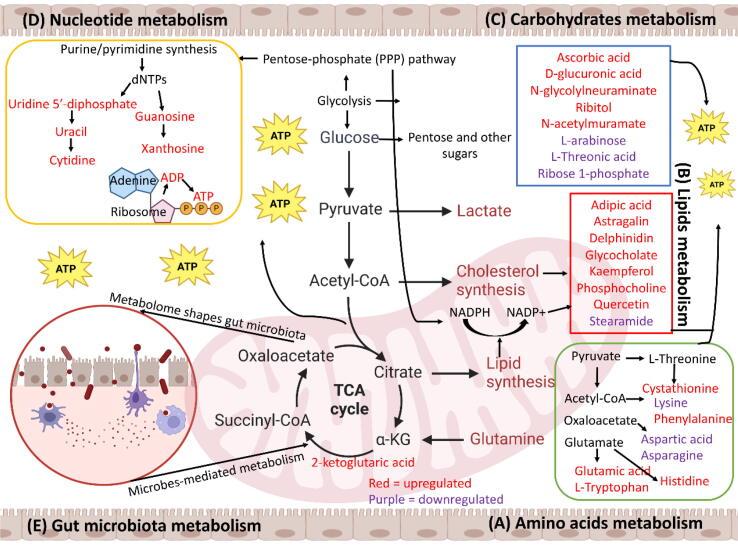
Our results indicated that dietary exposures to PS-MNPs had no lethal effect on survivorship, but interestingly, increased host body weight. Multiomics analysis revealed that PS-MNPs exposure significantly altered multiple pathways, particularly lipid metabolism, leading to enriched energy reserves. Furthermore, the exposure changed the structure and composition of the gut microbiome and increased the abundance of gut bacteria Acinetobacter and Enterococcus. Notably, the predicted functional profiles and metabolite expressions were significantly correlated with bacterial abundance. Importantly, these observed effects were particle size-dependent and were ranked as PS-S (91.92 nm) > PS-M (5.69 µm) > PS-L (9.7 µm).
CONCLUSION
Overall, PS-MNPs at environmentally realistic concentrations exerted stimulatory effects on energy metabolism that subsequently enhanced body weight in silkworms, suggesting that chronic PS-MNPs exposure might trigger weight gain in animals and humans by influencing host energy and microbiota homeostasis.
简介
微塑料和纳米塑料(MNPs)是新兴的环境污染物,它们对生态系统和生物健康的潜在影响引起了严重关注。尽管越来越多的研究致力于调查微塑料和纳米塑料(MNPs)对生物群的影响,但对于它们在环境浓度下对陆地生物,特别是昆虫的潜在影响知之甚少。
目的
为了填补这一空白,我们使用昆虫模型家蚕(Bombyx mori)来研究不同大小的聚苯乙烯(PS)MNPs 在环境现实浓度(0.25 至 1.0μg/mL)下对长期潜在影响。
方法
在幼虫期的大部分时间内(从最后一次蜕皮前的第二次蜕皮到最后一次蜕皮)暴露于 PS-MNP 后,通过综合生理(生长和存活)和多组学方法(代谢组学、16S rRNA 和转录组学)来检查终点。
结果
我们的结果表明,PS-MNP 的饮食暴露对存活率没有致命影响,但有趣的是,增加了宿主体重。多组学分析表明,PS-MNP 暴露显著改变了多个途径,特别是脂质代谢,导致丰富的能量储备。此外,暴露改变了肠道微生物组的结构和组成,并增加了肠道细菌不动杆菌和肠球菌的丰度。值得注意的是,预测的功能谱和代谢物表达与细菌丰度显著相关。重要的是,这些观察到的影响与颗粒尺寸有关,并且按 PS-S(91.92nm)>PS-M(5.69µm)>PS-L(9.7µm)的顺序排列。
结论
总体而言,环境现实浓度下的 PS-MNP 对能量代谢产生了刺激作用,随后在家蚕中增强了体重,这表明慢性 PS-MNP 暴露可能通过影响宿主能量和微生物组平衡来引发动物和人类的体重增加。


 Zotero 插件