
探讨抗心律失常药物胺碘酮对 TcdA 和 TcdB 毒素的抑制潜力。
Exploring the inhibitory potential of the antiarrhythmic drug amiodarone against toxins TcdA and TcdB.
机构信息
Institute of Experimental and Clinical Pharmacology, Toxicology and Pharmacology of Natural Products, Ulm University Medical Center, Ulm, Germany.
Centro de Investigación en Enfermedades Tropicales and Facultad de Microbiología, Universidad de Costa Rica, San José, Costa Rica.
出版信息
Gut Microbes. 2023 Dec;15(2):2256695. doi: 10.1080/19490976.2023.2256695. Epub 2023 Sep 25.
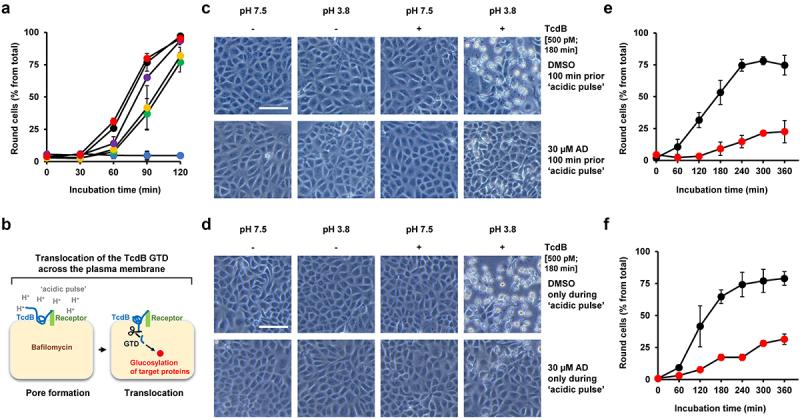
The intestinal pathogen is the leading cause of antibiotic-associated diarrhea and pseudomembranous colitis in humans. The symptoms of -associated diseases (CDADs) are directly associated with the pathogen's toxins TcdA and TcdB, which enter host cells and inactivate Rho and/or Ras GTPases by glucosylation. Membrane cholesterol is crucial during the intoxication process of TcdA and TcdB, and likely involved during pore formation of both toxins in endosomal membranes, a key step after cellular uptake for the translocation of the glucosyltransferase domain of both toxins from endosomes into the host cell cytosol. The licensed drug amiodarone, a multichannel blocker commonly used in the treatment of cardiac dysrhythmias, is also capable of inhibiting endosomal acidification and, as shown recently, cholesterol biosynthesis. Thus, we were keen to investigate with cultured cells and human intestinal organoids, whether amiodarone preincubation protects from TcdA and/or TcdB intoxication. Amiodarone conferred protection against both toxins independently and in combination as well as against toxin variants from the clinically relevant, epidemic strain NAP1/027. Further mechanistic studies suggested that amiodarone's mode-of-inhibition involves also interference with the translocation pore of both toxins. Our study opens the possibility of repurposing the licensed drug amiodarone as a novel pan-variant antitoxin therapeutic in the context of CDADs.
肠道病原体是人类抗生素相关性腹泻和伪膜性结肠炎的主要原因。与病原体毒素 TcdA 和 TcdB 相关的疾病(CDADs)的症状直接与毒素的毒性有关,这些毒素通过糖基化作用使 Rho 和/或 Ras GTPases 失活。在 TcdA 和 TcdB 的中毒过程中,膜胆固醇是至关重要的,并且在这两种毒素的内体膜形成孔的过程中可能涉及,这是细胞摄取后两种毒素的葡糖基转移酶结构域从内体转移到宿主细胞质中的关键步骤。已获许可的药物胺碘酮是一种常用于治疗心律失常的多通道阻滞剂,也能够抑制内体酸化,并且最近还显示能够抑制胆固醇生物合成。因此,我们热衷于用培养细胞和人肠类器官研究,胺碘酮预孵育是否可以预防 TcdA 和/或 TcdB 中毒。胺碘酮独立地和联合地以及针对来自临床相关的流行株 NAP1/027 的毒素变体提供了保护。进一步的机制研究表明,胺碘酮的抑制模式还涉及对两种毒素的转位孔的干扰。我们的研究为将已获许可的药物胺碘酮作为 CDADs 中的新型泛变体抗毒素治疗药物重新利用开辟了可能性。


 Zotero 插件