
在宿主中 HIV 迁移的系统级特征的鉴定。
Identification of system-level features in HIV migration within a host.
机构信息
Division of Infectious Diseases and Global Public Health, University of California San Diego, La Jolla, CA, United States of America.
Herbert Wertheim SPH and Human Longevity Science, University of California San Diego, La Jolla, CA, United States of America.
出版信息
PLoS One. 2023 Sep 26;18(9):e0291367. doi: 10.1371/journal.pone.0291367. eCollection 2023.
OBJECTIVE
Identify system-level features in HIV migration within a host across body tissues. Evaluate heterogeneity in the presence and magnitude of these features across hosts.
METHOD
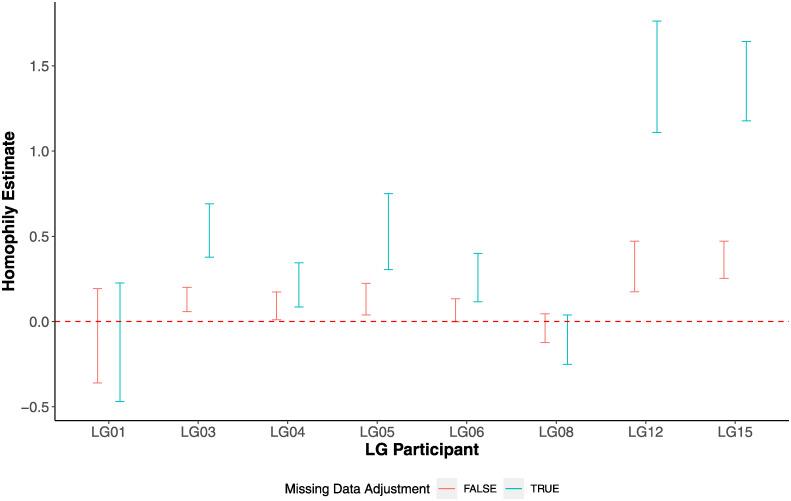
Using HIV DNA deep sequencing data generated across multiple tissues from 8 people with HIV, we represent the complex dependencies of HIV migration among tissues as a network and model these networks using the family of exponential random graph models (ERGMs). ERGMs allow for the statistical assessment of whether network features occur more (or less) frequently in viral migration than might be expected by chance. The analysis investigates five potential features of the viral migration network: (1) bi-directional flow between tissues; (2) preferential migration among tissues in the same biological system; (3) heterogeneity in the level of viral migration related to HIV reservoir size; (4) hierarchical structure of migration; and (5) cyclical migration among several tissues. We calculate the Cohran's Q statistic to assess heterogeneity in the magnitude of the presence of these features across hosts. The analysis adjusts for missing data on body tissues.
RESULTS
We observe strong evidence for bi-directional flow between tissues; migration among tissues in the same biological system; and hierarchical structure of the viral migration network. This analysis shows no evidence for differential level of viral migration with respect to the HIV reservoir size of a tissue. There is evidence that cyclical migration among three tissues occurs less frequent than expected given the amount of viral migration. The analysis also provides evidence for heterogeneity in the magnitude that these features are present across hosts. Adjusting for missing tissue data identifies system-level features within a host as well as heterogeneity in the presence of these features across hosts that are not detected when the analysis only considers the observed data.
DISCUSSION
Identification of common features in viral migration may increase the efficiency of HIV cure efforts as it enables targeting specific processes.
目的
确定宿主内 HIV 在不同组织间迁移的系统级特征。评估这些特征在宿主间存在和程度的异质性。
方法
使用来自 8 名 HIV 感染者的多个组织中生成的 HIV DNA 深度测序数据,我们将 HIV 迁移在组织间的复杂依赖性表示为一个网络,并使用指数随机图模型(ERGM)族对这些网络进行建模。ERGM 允许统计评估网络特征是否比随机情况下更频繁(或更不频繁)出现在病毒迁移中。该分析研究了病毒迁移网络的五个潜在特征:(1)组织间的双向流动;(2)同一生物系统内组织间的优先迁移;(3)与 HIV 储库大小相关的病毒迁移水平的异质性;(4)迁移的层次结构;和(5)几个组织之间的循环迁移。我们计算 Cochran's Q 统计量,以评估这些特征在宿主间存在程度的异质性。该分析对组织缺失数据进行了调整。
结果
我们观察到强烈的证据表明组织间存在双向流动;同一生物系统内组织间的迁移;以及病毒迁移网络的层次结构。该分析未发现组织中病毒迁移与 HIV 储库大小有关的差异证据。有证据表明,三个组织之间的循环迁移比预期的病毒迁移量发生的频率要低。该分析还提供了证据表明,这些特征在宿主间存在的程度存在异质性。对组织缺失数据进行调整,可以识别宿主内的系统级特征,以及这些特征在宿主间存在的异质性,而这些特征在仅考虑观察数据的分析中是无法检测到的。
讨论
识别病毒迁移中的共同特征可能会提高 HIV 治愈效果的效率,因为它可以使针对特定过程的靶向治疗成为可能。


 Zotero 插件