
二氯二苯三氯乙烷对女性生殖道导致不孕和癌症的影响:系统检索与综述
Effects of Dichlorodiphenyltrichloroethane on the Female Reproductive Tract Leading to Infertility and Cancer: Systematic Search and Review.
作者信息
Syed Shermeen, Qasim Shandana, Ejaz Maheen, Khan Nimra, Ali Haider, Zaker Himasadat, Hatzidaki Eleftheria, Mamoulakis Charalampos, Tsatsakis Aristidis, Shah Syed Tahir Abbas, Amir Saira
机构信息
Functional Genomics and Proteomics Laboratory, Department of Biosciences, COMSATS University Islamabad, Park Road Chak Shehzad, Islamabad 44000, Pakistan.
Cerebral Venous Disorder Lab, University of California, San Francisco, CA 94143, USA.
出版信息
Toxics. 2023 Aug 24;11(9):725. doi: 10.3390/toxics11090725.
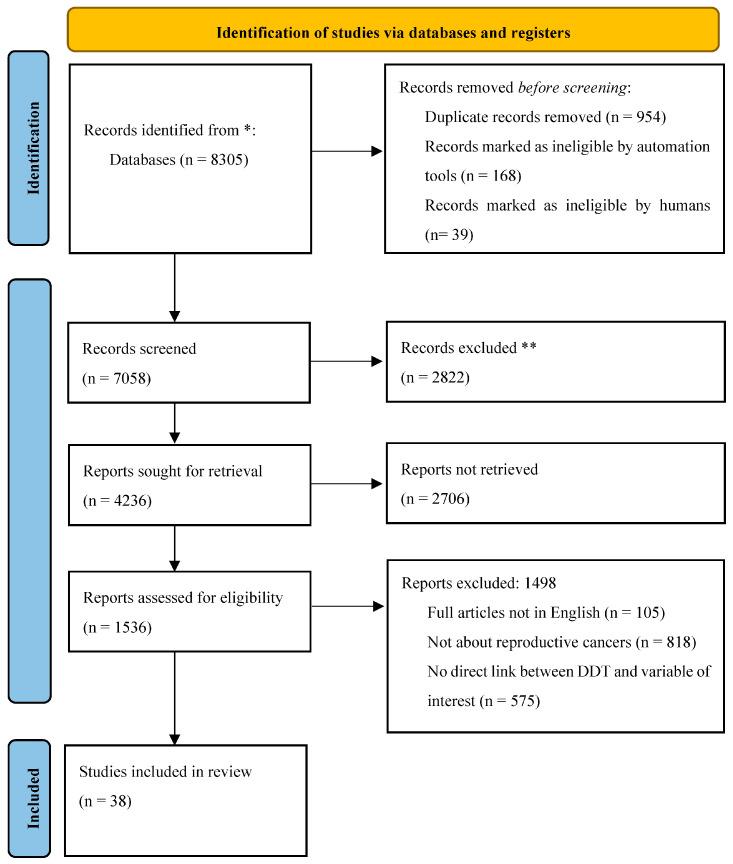
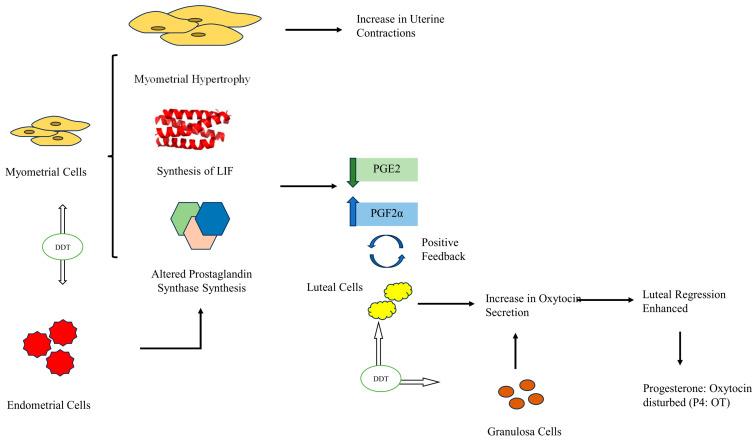
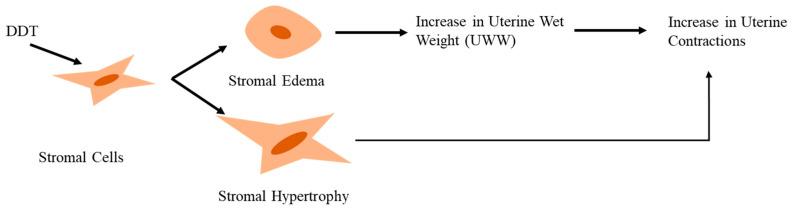
Persistent Organic Pollutants (POPs) such as dichlorodimethyltrichloroethane (DDT) are present and ubiquitous in the environment due to their resilient nature. DDT is a prevalent endocrine disruptor still found in detectable amounts in organisms and the environment even after its use was banned in the 1970s. Medline and Google Scholar were systematically searched to detect all relevant animal and human studies published in the last 20 years (January 2003 to February 2023) in accordance with the Preferred Reporting Items for Systematic Reviews and Meta-Analyses (PRISMA) statement. In total, 38 studies were included for qualitative synthesis. This systematic search and review indicated that exposure to DDT is associated with female reproductive health issues, such as reduced fecundability; increased risk of preterm/premature deliveries; increased periods of gestation; alterations in the synthesis of crucial reproductive hormones (Progesterone and Oxytocin) through ion imbalances and changes in prostaglandin synthesis, myometrial and stromal hypertrophy, and edema; and variations in uterine contractions through increased uterine wet weight. There was also limited evidence indicating DDT as a carcinogen sufficient to instigate reproductive cancers. However, this review only takes into account the in vitro studies that have established a possible pathway to understand how DDT impacts female infertility and leads to reproductive cancers. Links between the pathways described in various studies have been developed in this review to produce a summarized picture of how one event might lead to another. Additionally, epidemiological studies that specifically targeted the exposure to DDT of females belonging to various ethnicities have been reviewed to develop an overall picture of prevailing female reproductive health concerns in different nations.
诸如二氯二苯三氯乙烷(DDT)之类的持久性有机污染物(POPs)因其具有持久性,在环境中广泛存在且无处不在。DDT是一种普遍存在的内分泌干扰物,即使在20世纪70年代被禁止使用后,仍能在生物体和环境中检测到。根据系统评价和Meta分析的首选报告项目(PRISMA)声明,系统检索了Medline和谷歌学术,以查找过去20年(2003年1月至2023年2月)发表的所有相关动物和人体研究。总共纳入了38项研究进行定性综合分析。这项系统检索和综述表明,接触DDT与女性生殖健康问题有关,如生育能力下降;早产/分娩风险增加;妊娠期延长;通过离子失衡和前列腺素合成、子宫肌层和基质肥大以及水肿的变化,关键生殖激素(孕酮和催产素)的合成发生改变;以及子宫湿重增加导致子宫收缩变化。也有有限的证据表明DDT是一种足以引发生殖系统癌症的致癌物。然而,本综述仅考虑了已建立可能途径以了解DDT如何影响女性不孕并导致生殖系统癌症的体外研究。本综述梳理了各项研究中描述的途径之间的联系,以总结一个事件如何可能导致另一个事件。此外,还对专门针对不同种族女性接触DDT情况的流行病学研究进行了综述,以全面了解不同国家普遍存在的女性生殖健康问题。


 Zotero 插件